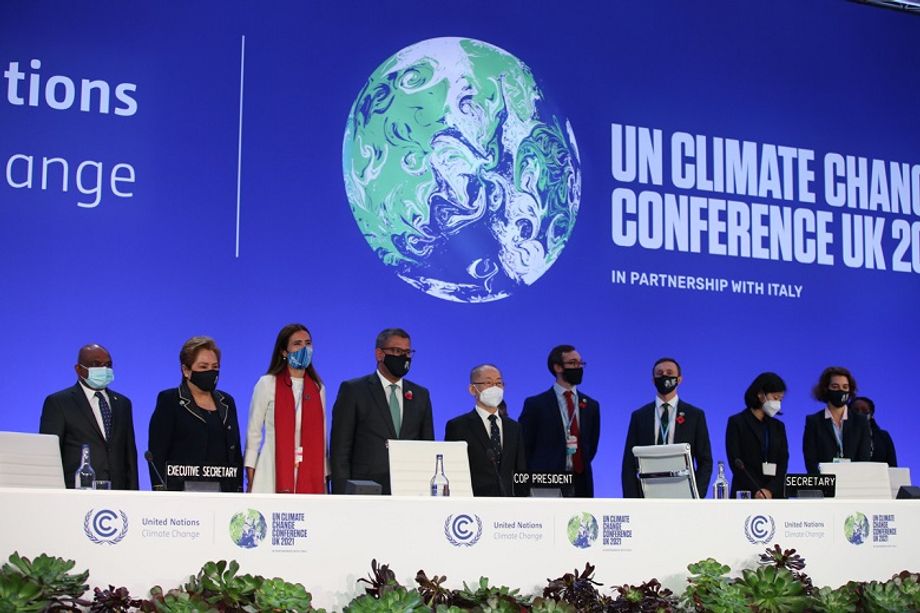
 Destinations and event professionals are showing keener intent than most industries to take a lead on the climate change debate and contribute to the United Nations Sustainable Development Goals (UN SDGs). Photo Credit: United Nations Framework
The dust has barely settled on COP26, the UN climate summit held in
November, but the event has already generated its fair share of
controversy. The overwhelming response appears to be one of frustration
over hope, with many saying talks have failed to deliver action at the
scale and urgency required to make a real difference to climate change.
The impact on host city Glasgow, however, appears to be markedly more
positive — with Aileen Crawford, head of tourism and conventions at
Glasgow Convention Bureau (GCB), saying there are numerous COP26 legacy
outcomes for the city.
“Much work has been done by GCB and Visit Scotland with industry
partners to encourage hospitality businesses to gain third-party
sustainability accreditation, using two established bodies — Green
Tourism and Green Key,” she said. “GCB has subsequently done a survey
among members, asking if COP26 has inspired them to get sustainability
accreditation or/ and improve their practices, and 65% answered
positively.”
Another initiative is The Glasgow Declaration, launched at COP26 by
Visit Scotland and The Travel Foundation, a call for stakeholders to
commit to a decade of climate action in tourism.
Crawford also points to numerous online educational tools that have
been introduced in the run-up to COP26, such as the Go Greener Toolkit,
which identifies and promotes sustainable businesses across the city to
conference organisers, assistance with measuring carbon footprint and
resources to help plan hybrid conferences.
Advancing sustainability
Destinations and event professionals are certainly keener than most
industries to take a lead on the climate change debate and contribute to
the United Nations Sustainable Development Goals (UN SDGs).
Global trade body the Joint Meeting Industry Council (JMIC) for
example is facilitating a net-zero carbon events pledge for the
industry, launched in September, signalling an industry commitment to
carbon neutrality and creating the alignment and practical processes
required to support this.
James
Rees, JMIC president, said that the industry has two primary roles to
play as a driver of the climate change agenda: first, as a strategic
tool for all governments, institutions, and industries to drive
developments and implementations in a sustainable way (COP26 itself
being a good example) and secondly as a sector that must drive
development towards carbon neutrality and net-zero carbon for the sake
of its own future as a sustainable industry.
“Within weeks, this [initiative] has grown to be the most global and
the most inclusive collaboration ever seen in our industry on this issue
— with leading organisers, venues, association and service providers
joining in and signing up. We already have more than 200 supporters,”
Rees said.
He added that there are a wide range of sustainability goals to address and many different ways to pursue these.
“This pursuit will be driven by the increasing expectations of
clients and communities for enhanced sustainability and as part of a
“license to operate” as an industry in our respective communities,” he
said. “Creativity and the sharing of experiences and ideas will produce
the best results, particularly where this takes place within an agreed
framework.”
 JMIC president James Rees, and CEO of Positive Impact Fiona Pelham. Photo Credit: United Nations Framework
Changing the legacy narrative
Fiona Pelham is CEO of global not-for-profit Positive Impact, which
provides education, engagement and collaboration to create a sustainable
event sector.
“We keep falling back on the ‘environment’ and ‘green’; it’s an area
we cannot win on because there is a negative impact from events, so it’s
important to look at how the events industry can advance
‘sustainability’,” she said. “Some of the key initiatives to advance
that narrative is making net zero carbon commitments, however we also
need to go beyond carbon, thinking of human rights considerations.”
Pelham believes it’s time to change the narrative around the legacy
impact of events. “What if we changed the whole system and process for
an event by asking from the start, rather than after the event: ‘Who
could this event impact’, ‘how can it advance SDGs and ‘What can the
legacy be?”.
How does Asia measure up?
The Global Destination Sustainability Movement, which aims to enable
destination management professionals to ‘create flourishing and
resilient places to visit, meet and live in’, recently revealed its
GDS-Index for 2021.
This evaluates four key areas: a city’s environmental strategy and
infrastructure; its social sustainability performance; industry supplier
support and the destination management organisation’s strategy and
initiatives. Gothenburg in Sweden topped this year’s results, with
Melbourne placing 11th and Sydney 15th; while no Asian destination was
in the top 20, there are plenty of best practices coming out of the
region.
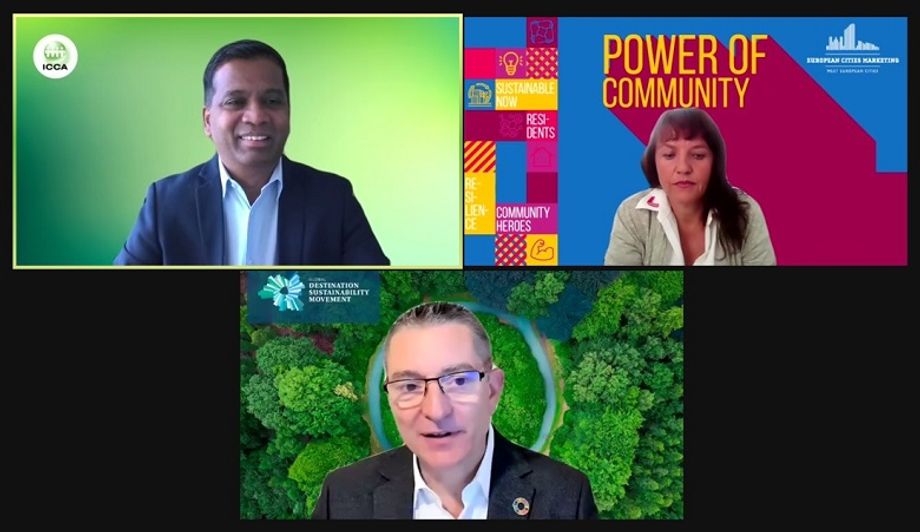 The GDS-Movement is working with associations and DMOs to improve sustainability practices and education. Photo Credit: United Nations Framework
Guy Bigwood, managing director of the GDS-Movement said: “We witness a
constant increase in [South Korea’s] Goyang’s total performance since
they started with the GDS-Index, and they’re currently leading the
region thanks in large part to their collaborative sustainability
strategy development, and their efforts in encouraging suppliers to
adopt sustainability policies and certifications.”
Sapporo in Japan is also a leader in implementing impactful
strategies. As an SDGs Future City known for its active measures to
combat climate change and achieve the UN SDGs, Sapporo uses data and an
SDG framework to monitor the impact and legacies of its events.
The GDS Movement also points to how Thailand Convention and
Exhibition Bureau has developed an outstanding training and
certification programme for local suppliers to build their
sustainability capacity, while Malaysian destination Sarawak boasts a
business events legacy programme, called ‘BESLegacy programme’, focused
on generating positive social and economic outcomes for the local
community.
When it comes to progress within Asia, the GDS Movement shows that
the path has been made harder by the pandemic, for some more than
others. Overall, though, it shows there is positive recovery and
progress for most destinations, with the average destination’s
performance returning to pre-pandemic levels. And while some will have a
longer road to recovery, the GDS movement says we are seeing more
innovation and creativity with destinations charting a new path forward
that’s moving from ‘business as usual’ to building a regenerative
future.
If the global business events sector is to meet UN SDGs, it will need
to further alignment and participation from a whole range of
participants, throughout both the supply chain and diverse users. As the
GDS Movement suggests, the biggest opportunities destinations must
build on is to continue improving the quality of their sustainability
strategies by including monitoring and reporting for social and
environmental impact.