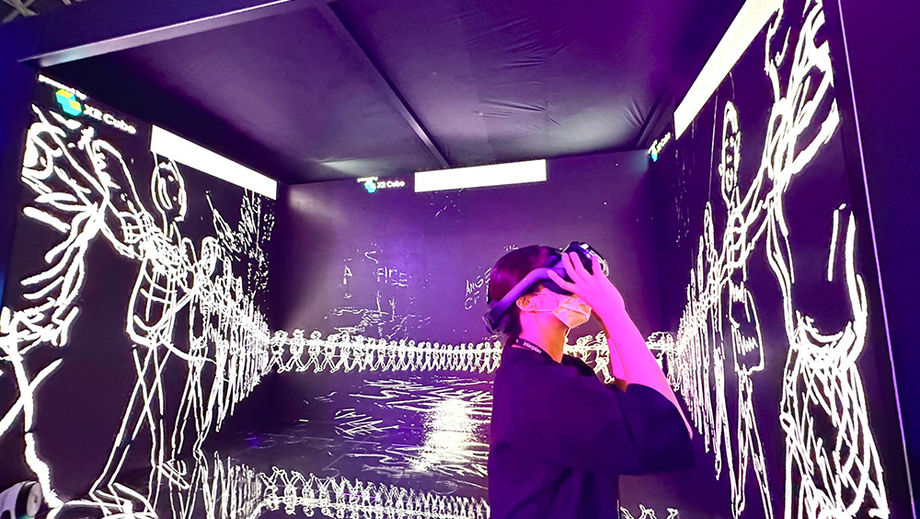
 The value of immersive technology lies not only in capturing attention, but also in helping participants understand content faster, enter the right context, and engage more effectively. The image shows XR applications integrated into an event in Taiwan.
The success of an international business event is no longer determined solely by venue capacity, hotel inventory, or flight connectivity. For organisers, the more critical questions often arise on site: Can overseas participants quickly orient themselves within the programme? Can attendees from different languages and backgrounds communicate smoothly? Can sustainability commitments be put into practice in concrete ways? Can the event connect with local industries and allow participants to see real market, technology, and partnership opportunities?
These questions are redefining the competitiveness of business event destinations in Asia. In recent years, Taiwan has advanced the use of event technology, sustainability tools, and industry-site integration –not to add complexity to events, but to help organisers turn destination resources into tangible outcomes when planning conferences, forums, exhibitions, corporate events, or incentive travel programmes.
Technology becomes part of the on-site experience
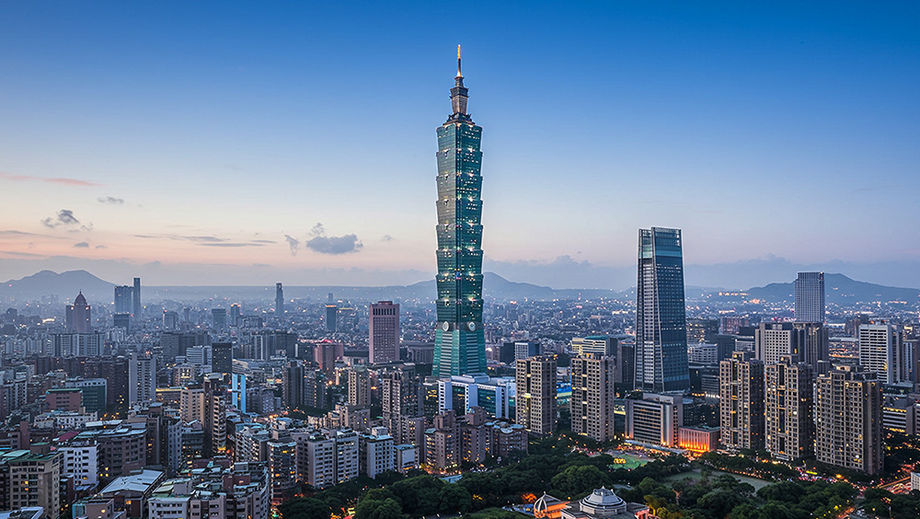 The competitiveness of a business event destination now extends beyond venues and transport infrastructure. It also depends on whether a city can support multi-venue programmes, complex agendas, and the needs of international participants. The image shows Taipei’s cityscape.
In large-scale business events, technology often delivers its greatest value not on the main stage, but in the moments when participants are moving through the venue, understanding content, navigating exhibition areas, and engaging with one another. When an international industry forum includes keynote sessions, exhibition visits, business matching, and technology showcases, organizers are managing far more than floor plans –they are shaping the full participant journey.
The EXPO-TECH Digital Exhibition Leadership Program, promoted by the International Trade Administration under Taiwan’s Ministry of Economic Affairs, brings together exhibition organisers and technology service providers to test applications such as digital navigation, indoor positioning, real-time translation, XR displays, and interactive experiences in real event environments. The focus of these tools is not to showcase technology for its own sake, but to help organisers improve visitor flow, strengthen content delivery, and shift on-site services from passive responses to proactive support.
Sustainability moves from commitment to event design
Sustainability has become a common language for international business events. The real challenge, however, is translating that commitment into the details of transport, logistics, energy use, catering, registration, booth construction, and waste management. Without quantification tools and supplier collaboration, sustainability remains a statement of intent. When assessment and management are introduced early in the planning process, they can enhance event quality and strengthen brand trust.
Through its carbon footprint calculator for the MICE industry, Taiwan helps organisers and event professionals better understand activity-related emissions, allowing sustainability management to be gradually built through estimation, documentation, and post-event review. The value of this type of tool goes beyond carbon calculation. It helps organisers identify earlier which processes can be reduced, which suppliers need to collaborate, and which outcomes can become credible content for external communication.
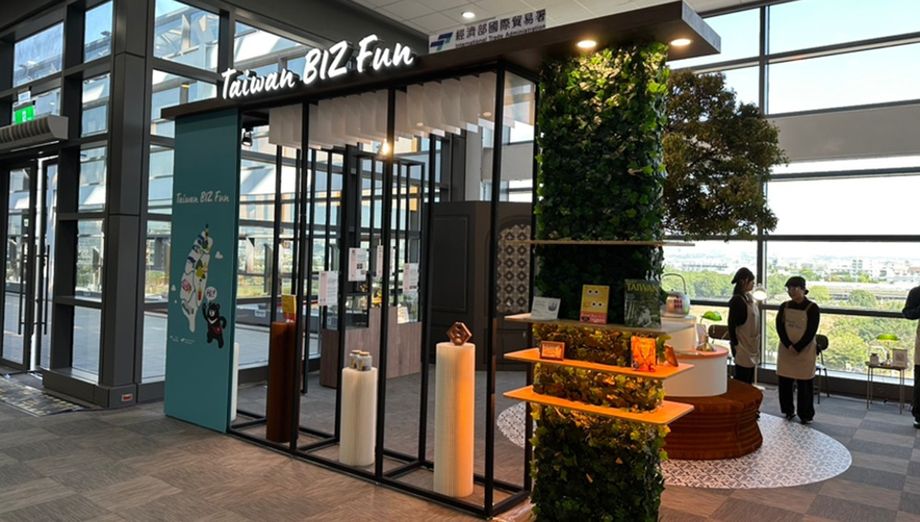 When sustainability is embedded in event design, booths, reception areas, and lounge spaces can all become part of the practice. The image shows a sustainability design showcase at an event in Taiwan, demonstrating how environmental responsibility can be translated into an on-site experience that participants can see and engage with.
CSR Day, jointly initiated by MEET TAIWAN, the Japan Convention
Management Association, and the Asia Venue Alliance, further extends
sustainability discussions to regional venues and community action. For
organisers, a destination is not only a place that provides event space;
it can also help connect an event with the city, the community, and
broader industry responsibility.
Industry ecosystems add depth to event content
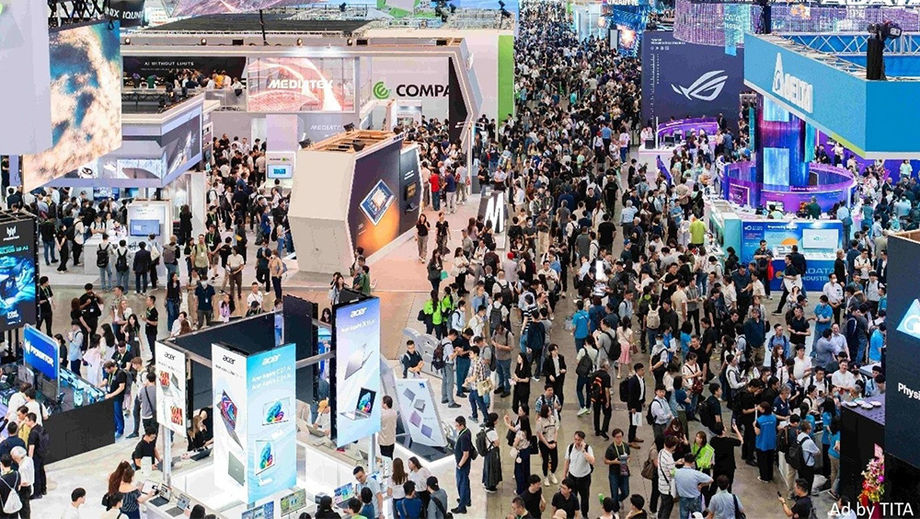 Taiwan’s professional trade shows are more than product showcases. They can also serve as starting points for forums, buyer matching, technology exchange, and industry visits. The image shows a professional trade show in Taiwan, illustrating how business events can connect with local industry ecosystems.
For events focused on technology, manufacturing, healthcare, green energy, and innovation, the destination itself is often part of the content. Organisers need more than meeting rooms. They need an environment where participants can understand market trends, meet industry players, observe supply chains, and see real-world application scenarios.
What the business events industry truly values is not the output of a single sector, but whether an event can create a complete business context: whether professional visitors are present, international buyers gather, forum content attracts industry professionals, and business matching and technology exchange can naturally take shape.
In Taiwan, these conditions often come together. COMPUTEX is not just a trade show. It also integrates keynotes, forums, startup showcases, technology experiences, and business networking, allowing participants to engage with technology trends, industry leaders, and real-world applications within the same event cycle. Under the theme “AI Together,” COMPUTEX 2026 focused on AI Computing, Robotics & Intelligent Mobility, and Next-Generation Technology, demonstrating how Taiwan can transform a professional exhibition into a platform for industry exchange.
The manufacturing and machine tool sectors offer a similar kind of event value. The Taipei International Machine Tool Show (TIMTOS), is more than a venue for product display. It also connects technical discussions, industrial applications, and exchanges with international buyers, extending the event from an exhibition into supply chains, manufacturing contexts, and business collaboration. For organisers, this level of industry density is more meaningful than any single figure, because it means event content can be connected to real markets and practical applications.
Taiwan’s industrial foundation, therefore, should not be understood simply as strength in a particular sector. It should be seen as a content asset that organisers can actively use. When forums can be linked with professional trade shows, corporate meetings can include technical visits, and buyer matching can connect with local supply chains, the value of an event is no longer limited to the agenda inside the venue. It extends into the entire industry ecosystem offered by the destination.
Taiwan offers an event environment that organisers can put to work
Business events in Asia are entering a new stage of competition. Destinations that emphasise only venues, transport, or cost are no longer fully meeting the expectations of international organisers. What matters more is whether a destination can help an event solve real problems: making the on-site experience smoother, content richer, sustainability more credible, and business exchange more efficient.
Taiwan’s strength lies in the integration of these elements. Event technology enhances the on-site experience. Sustainability tools support event management and communication. Urban execution capabilities support diverse forms of international events. Local industry ecosystems allow event content to extend into real markets and supply chains.
For organisers looking for their next business event destination in Asia, Taiwan’s answer is not simply that it can host an event. It is that Taiwan can help an event deliver clearer outcomes: a better participant experience, more convincing sustainability practices, and industry connections with greater potential to turn into meaningful collaboration.
Explore how Taiwan can support your next business event in Asia:
https://mice.meettaiwan.com/meettaiwan/home/en/index.html

This article is brought to you by MEET TAIWAN.