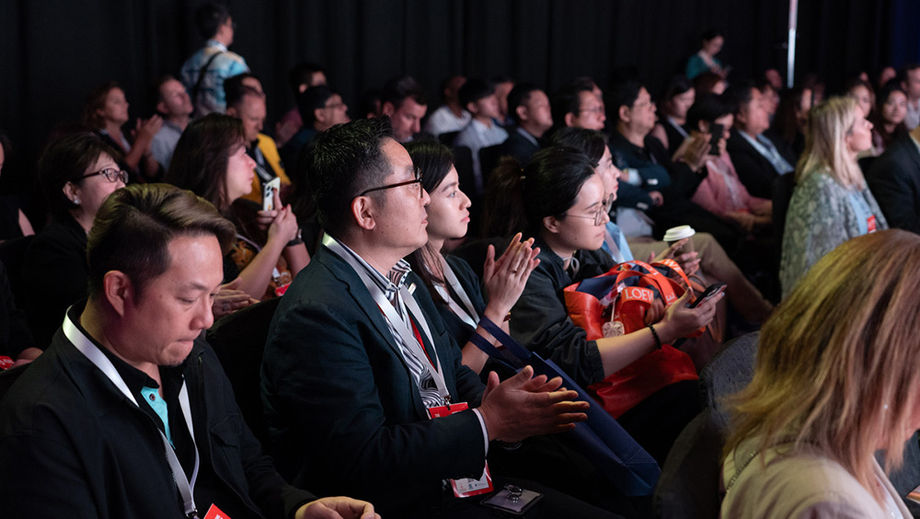
 Understanding the diverse interests of event attendees goes a long way to improving the bottom line and engagement. Photo Credit: Meetings & Conventions Asia
The importance of audience segmentation in MICE events to meet
diverse interests was a key topic highlighted by June Kim,
director of Kim’s M&T and regional manager of MPI Academy Korea, as
part of an industry outlook on the latest in global MICE trends at The
Meetings Show Asia Pacific 2024.
Kim, who also represents the Global MICE Collaborative, a coalition of MPI, SITE and IAEE, presented the following key points:
Exhibitions: Engagement and community building take centre stage
It’s increasingly critical for event organisers to understand the
interests of event attendees, exhibitors, buyers, media, and sponsors –
this helps to ensure personalised engagement and segmentation during the
event, ensuring relevance and effectiveness in marketing and delivery
experiences.
Attendee acquisition strategies involve being proactive in using
multiple marketing channels – including digital and traditional methods –
to reach these audience segments, attract thought leaders and encourage
exhibitors to become partners in boosting attendance.
The ultimate goal, said Kim, is to build a community around the
event. “Sponsors and exhibitors can be some of the best means of
designing and attracting these communities,” he emphasised.
In terms of engagement strategies, email remains the most effective
means of reaching attendees, while creating compelling narratives and
producing podcasts are seen as reliable tools for providing a
continuous stream of updates and insights about the event.
With sponsorship representing 25% or more of exhibitions' revenues
but 73% still sell sponsorships a la carte, there is an opportunity to
improve revenue through the introduction of comprehensive sponsorship
packages.
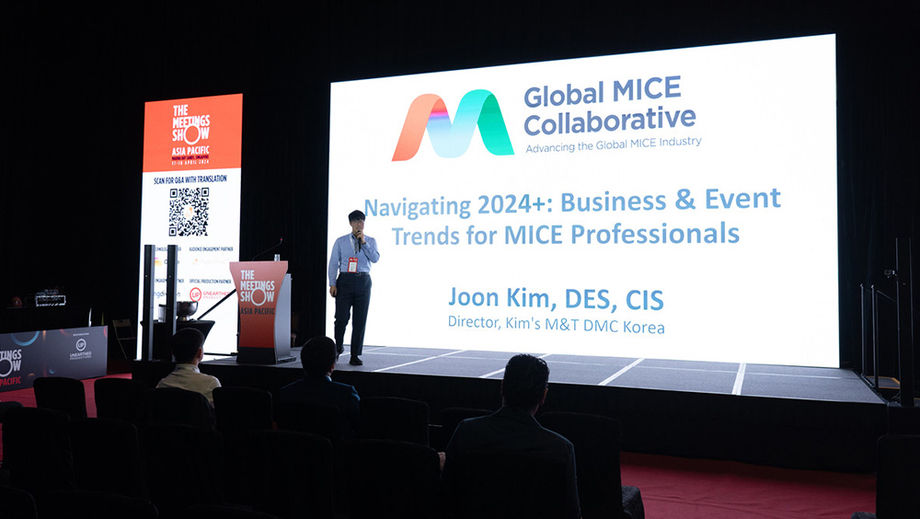 Kim’s M&T director June Kim, who also represents the Global MICE Collaborative, a coalition of MPI, SITE and IAEE, speaking during The Meetings Show Asia Pacific 2024.
Corporate meetings: Navigating cost management challenges
Top concerns voiced by meeting planners include cost management,
budgeting, staffing and talent, client expectations, tech integration
and pandemic worries.
These considerations have prompted planners to implement cost-saving
measures, including making major cuts in entertainment, promotional
products, destination choices, hotel and venue selections, and
contractor expenditures.
In terms of supplier ratings, AV companies and convention centers
received high marks for service improvement. Conversely, hotels received
lower ratings, underscoring the need for planners to exercise greater
diligence in their hotel selection processes.
As virtual events continue to garner positive reception and become a
fixture in the industry landscape, Kim suggests incorporating these
mediums into corporate meetings.
Sustainability practices are gaining traction within the industry,
with 52% of industry professionals using eco-friendly badges, 80% making
concerted efforts to eliminate or reduce printing, and 60% actively
sourcing for local food and menus.
Despite these efforts, there is room for improvement. Only 6% of
industry professionals are purchasing carbon offsets or credits, and
just 18% are offering virtual and hybrid event options.
Incentives: Planners be nimble in dynamic climate
Amid an uncertain economic outlook, rewards and recognition remain
crucial for business success. As remote work arrangements become
increasingly prevalent, companies are recognising the importance of
regular in-person gatherings to foster communication and alignment with
corporate objectives.
Hence, incentive trips are a means to foster company culture in an
intentional way, providing new opportunities for off-site and
team-building events. Kim noted that incentive travel is shifting closer
to home towards regional and tried-and-tested destinations due to
geopolitical uncertainties.
In conclusion, Kim emphasises the need for adaptability in the
incentive travel sector, particularly in response to shorter lead times.
He underscores the importance of flexibility, agility, nimbleness, and
quick decision-making for planners to navigate evolving circumstances
effectively.