 Beyond being a high-yield segment, business events also support year-round tourism in Australia. Photo Credit: AdobeStock/Andrew Atkinson
Asia is in focus as Tourism Australia unveils ambitious projections for business events tourism, with expenditure from its key Asian source markets projected to rise sharply over the next decade.
Asia drives
According to Tourism Australia's forecasts, total business events trip spending from its top markets in North Asia is expected to increase from A$924 million (US$652.3 million) in 2025 to A$1.5 billion by 2035.
Spending from key markets in Southeast Asia and India is forecast to grow from A$746 million to A$1.44 billion over the same period.
Combined, the two regions are projected to contribute almost A$3 billion in annual business events expenditure by 2035.
The figures underscore the growing importance of business events to Australia's broader visitor economy.
While business events travellers account for around 10% of Australia's international arrivals, they punch well above their weight economically. In 2025, international business events visitors spent an average of 56% more per night than leisure travellers, making the sector one of tourism's highest-yield segments.
Business events also help smooth demand patterns across the tourism industry. Visitors often travel during shoulder seasons and midweek periods when leisure demand is lower, supporting year-round business for hotels, airlines and tourism operators, Tourism Australia said in its Tourism 2035 report.
Market prioritisation
For Asia, incentive travel remains a particularly important opportunity. Tourism Australia now designates China and Hong Kong, India, Singapore, Malaysia, Indonesia and New Zealand as incentive-focused markets.
Vietnam, South Korea and Japan are classified as emerging markets where Tourism Australia is concentrating on distribution activity to build future demand.
When it comes to association congresses and conventions and incentive travel, Tourism Australia is focusing on North America and the UK/Europe as principal markets feeders.
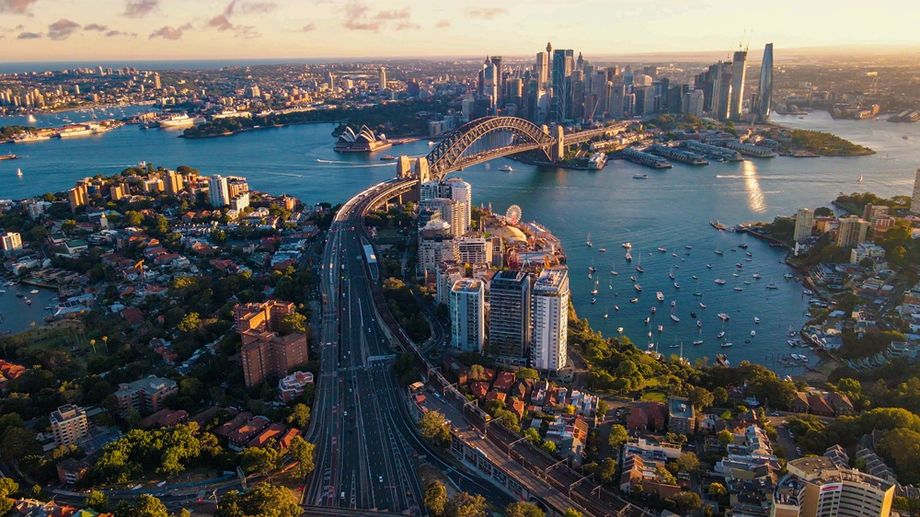 Australia eyes Asia’s incentive potentials, while North America and the UK/Europe remain principal sources of association planners.
Major event synergies
As Australia experiences a “a once-in-a lifetime streak of major events”, the destination also has a strategy to align business events with major events.
“Australia is in the middle of a spectacular ‘Green and Gold decade’ of not just sporting, but cultural and business events. This includes an unprecedented series of global events that both capitalise on the rise of sports tourism and reinforce Australia’s growing sports diplomacy strategy,” Tourism Australia said in its report.
The major event line-up includes the 2027 Men’s and Women’s Rugby World Cup, 2028 Cricket World Cup, and the 2032 Olympic and Paralympic Games. It will be underpinned by other major sporting, cultural and business events like Vivid Sydney, the Sydney Gay and Lesbian Mardi Gras, and the Australian Open and F1 Grand Prix.
“Research from previous host nations of major events demonstrates a huge surge in global interest. However, this is often temporary and local, fading fast post-event and concentrated on the host cities – to the detriment of regional and non-event areas,” Tourism Australia stated.
It sees opportunities in creating a “unified national narrative that uses events as an entry point to sell the entire Australian experience”, and in ensuring benefits flow across every state and territory.
Business events play a role in realising these opportunities, with Tourism Australia seeing an alignment of incentives and conferences with major events as a way to showcase the destination and its credentials, before, during and after the events themselves.