 With the ability to conduct businesses online, more attendees indicate that they may not attend as many B2B events as they did pre-pandemic. Photo Credit: GettyImages/Rawpixel
Business events are definitely different from the pre-pandemic era –
and it appears that attendees are partly responsible for the
transformation.
One of the biggest prevailing issues is the reluctance to attend B2B
events, with those who may have travelled to a range of events
pre-pandemic now increasingly choosing to do so far less.
And this isn’t the only shift and challenge for planners who are quickly having to adapt to this new world order.
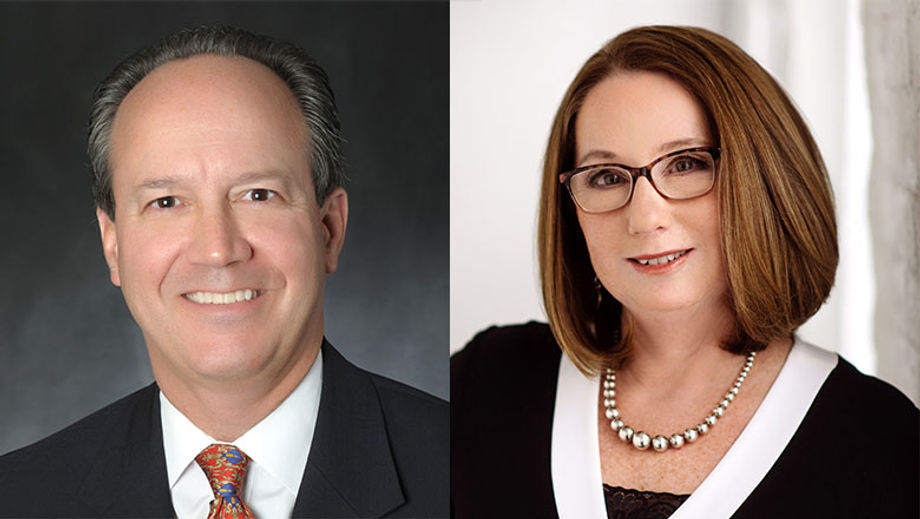 IAEE's president and CEO David DuBois, and executive VP and COO Cathy Breden.
President and CEO of the International Association of Exhibitions and
Events (IAEE), David DuBois, along with executive VP and COO, Cathy
Breden, revealed the top trends in the exhibition industry from a recent
survey to business events professionals at Malaysia Business Event Week
(MBEW) on 29 August.
Here are their top findings:
1. Attendees may not want to attend B2B events
Some 38% of event attendees surveyed say they may attend fewer B2B
events due to the ability to interact online. When asked why, 55% of
attendees said that exhibiting at an event is too expensive and there’s
not enough ROI; 29% cited Covid-19 as a factor; 22% believe that digital
channels are already meeting their needs without having to meet
face-to-face; while 21% think that one-to-one hosted buyer events are a
better fit.
“Some of them are even launching their own VIP events to bring in
their current and prospective customers at a much lesser cost than it
would be to exhibit,” Breden said.
However, DuBois pointed out that “nothing in the business events
industry can replace face-to-face", and the industry will just have to
relearn what attendees are looking for in order to bring the attendees
and exhibitors back.
2. The rise of smaller, niche events and collaboration
“You may want to consider smaller, niche events and collaborations,”
suggested DuBois, who pointed out MBEW as an example. “We have six or
seven different event collaborations that are already in place all
across the world.”
Just like how IAEE collaborated with Malaysia Convention &
Exhibition Bureau (MyCEB) by having DuBois and Breden share their
insights with business events professionals at MBEW 2022, DuBois added
that collaborations like this are becoming very commonplace.
“Competitors are even merging shows. At the end of the day, it’s all
about buying and selling in the exhibitions industry.”
This is going to be a new era of what Breden called ‘coopetition’
instead of competition as the industry works “together to produce events
and find other new ways for collaborating”.
3. The 3 Cs: Captured, created and curated content
To generate year-round engagement and reignite interest in physical
trade events, IAEE recommends creating captured content, created content
and curated content. These three Cs, according to Breden, can help to
increase the brand and reach audiences that may have been out of reach
before.
Captured content refers to releasing content during the duration of
the show like recorded education sessions, one-on-one interviews and
testimonials.
Created content refers to producing original content even in-between events like blogs, video series, infographics and podcasts.
Curated content refers to finding ways of adding influencer
marketing, appointing ambassadors or engaging trade publications to
promote the event, whether it’s in the form of articles, videos or
LinkedIn posts.
4. Develop new marketing messages
“As we continue to support this hybrid environment and offer 24/7 and
365 days of opportunities for buyers and sellers in the exhibitions and
business events industry, certainly new marketing messages are
critical,” DuBois said.
New marketing messages should contain transparent communications,
health guidelines, and training for exhibitors, he added. Transparent
communications goes hand-in-hand with what’s happening in health
guidelines as Covid-19 still hasn’t gone away, and many places around
the world still have differing safety restrictions to follow.
It’s also critical to train the exhibitors to help them prepare for
the event, considering that many of them have atttended tradeshows for a
long time or many of the staff are new and need to cut their teeth.
“The exhibitor training has to take place prior to the show many
months in advance so they know how to better maximise the ROI and
understand the demographics of the attendees you’re bringing to the
show,” DuBois explained.
5. Go green or go home
“Environment social government (ESG) is something so incredibly
important to all of us around the world,” DuBois said. “Everybody is
focusing on ESG now — to be environmentally and socially responsible, to
understand the diversity and inclusion opportunities in your own
community.”
Breden agreed that the growing net-zero movement in the industry is
certainly worthy of attention and and further exploration, alongside
trying to attain a sustainability certificate for events. Breden said as
the entire world pivots to greener ways of doing things it is obvious
that both attendees and planners want events that have stronger
sustainability objectives and outcomes.