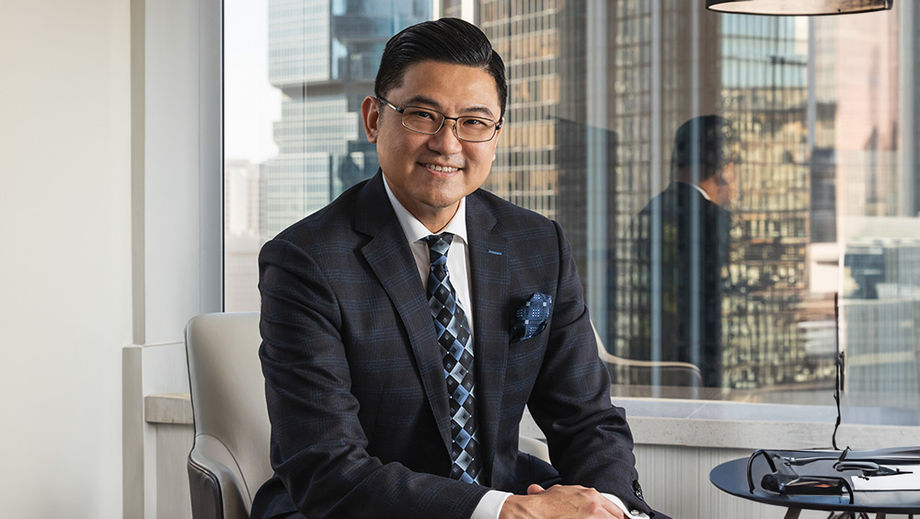
 GP Yeow, general manager of JW Marriott Hotel Hong Kong, is a key advocate of sustainability in hotel operations and green meetings.
Good food and resourcefulness never go out of style. For GP Yeow, they are the foundation of a thriving career in hospitality.
As general manager of JW Marriott Hotel Hong Kong, Yeow has turned a lifelong passion for food into a transformative force for the industry. Growing up in a Chinese resettlement town outside Kuala Lumpur, Yeow experienced Malaysia’s vibrant food culture firsthand. At 13, he helped his family and worked in the wet market, taking food home for his mother to transform into meals, which he then sold to classmates for pocket money – a foreshadow of his entrepreneurial spirit.
Rooms are the bread and butter, but F&B is the face of a hotel.
GP Yeow, general manager, JW Marriott Hotel Hong Kong
Yeow’s introduction to the world of hospitality was, coincidentally, through food. When his tour guide father, who occasionally brought back food from hotels, he was intrigued by the different flavours that he was accustomed to. Young Yeow’s curiosity deepened when his father took him to the then Kuala Lumpur Hilton, where he encountered a grand lobby, sparkling chandeliers, and buffet with a wide spread of food. That sparked off a lifelong fascination with hospitality for the Malaysian-born hotelier, who decided that “a hotel is where I wanted to be when I grew up”.
Yeow’s father suggested becoming a chef to see the world. Attending high school in Perth, Yeow worked as a part-time cook in a Chinese restaurant where he honed his kitchen skills and picked up roles as a banquet waiter and bartender. His fascination with the industry prompted him to enroll in the Blue Mountains International Hotel Management School to pursue a career in hospitality.
Crafting a career beyond the kitchen
Fast forward three decades, Yeow has carved a unique path in luxury hospitality, leveraging his culinary roots to fuel innovation. “Hospitality is so much more than cooking,” he says. “It’s about developing skills in communication, marketing, leadership, and operations.”
His hands-on experience in food and beverage (F&B) also positioned him as a champion for sustainability – a cause he’s deeply passionate about. “Luxury and sustainability can go hand in hand. Green practices are now the ultimate luxury in travel,” he explains.
Since 2023, Yeow has spearheaded an ESG committee to assess monthly and quarterly performance of each department. Under his leadership, the luxury hotel has adopted eco-friendly measures that align with local realities. For instance, rather than replacing single-use plastic bottles with glass, which aren’t readily recycled in Hong Kong, the property opts for recyclable aluminium cans. “We need to adopt and adapt to local solutions.”
Yeow also tackled waste reduction creatively. Noticing that guests often left welcome fruit baskets untouched, he and his team introduced smaller, more practical options like bowls of berries and offering guests the choice of still or sparkling water. Small changes can make a big impact, he notes, pointing out that this tweak alone saves 88 tonnes of fruit annually.
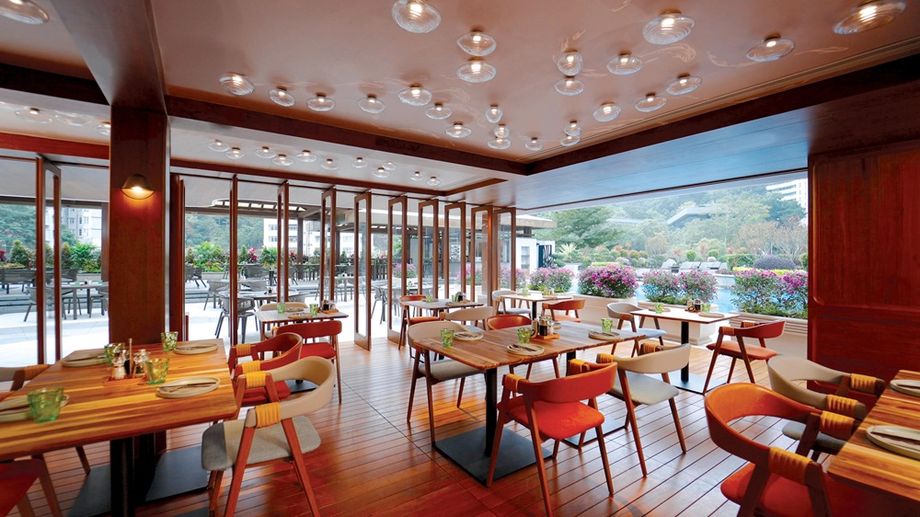 At JW Marriott Hotel Hong Kong, the alfresco Fish Bar and Pool Lounge serve a curated selection of daily fresh catch and sustainable seafood worldwide.
Green meetings, big impacts
JW Marriott Hotel Hong Kong’s sustainability efforts extend to its meetings and events. The Meet Green at JW initiative promotes sustainable gatherings, offering digital signage, screens, projectors, and QR code menus as well as LED walls in the JW Marriott Ballroom for presentations. Menus prioritise plant-based options and locally sourced ingredients, while leftover food is donated or recycled. Venues like the Executive Meeting Suites and HarbourDen leverage natural daylight to conserve energy, and guests are encouraged to use refillable containers.
“These efforts position JW Marriott Hotel Hong Kong as a leader in green events,” Yeow says, adding that the hotel has hosted prestigious events such as a large-scale conference and events for a global financial institution in 2023.
Less is more in sustainable gastronomy
For Yeow, F&B remains both a passion and a challenge. “Rooms are the bread and butter, but F&B is the face of a hotel,” he remarked, stressing how a luxury property’s reputation often rests on its culinary and service excellence. “After all, the hardest thing to please is the human palate.”
Under his guidance, the hotel prioritises the responsible sourcing to feature sustainable seafood, organic ingredients, and local produce in the menus, to incorporating live stations at buffets to cut down on food waste while the on-site JW Garden grows and provides herbs like basil and rosemary for dishes and cocktails.
But it’s the inventive use of food waste that sets the hotel apart. Yeow adopts a green operation in the hotel, which allows the chefs to execute creatively dishes by turning watermelon peels into juices, tiger prawn shells into soup bases, and pulverised fish bone into noodles served at the hotel’s Fish Bar. “Not only are these fish bone noodles help to reduce food waste, but they are also high in calcium,” he shares.
After 22 years with Marriott International, including GM stints at JW Marriott Beijing and W Hong Kong, Yeow finds “a very rewarding career” in hospitality, having met great mentors who guided him on the career path as a hotel general manager.
“I get to travel and work with different people in different locations, enjoying the beauty of each location and learning the local culture. And, of course, taste some of the best cuisine,” he says.