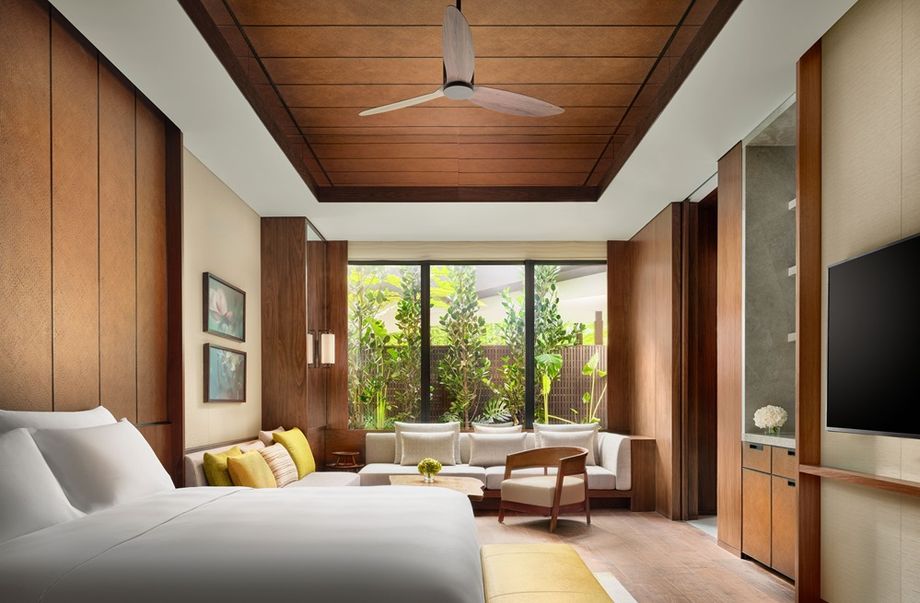
 A King Bed Premium with Garden Access suite at the nature-inspired Terrace Wing, which will be among the first spaces to reopen at Grand Hyatt Singapore. Photo Credit: Grand Hyatt Singapore
Grand Hyatt Singapore will be opening its doors on 10 July, nearly two years since it closed in September 2022 for renovations.
This multi-million-dollar facelift has resulted in a top-to-bottom overhaul of the property, adding more guestrooms and pivoting to a central focus on holistic wellness.
The 699-key luxury hotel will unveil its new look in stages, starting
with the launch of the nature-inspired Terrace Wing in July, while the
rooms and suites will reopen in stages across this and next year. The
Grand Wing will open by early 2025.
Grand Hyatt Singapore is expected to be fully open by 2025.
Grand meeting spaces for greater connections
Grand Hyatt Singapore will feature 16 venues that cover over 5,100 sqm of event space across three levels:
Located on level 1M, The Gallery takes inspiration
from modern contemporary art spaces, with a ballroom, loft kitchen,
lounge, and two Ateliers – one of which offers a private VIP holding
room – in an 826-sqm space.
Level 2 has seven unique meeting rooms over 1,500 sqm, and The Grand Salon
features advanced lighting capabilities as well as a Skyfold
retractable wall to unveil an impressive show kitchen for unique
experiences.
Level 3 is the grandest yet, with 2,786 sqm that comprise of two
thematic ballrooms, five meeting rooms, spacious foyer areas, and two
loft kitchens. The Grand Ballroom features extended digital canvas walls for a distinct visual element, while the Grand Residence brings in natural daylight and colour-changing lattice walls for lasting impressions.
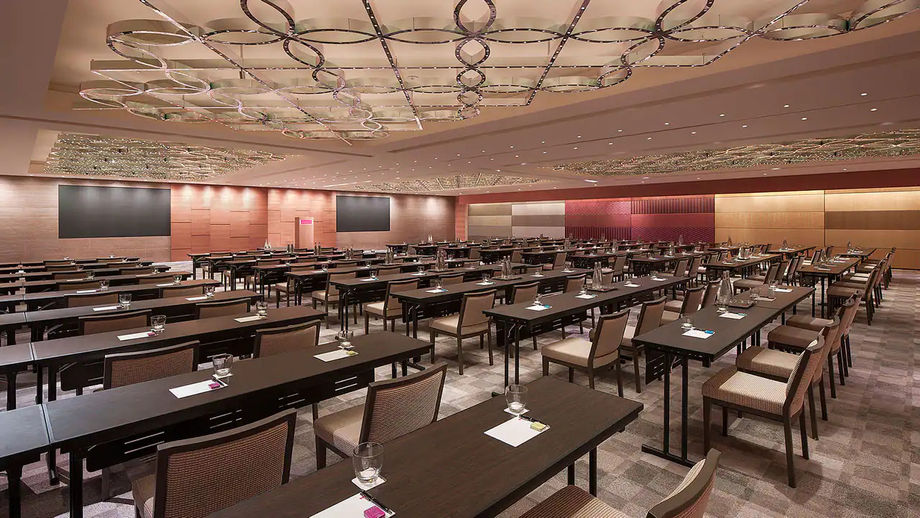 The Grand Salon on level 2 opens up to accommodate a show kitchen for immersive dining experiences. Photo Credit: Grand Hyatt Singapore
Serious about dining and sustainability
Reopening in August 2024 are Oasis, featuring all-day poolside dining
on Orchard Road with BBQ, cocktails, and live DJ music; and
StraitsKitchen for local ethnic cuisine. Pete’s Place, a beloved icon since 1973, will return with its classic Italian cuisine of familiar comforts.
Debuting in October 2024, Le Pristine Singapore presents Chef Sergio Herman's Michelin-starred contemporary cuisine with Zeeland influences, complemented by a revamped Martini Bar.
The Grand Hyatt Singapore takes its environmental commitments
seriously, as the first hotel in Singapore to work with cloud-based
tracking system Wisefins to measure the carbon footprint of every dish
offered in its restaurants. It also works with BioPak to offset up to
479kg of carbon every year.
Guests may join in on sustainability efforts too; The hotel produces
sustainable corporate gifts produced in partnership with local brands,
and has an in-house water bottling plant that provides guestrooms and
event spaces with purified water in reusable glass bottles, eliminating
plastic bottles in the hotel.
The kitchens also make sure to use sustainably sourced ingredients,
working with a local rooftop farming company as well as suppliers from
Cameron Highlands to reduce carbon footprints while ensuring quality and
freshness of produce used.
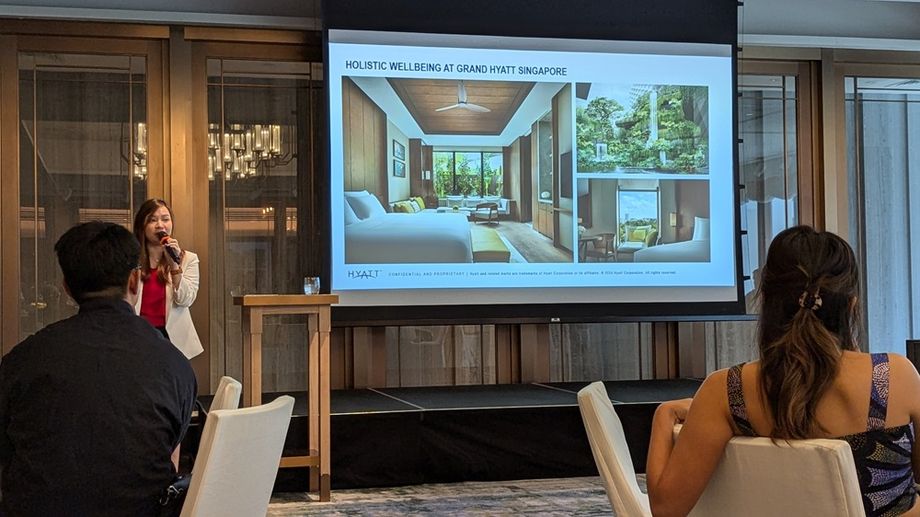 Tricia Quak, Hyatt’s senior manager in field marketing and communications (South Korea and Southeast Asia) speaking about the upcoming reopening. Photo Credit: Natalie Chew
Wellness in mind
The Grand Hyatt Singapore will also be introducing Thea Wong,
stepping into the new role of director of well-being – a new role
created uniquely for the hotel to make good on its commitment to
well-rounded wellbeing.
Wong’s role will be to champion the hotel’s wellbeing efforts,
creating “carefully-curated programmes that really translate from
mindfulness to wellness” for the hotel’s guests and community.
One such programme is the kintsugi workshop that Grand Hyatt
Singapore will be introducing to guests and colleagues alike, in
partnership with the Kintsugi Art Studio in Singapore.
First originating in Japan, kintsugi is the art of repairing
broken pottery by mending the areas of breakage with lacquer, commonly
dusted or mixed with powdered gold, and is seen as mindful symbolism of
embracing the flawed or imperfect.