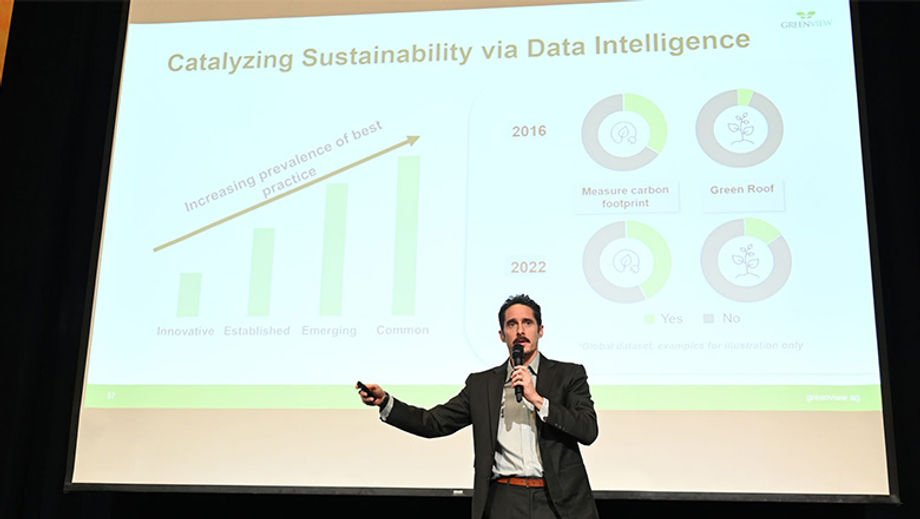
 Greenview’s Eric Ricaurte. Photo Credit: Greenview
With more companies paying attention to their scope 3 business travel
footprint, Singapore’s hotel industry is being encouraged to equip
staff with the basic principles and formula for carbon calculation.
Advocating such an approach is Greenview’s founder and CEO, Eric
Ricaurte.
As part of Singapore’s Hotel Sustainability Roadmap, hotels will need
to commence tracking emissions by 2023. One of the ways hotels have
been encouraged to do so is via the free Hotel Carbon Measurement
Industry Methodology (HCMI) tool which Greenview has developed.
Since 2022, Greenview has been collaborating with Singapore Hotel
Association (SHA) to conduct a carbon measurement workshop based from
its Hotel Carbon Measurement Industry Methodology (HCMI).
Said Ricaurte: “We will be holding this workshop again in 2023. It
has been 10 years since HCMI was first launched and since then it has
been iterated to remain the industry’s standardised method of carbon
calculation.
“In the workshop, we share the basic principles and formula to carbon
calculation, and teach industry professionals how to use the free HCMI
tool to get an estimate of their hotel’s carbon footprint per room night
and the carbon footprint of meeting spaces…these metrics from HCMI help
MICE planners confidently respond to questions in requests for
proposals regarding the footprint of their event.”
Getting started
Ricaurte said: “You can’t manage what you can’t measure, thus
planners learning how to calculate the footprint is the first step in
the decarbonisation pathway of events. To do so, meeting planners can
first explore the free HCMI tool.
Singapore hotels who are keen on GSTC certification, may be interested to know that all the strategies suggested here not only helps them meet the demand for green meetings, but will also help them meet some GSTC criteria. Thus, hotels will be supporting both targets in Singapore’s Hotel Sustainability Roadmap of obtaining sustainability certification and tracking their emissions.
Eric Ricaurte, founder and CEO of Greenview
Added Ricaurte: “Some things meeting planners may consider including
in their vendor evaluation include favouring hotels with sustainability
certifications (example: GSTC), reviewing the types of energy efficiency
initiatives hotels have implemented, and requesting that hotels provide
a HCMI report of the hotel’s footprint and the meeting footprint after
the event. With this information, meeting planners can think about
purchasing offsets for their meeting.”
Further suggestions
Beyond calculating carbon, planners can consider requesting hotels
support them in the execution of a low carbon event, suggested Ricaurte.
For example, if the meeting venue is spread out, the hotel could offer
bicycles or shuttle buses for attendees to get from place to place in a
low carbon manner. “Additionally, meeting planners may wish to minimise
food-related emissions through keeping beef off their meeting menus and
discussing food waste minimisation strategies with the hotel,” he said.