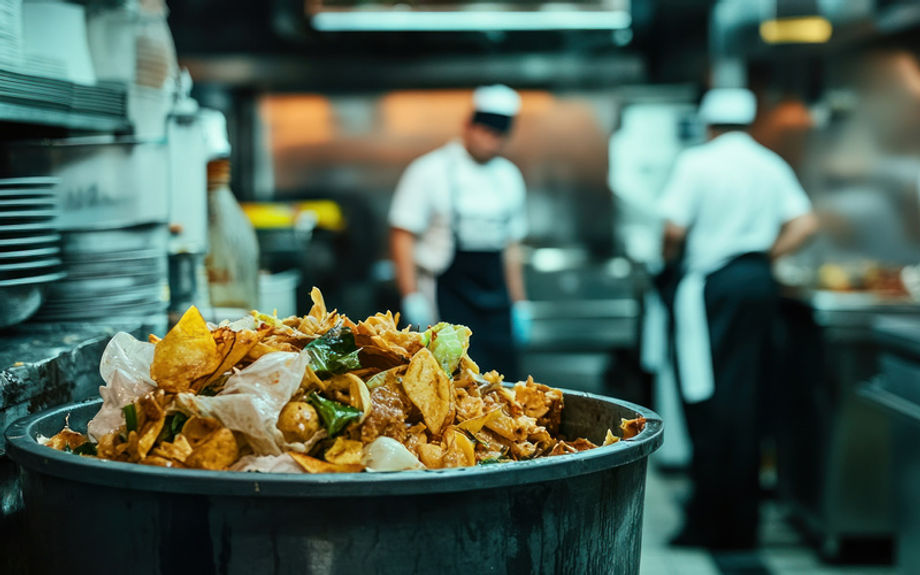
 No need to bite off more than you can chew: start with better planning, experts say. Photo Credit: Adobe Stock/Imam
Food waste is one of the most visible sustainability challenges at events. It’s also where organisers are likely to encounter red tape. ICCA has recently launched its food waste management toolkit for associations, providing an overview for how food waste is managed by venues and offering actionable steps.
Think ahead
“Each destination has their own rules and regulations and venues often have their own policies too,” said Natalie Crampton, director of agency TEC. “It’s about a mindset shift: food waste reduction must be built into planning from day one. Events that make sustainability part of the experience and communicate it tend to gain stronger engagement from delegates.”
Luther Low, regional operations director, Asia Pacific at CWT Meetings & Events, says one of the most effective ways to manage food waste is through accurate forecasting and close collaboration between planners and venues.
“By sharing attendee numbers, dietary preferences, and likely consumption patterns early on, kitchens can prepare the right amount of food without compromising choice,” said Low. “Building flexibility into catering contracts – for example, allowing last-minute adjustments to orders – also helps avoid overproduction.”
Waste-conscious menus
According to Low, some venues are consolidating menus across multiple events taking place at the same property, a process often referred to as ‘ganging up’. This allows kitchens to scale production more efficiently and minimise surplus.
Others are offering live stations where food is prepared fresh, à la minute, which not only elevates the dining experience but also reduces waste compared to large buffets. While it can be difficult in the current environment to reduce menu choices due to diverse dietary requirements, organisers can consider alternatives such as self-service stations or packed lunch options.
Focusing on quality versus quantity is also important. Sanjay Seth, SVP and managing director, APAC at BCD M&E said that the agency advises customers to manage with fewer items when it comes to meeting breaks, and to focus on the quality of food being served versus multiple options.
“We also look at all vegetarian or plant-based menus on specific days of a longer event,” he said. “Involve the chef at the event venue early on to discuss your food wastage goals. This helps both define a plan and determine a better budget.”
Deal with it
Crampton adds that transporting food to donate it offsite is not always possible, due to food safety regulations.
“Where it’s not possible we look at alternative uses such as converting the food waste to animal feed or composting,” she says.
From a reporting standpoint, organisers are increasingly asking venues to provide sustainability metrics, including food waste data – as part of their post-event reporting, so they can benchmark progress over time.