 Cop30 is the 30th conference of the parties under the UN Framework Convention on Climate Change (UNFCCC), which takes place in Belém, Brazil in November 2025. Photo Credit: UN Climate Change Conferences
As COP30 brings an estimated 50,000 people to the doorstep of the Amazon in Belém, Brazil, just how sustainable is the world’s biggest sustainability event?
Waste to worth after COP30
In a city where waste accounts for 31.5% of greenhouse gas emissions and 99% of methane emissions, Belém’s first public mechanised composting system represents a significant breakthrough that will leave a legacy even after COP30.
The new facility can process up to 180 tons of organic waste per month, including the 13 tons expected to be generated daily during the 12-day summit.
The initiative is both environmental and social. Not only will the compost be primarily distributed to family farmers, waste picker cooperatives will likely be integrated into the municipal collection system, while the centre will be operated by waste pickers from the Redes Recicla Pará and Rede Central da Amazônia.
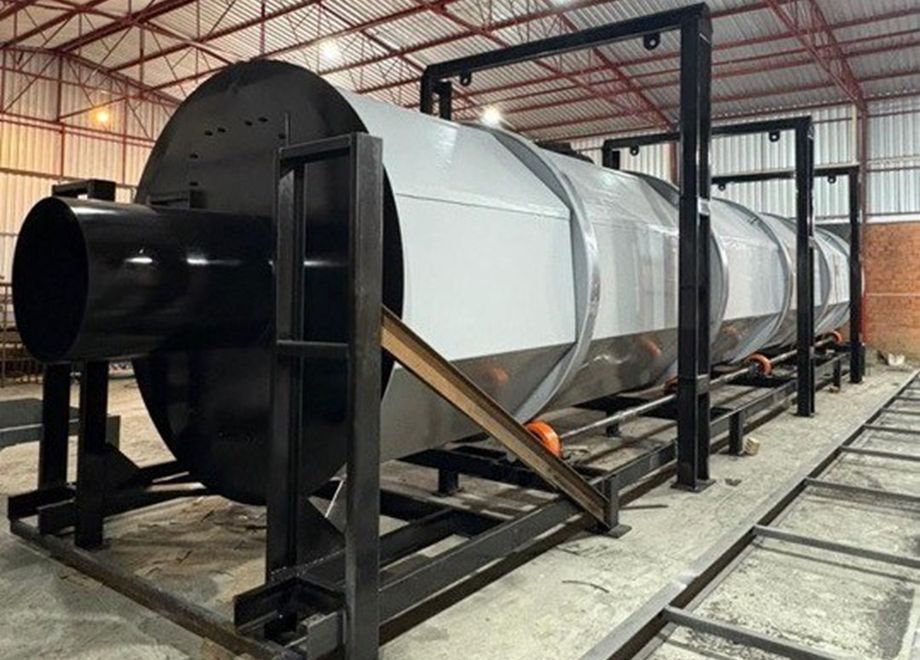 Composting unit to be installed in Belém. Photo Credit: Igapó
Power play
With energy another test of green credentials, Brazil being one of the world’s most renewable electricity grids bodes well for COP30.
As for the 80 MW of electricity contracted as backup in the event of an outage, the tender originally favoured 100% biofuel (B100), but the 160 generators will instead use S10 diesel – a blend of 75% mineral diesel, 15% transesterified biodiesel and 10% renewable co-processed raw material.
The Organization of Ibero-American States (OEI) clarifies that the decision was made after a joint technical assessment with the Federal Government and Petrobras, considering logistical feasibility, operational safety, wide availability in the Amazon, in addition to compatibility with all contracted equipment.
While not 100% biofuel, the S10 combination “ensures lower sulfur content, better energy performance, and significant reduction in emissions compared to conventional diesel, ensuring that the 160 generators installed meet the ANP's environmental criteria and the event's sustainability goals”, a COP spokesperson said.
Bus and cruise transport
For big international meetings like COP30, transport emissions have been a glaring consideration.
To help consolidate transport and minimise emissions, the State of Pará will provide 250 buses for official transportation during COP30.
In a similar way the tender initially called for power generators to operate with biofuels, measures focused on reducing emissions have been implemented for urban mobility and for the cruise ships used to accommodate participants, the COP30 spokesperson said.
Moreover, as part of the COP host agreement, the Brazil government is decreed to offset all event related emissions.
Clearing the air
BBC previously reported that a four-lane highway cutting through tens of thousands of acres of protected Amazon rainforest was built to ease traffic to the city in anticipation of the 50,000 participants arriving for COP50.
A spokesperson told M&C Asia: "The Special Secretariat for COP30, linked to the Civil House of the Presidency of the Republic of Brazil, clarifies that the construction of the Avenida Liberdade highway in Belém, Pará, is not the responsibility of the federal government and is not part of the scope of infrastructure works for COP30.”
The episode highlights an ongoing tension in climate diplomacy: the struggle to balance rapid development with environmental integrity. For many in Belém, a city built on the edge of the Amazon rainforest, that paradox is not new – it simply has a bigger audience now.