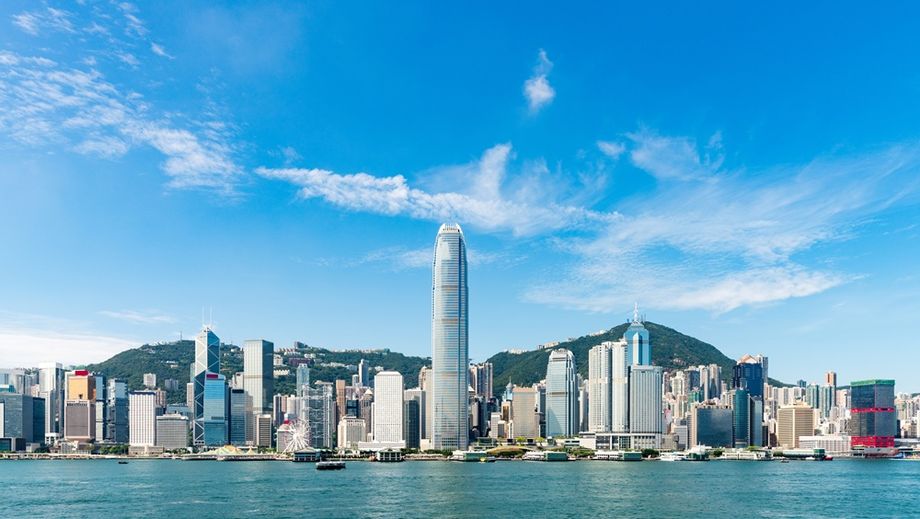
 New plan signals greater bleisure and tourism opportunities for hotels in Hong KOng. Photo Credit: AdobeStock/karsty
Hong Kong's newly unveiled Five-Year Plan, announced alongside the government's Policy Address on 16 September, is being read by the hotel sector as a formal bet on MICE and high-value tourism as the city's next growth engine.
The full document – officially titled the First Five-Year Plan for Economic and Social Development of the Hong Kong Special Administrative Region (2026-2030) – sets a target for the tourism sector's value-add to grow roughly 40-50% to around HK$126 billion (US$$16.06 billion) by 2030, up from HK$86.2 billion in 2024.
For hoteliers, tourism officials and boutique operators alike, the plan reads less like a new direction than validation of strategies already underway – though each is betting on a slightly different piece of it.
At Grand Hyatt Hong Kong, which sits directly connected to the Hong Kong Convention and Exhibition Centre (HKCEC), the plan is being framed as confirmation of an existing strategy. Ann Foo, the hotel's sales and marketing executive assistant manager, says the policy “reinforces the city's position as a leading international business and events hub, creating opportunities for growth in MICE and high-value tourism.”
The hotel's recent track record backs that reading: as headquarters hotel for the Lions International Convention 2026, it secured a booking that "generated over 3,400 room nights and became one of our largest MICE successes since the pandemic."
The Hari Hong Kong is reading the same signal, but making the case that the benefit isn't limited to convention-adjacent giants.
GM Edward Snoeks says the plan “strengthens the city's position as an international business and tourism hub while enhancing connectivity with the Greater Bay Area and regional markets,” and argues his own boutique property stands to gain just as directly by “offering business travellers a boutique alternative with personalised service, convenient access to key commercial districts and the Hong Kong Convention and Exhibition Centre”.
Hong Kong's broader play
Both hotels are operating within a wider strategy set by the Hong Kong Tourism Board, whose chairman, Peter Lam, welcomed the plan by first crediting the government's backing of the sector in a press release: the HKTB is “deeply grateful to the HKSAR Government for its long-standing recognition of tourism as a key economic pillar and growth driver for Hong Kong”.
His priorities for turning policy into results centre on a packed international events calendar aimed at “further reinforcing Hong Kong's standing as the Events Capital of Asia”, alongside pushes into Muslim-friendly tourism, film and culinary tourism, and multi-destination itineraries built with regional partners.
Technology is also part of that plan. In the press release, Lam said the board “will also expand the use of artificial intelligence to enhance visitor experience on multiple fronts”, positioning AI as a visitor-facing tool rather than a back-office efficiency play.
For hotels like the Grand Hyatt and The Hari, that combination – government-backed events calendar, deeper regional connectivity, and a tourism board actively marketing Hong Kong's MICE credentials abroad – bodes well for their bleisure and boutique-business strategies respectively.