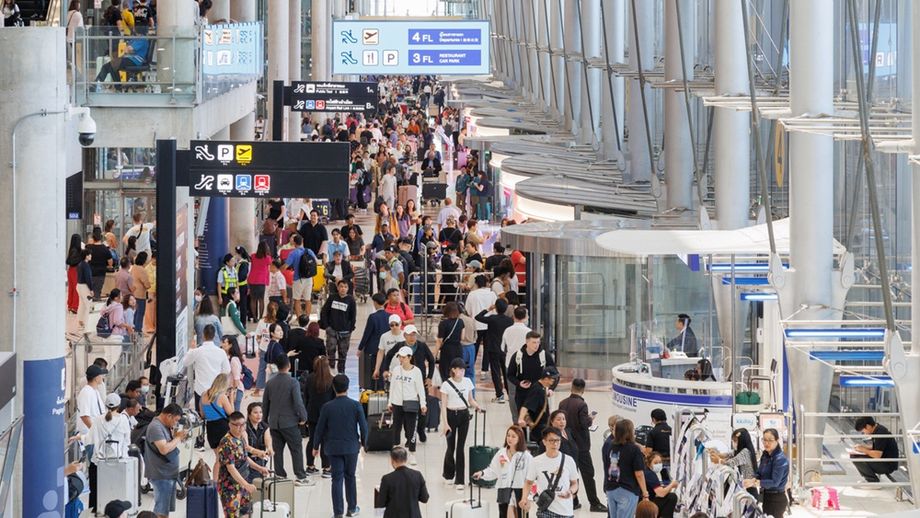
 Flight and baggage delays have been reported at Bangkok Suvarnabhumi Airport. Photo Credit: iStock/Gumpanat
For a city no stranger to seasonal flooding, Bangkok has endured an especially challenging few days. Since last week, days of continuous rains have battered the Thai capital, inundating roads across the city and impacting residents, businesses and travellers alike.
The latest flooding – triggered by a strong low-pressure system over central Thailand resulting in continuous heavy rainfall and thunderstorms – has crippled parts of Bangkok since Friday (25 September), turning major roads into waterways and grinding traffic to a near standstill.
On Saturday, the Bangkok Metropolitan Administration declared the capital a disaster-affected area after almost 300mm of rain fell within 48 hours, leaving some vehicles partially submerged and entire neighbourhoods struggling to cope.
However, rainfall has eased compared with previous days, although intermittent showers and periods of heavy rain remain possible, particularly in eastern parts of the capital.
What does this mean for travel?
The impact is probably felt most acutely in accessibility.
Due to flooded roads or residences, some workers have encountered difficulties to reach their workplaces or report for duties. Several hotels in Bangkok have arranged temporary in-house accommodation for affected staff to maintain operations.
Travellers have also encountered disruptions. Reports of lengthy waits for checked baggage at the airport have circulated, while securing taxis and ride-hailing services such as Grab has become more difficult amid transport disruptions and workforce shortages.
For independent travellers and smaller groups, industry players recommend using mass transit rail systems where possible, including BTS Skytrain, MRT Subway, SRT Red Line and Airport Rail Link, which remain fully operational.
And for those travelling around Bangkok, using the expressway and tollway where possible is recommended as these roads are currently free of charge to help ease traffic flow.
Airports remain open
Both Suvarnabhumi and Don Mueang airports in Bangkok remain operational.
While flights continued to operate throughout the weekend with some delays, Thai Airways today (29 September) announced cancellations for selected flights scheduled for 29 and 30 September.
Suvarnabhumi Airport attributed disruptions primarily to flooding-related challenges affecting ground-handling operations, which in some cases resulted in slower baggage delivery and longer-than-usual waiting times for passengers.
Airlines have also introduced flexibility measures for affected passengers. Thai Airways International is permitting one complimentary date change through Tuesday 29 September for travellers impacted by flooding in Bangkok and surrounding areas.
Meanwhile, AirAsia, Nok Air, Thai Lion Air and Thai Vietjet have rolled out flight-change and travel-credit options for passengers affected by the weather disruption between 26 and 28 September.
The Tourism Authority of Thailand has advised travellers to check flight status directly with airlines and monitor road conditions before heading to the airport, and to leave extra time for journeys to the airports.
Hotels a safe haven
Yet despite images of widespread flooding dominating news feeds, much of downtown Bangkok remains accessible.
While several districts have been hit hard, Bangkok’s commercial centre and key tourism precincts such as Silom, Sukhumvit and Ratchaprasong have largely escaped flooding and remain operational.
"At present, there is no flooding in the immediate area surrounding Hyatt Regency Bangkok Sukhumvit, and the areas around Nana, Asok, Ploenchit and Phrom Phong remain accessible," said the hotel's GM Sammy Carolus. "The hotel remains fully operational, including our restaurants, facilities, meetings and events, with guests continuing to arrive and depart as planned."
For Jeff Sutthiporn Fongmool, Bangkok-based managing director of MICE Magnet, some guests staying in heavily affected areas had been relocated to alternative accommodations elsewhere in Bangkok. However, he stressed that hotels themselves remain safe and operational.
"If guests are not in a hurry to depart, we would encourage them to stay in the hotels," Jeff said. "The hotels are safe. The challenge is simply that some roads are flooded. Guests can enjoy the facilities and treat it as a resort stay until conditions improve."
DMCs and planners keep clients informed
For Bangkok's travel and meetings sector, the priority has been communication.
"Bangkok is a large city, and the situation varies by area. While many parts of the central business district remain unaffected and businesses are operating as usual, some areas along Sukhumvit, including Thonglor and On Nut, have been affected," said Kwan Juthamas, founder and chief curator of Curated Partner, a Bangkok-based boutique travel and global venue sourcing company.
"For guests arriving in the coming days, I would recommend checking directly with their hotel or venue regarding the specific area they are travelling to, while also following the latest local updates," she added.
Jeff expects the situation will improve in the coming days as the rains ease up. "Event planners coming into Bangkok the next two days are naturally concerned, but we haven’t heard of any event cancellations. We’re keeping clients updated of what’s happening on the ground by sending regular photos and updates."
Hyatt Regency Bangkok Sukhumvit will waive cancellation charges for those guests who wish to cancel or postpone their guestroom, events and restaurant bookings between 25-29 September 2026. "So far, cancellations have been few and the majority is postponement to future weeks," said Carolus.
"We are proactively communicating with upcoming guests through pre-arrival advisories, and providing regular updates to our in-house guests and event organisers.
"We have survived many challenges in the past," Carolus added. "We will ride this ‘storm’ again."
Source: Travel Weekly Asia