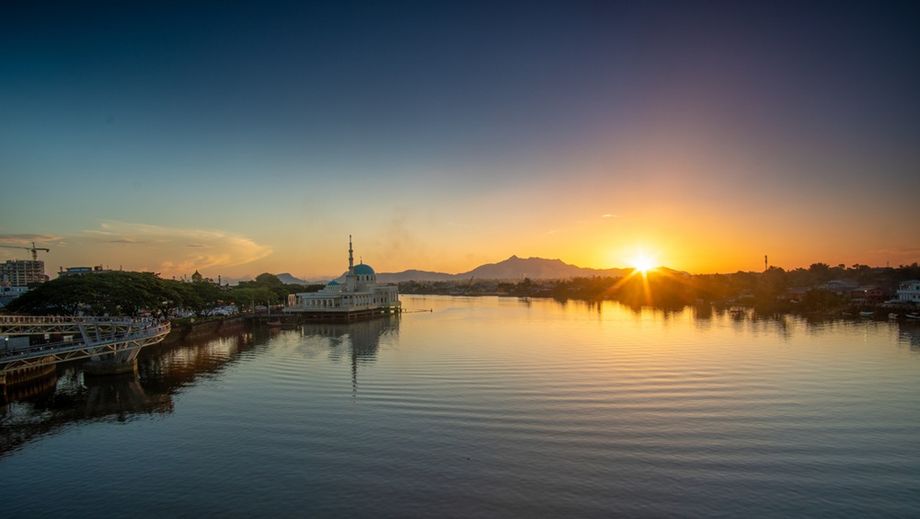
 Sarawak welcomes “another currency of progress” as its convention bureau enters its third decade. Photo Credit: iStock/hashim mahrin
“Twenty years ago, we dreamed of taking Sarawak to the world,” Business Events Sarawak (BESarawak) CEO Jason Tan Chin Foo told guests at the bureau's 20th-anniversary gala in Kuching on 23 September. “Tonight, the world is here in Sarawak.”
The numbers bear that out. Since it was established in 2006 as the Sarawak Convention Bureau, Malaysia's first convention bureau, and renamed BESarawak in 2019, the bureau has secured 1,587 business events. Dato Sri Abdul Karim Rahman Hamzah, Sarawak's Minister for Tourism, Creative Industry and Performing Arts, said these events have brought in more than 500,000 delegates and 1.9 million delegate days, and generated an estimated RM4.95 billion (US$1.21 billion) in economic impact.
BESarawak chairman Datu Hii Chang Kee, who is also Sarawak's Deputy State Secretary (Operation), described the anniversary as a coming of age. “Today, 20 years later, we are no longer finding our place. We are defining it. And now comes the responsibility to lead.”
From finding its place to setting the pace
The bureau started as an outsider in a crowded regional market. “We were coming from nowhere, so we had nothing to lose,” recalled Jill Henry, the bureau's founding CEO. She credited a board that “gave us the freedom to test even our most crazy ideas”.
A turning point, according to Mike Cannon, the bureau's managing director from 2012 to 2017, was the 55th ICCA Congress in Kuching, which drew more than 1,000 delegates from 60 countries.
The bureau's shift from counting delegates to measuring legacy gained momentum after Sarawak launched its Post Covid-19 Development Strategy (PCDS) 2030 in 2021, which gave business events a formal role in the state's development agenda.
In 2025, BESarawak launched AI.LEGACY, its Business Events Intelligent Impact Management System. Alongside it came LEGACY360, which spans LEGACY360 Education, the LEAP Summit, Kind Borneo and the Borneo Inspires Legacy Awards.
Related: The event is over. The impact isn’t. | Meetings & Conventions Asia
In October 2025, the LEAP Summit in Kuching adopted the Borneo Legacy Declaration. Its signatories commit to measuring event success through KPIs beyond tourism, and to making legacy outcomes a condition of funding for events.
Hii set out the definition plainly. “We should measure success not only by the number of delegates coming in, but also by the knowledge that stays after the event, the opportunities that come after the event, the people who grow after the event, the industry that becomes stronger after the event, and the communities that can move forward with us after every business event.”
A record run
Today, the bureau enters its third decade in its strongest form. In 2025, Sarawak secured 160 business events, 115% of its annual target of 140. Scheduled between 2025 and 2030, those events are projected to generate RM483.5 million in total economic impact.
The state also hosted 159 events during the year, up 27% year on year, and BESarawak has reported a 100% bid success rate since 2022.
Recent wins include the Asian Congress on Occupational Health 2026 and the International Council on Archives Conference 2027. The largest is the International Water Association World Water Congress and Exhibition in 2028. It is expected to bring about 10,000 delegates and will make Sarawak the first ASEAN destination to host the event.
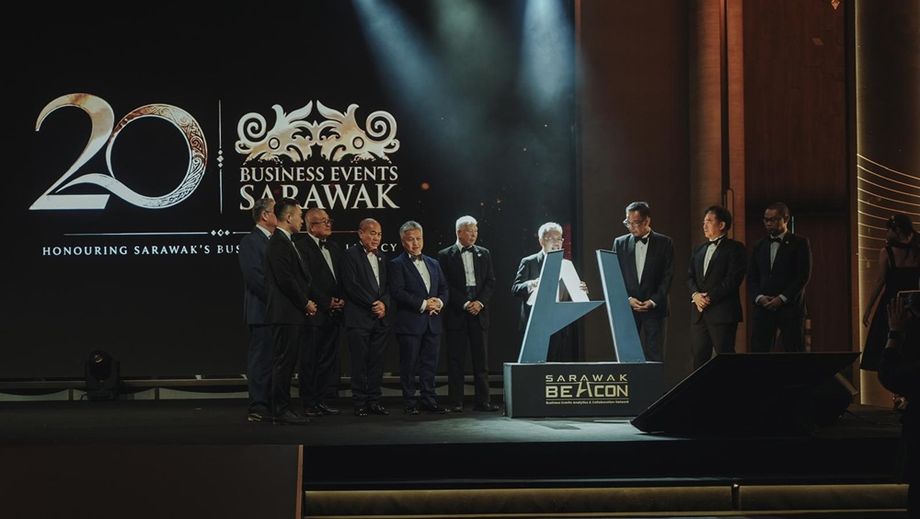 BESarawak unveiled a centralised AI-powered platform in conjunction with its 20th anniversary, with the destination recognising that its next 20 years ‘cannot be built on instinct alone’.
The road ahead
As it marked a milestone year, BESarawak also announced the launch of the Sarawak Business Events Analytics and Collaboration Network (Sarawak BEACON). BESarawak is developing the centralised industry intelligence platform with the Sarawak AI Centre (SAIC). It will draw on data covering accommodation, events, venues, transport, the supply chain and healthcare.
“While data on the industry already exists, it is fragmented," said Tan. “The opportunity now is to bring that information together so we can better understand our strengths, identify gaps and opportunities, and plan more effectively for the future.”
SAIC CEO Patrick Then said the aim was to develop BEACON into “a sovereign agentic AI platform, one that keeps Sarawak in control of its data while using AI to generate deeper intelligence and support smarter, more proactive decision-making for the industry”.
In a speech read by Sim, Sarawak Premier Datuk Patinggi Tan Sri Abang Johari Tun Openg said: “The next 20 years cannot be built on instinct alone. They must also be built on data, intelligence, collaboration and evidence.”
The state's ambitions are set out in the 13th Malaysia Plan: 720 business events between 2026 and 2030, with a projected RM2.06 billion in economic impact, and at least half delivering measurable legacy outcomes. Abang Johari said the events Sarawak pursues should increasingly match the sectors it is building, including energy, semiconductors, the digital economy and healthcare.
“If we want to grow our semiconductor, energy, or our healthcare sectors, then bringing the right international communities and experts into Sarawak can help accelerate that progress,” he said. Business events, he added, bring “another currency of progress”: knowledge, expertise, networks, innovation and investment opportunities.
Building bigger and reaching farther
Infrastructure is catching up with that ambition. In July, the RM550 million Borneo Convention Centre Kuching 2 was about six weeks ahead of schedule, with completion now expected in the first quarter of 2028. IHG's voco Kuching opened in June with 321 rooms and a 1,434 sqm ballroom seating up to 1,350. State-owned AirBorneo took over MASwings' operations on 1 January, and a hydrogen-powered Autonomous Rapid Transit system is in development.
Related: Sarawak has big ambitions for world-class event venues | Meetings & Conventions Asia
Abang Johari also called for business events to grow beyond Kuching. Miri could build on energy and tourism, Sibu on education, community and industry, and Bintulu on energy and industrial activity.
“We should not try to make every city the same," he said. "Instead, we should identify what each city can be known for, build the right capability around those strengths, and connect the right events with the right destination.”
For Hii, the next chapter depends less on buildings than on people. “Our priorities are clear. We will innovate to stay ahead. We will create an impact that lasts. And above all, we will invest in people," he said. "Industries don't grow because of organisations. Industries grow because of people.”
Tan ended the evening on a note of ambition: “Never underestimate how far a dream can travel.”