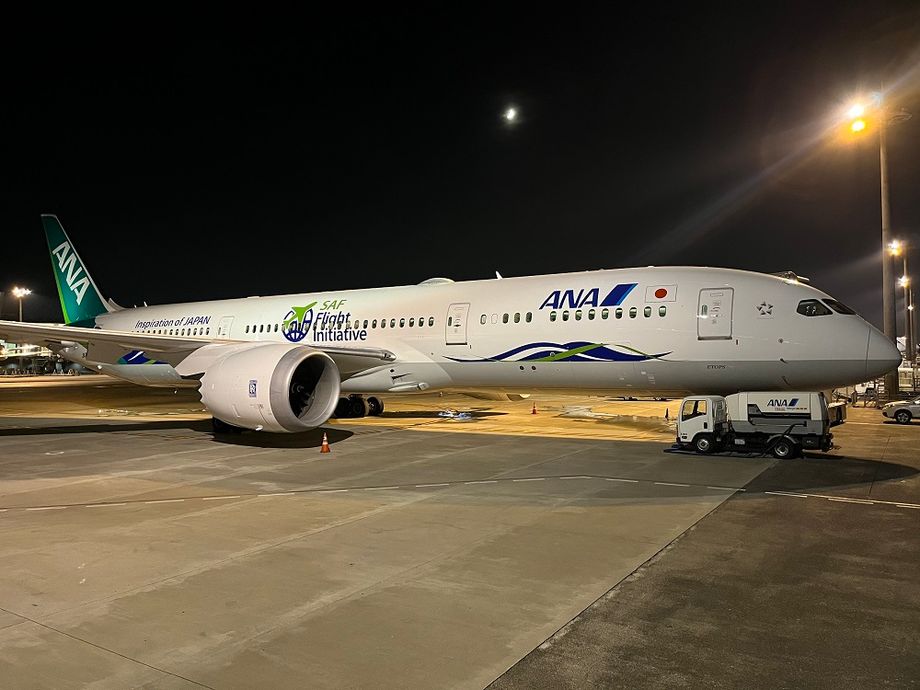
 ANA Green Jet features livery with a special riblet texture that will decrease drag and CO2 emissions. Photo Credit: Adobe/petrovalexey
All Nippon Airways (ANA) has embarked on a green mission with its
special aircraft ANA Green Jet, which has been developed to raise
awareness and promote sustainable practices, and reduce CO2 emissions.
Two ANA Green Jet aircraft have been designed with artistic livery
featuring ANA Future Promise (AFP) initiative, which started in 2021, to
integrate environmental, social responsibility and governance (ESG)
components.
“Our goal is to create a more sustainable society while helping our
local communities and enhancing corporate value. We have dedicated this
aircraft to help promote these efforts,” said ANA President and CEO
Shinichi Inoue.
He added that ANA is working hard to create a safe, efficient and
sustainable operation by utilising current technology advancements and
investing in new solutions.
One aircraft entered service between Tokyo Haneda and San Francisco
on 5 October while the other would operate domestic routes starting
November.
According to ANA, a special material developed by Nikon Corporation,
which has a “shark skin effect” together with a riblet texture is
featured on the aircrafts.
The airline would study the “decrease in air resistance and CO2
emission reduction” of the aircraft, as well as the material's
durability and technology.
Other attributes of the aircraft include vegan leather headrest covers manufactured by Toray Industries Inc and appcycle Inc.
The headrest consists of 100% plant-based Polyethylene terephthalate
(PET2), a recyclable material, and the residue of juice made from apples
grown in Aomori Prefecture.
ANA has also launched a resource recycling scheme with Sojitz Pla-Net
Corporation, the first of its kind in Japan's transportation industry,
where used plastic films from cargo would be recycled and reproduced
into plastic products for the group.
Moving forward, ANA plans to develop upcycled products using aircraft
parts and uniforms, as well as encourage customer participation in the
programme.
Source: Travel Weekly Asia