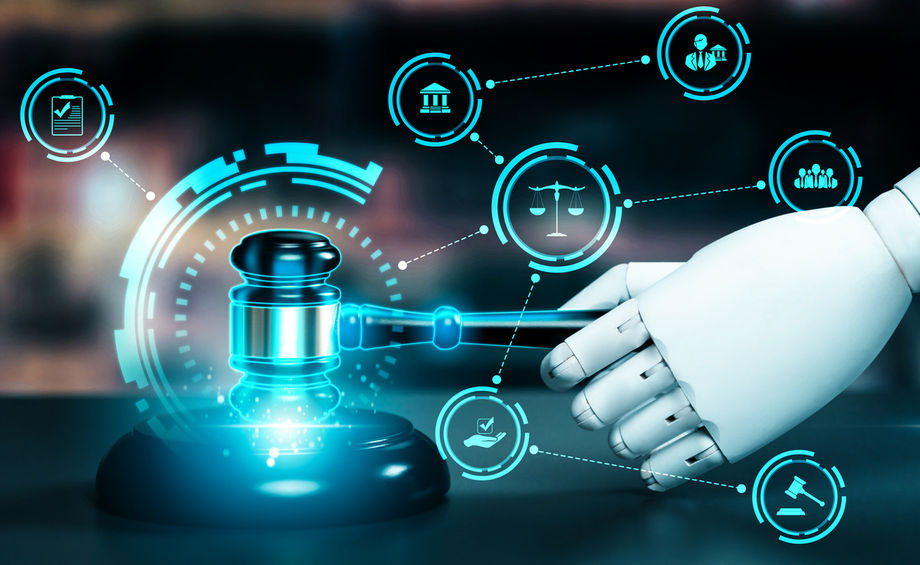
 Making a judgement call: AI is great for ideation but planners will always need to be involved in order to check-in and cross-check processes. Photo Credit: Adobe stock/Blue Planet Studio
How to evaluate technology, incorporate AI and improve the use of
data were some experiences shared by event planners during a recent
Cvent webinar in partnership with the Financial and Insurance Conference
Professionals.
Participants learnt how to leverage technology to deliver impactful
events, with a focus on the financial services and investment sectors.
Contributors included Stacey Sheppard, senior manager, Industry
Solutions at Cvent, Lisa Biene, event technologist, Global Event
Operations at MetLife, and Elyse Dawson, CMP senior manager, Corporate
Events and Conference Center at Invesco.
Time to consolidate. Sheppard highlighted how
planners have adopted a wealth of digital capabilities over the past few
years and that now is the time to consolidate those technologies to
deliver a better user experience to employees, investors, and customers.
“We’re seeing more connected event programmes that incorporate digital
technology and a lot of solutions may have been adopted,” she said. “A
growing trend is the idea of technology consolidation.”
Do more with less. With many planners now reporting
that they are working with limited budgets, it is time to get creative
and such thinking applies to technology too, especially for in-house
solutions. They recommended exhausting these options before bringing in
technology from outside. “It’s about finding a great balance between
stakeholders, the best way that they receive information, the metrics
that you're getting out of these different (technology) methods and
ultimately price sometimes as well,” said Dawson. “Can we afford to
onboard another technology platform and what are we getting from it? Is
it going to improve our processes? Is it going to save us money down the
line and get us more exposure to new clients?”
Data visualisation is key. Being able to see all of
the event information in different ways is critical to the success of an
event and the technology that underpins it. As Dawson pointed out, the
technology planners use could deliver this data in the form of a pie
chart, timeline, roadmap or a dashboard. “It's all about metrics and
benchmarking, in comparison to our competitors and to ourselves,” she
said. “Year over year, where are we - are we right on par with the
number of events or are we doing more? When people have access to the
information sooner, they are allowed more autonomy in how they want to
take that information and what they want to do with it.”
The jury’s still out on AI. Are event professionals
going to be able to use AI to make things easier and more efficient? The
panel had no definite answer but advised planners to take the time to
really look at what they are doing with regards to AI and whether it
makes sense and is the right step for the team. “It’s great for ideation
and coming up with a starting point,” said Dawson. “I think humans
will always need to be involved in order to check in and cross check
these things and make sure that we're not doing something weird because
AI told us to.”
Incorporate technology into sustainability.
MetLife’s Biene reflected on how planners could benefit from technology
that can help them to track or gamify sustainability and increase
attendee participation and interest in such initiatives. “There are
already apps out there that track water consumption or measure your
carbon footprint but we're still working on ways to incorporate that
into the event experience itself,” she said.
Use existing software to fulfil an additional purpose.
Biene outlined how on arrival at an event, a check-in app was used
which then enabled people to select gifts at a gifting kiosk. A
‘checkout’ question was built into the app containing each gift option
which allowed Biene’s team to know who had received their gift already
and who had not. She added, “And we could also look at what was most or
least popular."