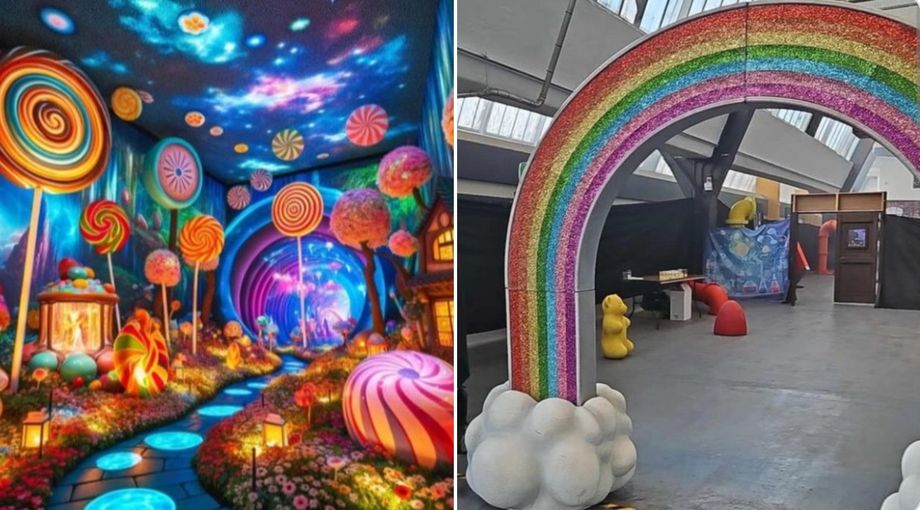
 Stark contrast between AI generated images and event reality. Photo Credit: Chris Alsikkan
The Glasgow Willy Wonka experience made headlines and brought much
laughter to people all over the country last week – but not in the way
the event organisers had hoped.
Participants attending Willy's Chocolate Experience in Glasgow were
promised “a universe where confectionary (sic) dreams are brought to
life” and “a journey filled with delicious treats, enchanting
adventures, and moments worth capturing”.
What they got was an experience so bad that they called the police.
Attendees found themselves in a barely-decorated warehouse, surrounded
by a scattering of props and a small bouncy castle. The actor playing
Wonka has since said he was given a 15-page script the night before
opening consisting of AI-generated gibberish.
The Oompa Loompas looked distraught. A made-up villain, The Unknown,
lurked menacingly. Those delicious treats that were promised? They
turned out to be a quarter cup of lemonade and two jelly beans per
child.
Considering organisers, the House of Illuminati, were charging up to
£35 (US$45) a ticket for an event that left children and adults alike
distraught, it is no wonder the police were called. It sounds like pure
nightmare fuel. After an immediate and angry response from the initial
batch of attendees, organisers pulled the plug on the event just hours
after opening.
That did not prevent social media having an absolute field day,
amplifying the sheer ludicrousness and awfulness of the entire event.
The warning signs were there. The event website looks slick enough at
first glance, but closer inspection reveals AI’s chocolatey
fingerprints. After all, what else but AI would come up with such
nonsense as “Cartchy tuns. Exarserdray lollipops, a pasadise of sweet
teats”?
The full script also appears to have been leaked online, and again,
it is full of standard AI giveaways. For a start, it includes much that
is simply impossible and untrue. One particularly memorable section has
the actor playing Willy catching a bubble, which then “gently pops,
releasing a small, twinkling light that ascends into the rafters,
leaving the audience in awe”. The script gives no indication of how this
effect was to be achieved. Clearly, AI believes in magic.
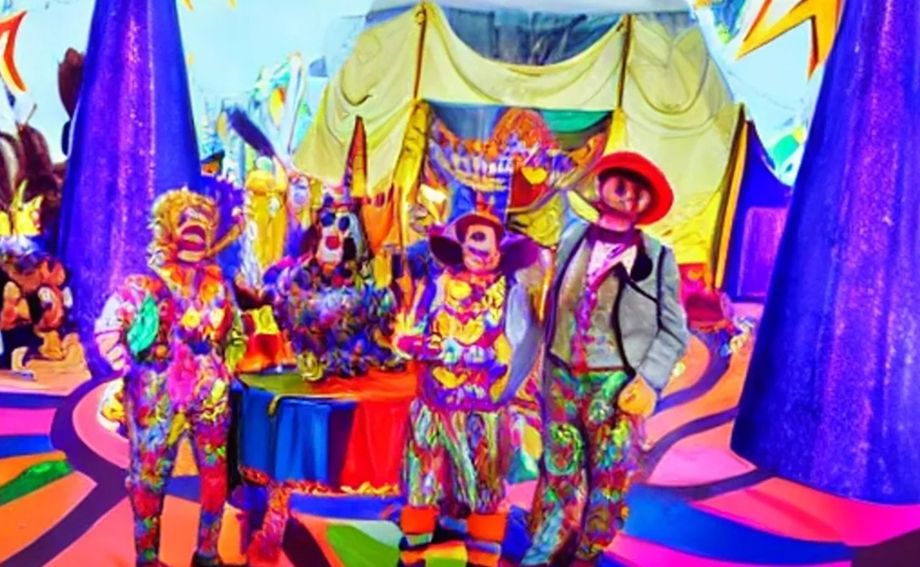 Image generated by AI. Photo Credit: M&IT
It is just so easy to use AI to create an event that people want to
go to – and are willing to part with their hard-earned cash to attend.
In this case, attendees got their money back after reality spectacularly
failed to meet expectations; the sheer detachment from reality is
something that is impossible to ignore.
It is incredibly easy to make something, be it words, images, video
or audio, using AI. The weird picture above? That is not an image from
the event: I made it, and it took me less than 60 seconds. Imagine what I
could have done if I had spent 60 minutes on it.
AI undoubtedly has its place in our sector, it is a powerful tool
that we can and should explore. But unless there is some kind of
regulation, we are only going to see more and more of these stories pop
up.
Source: M&IT