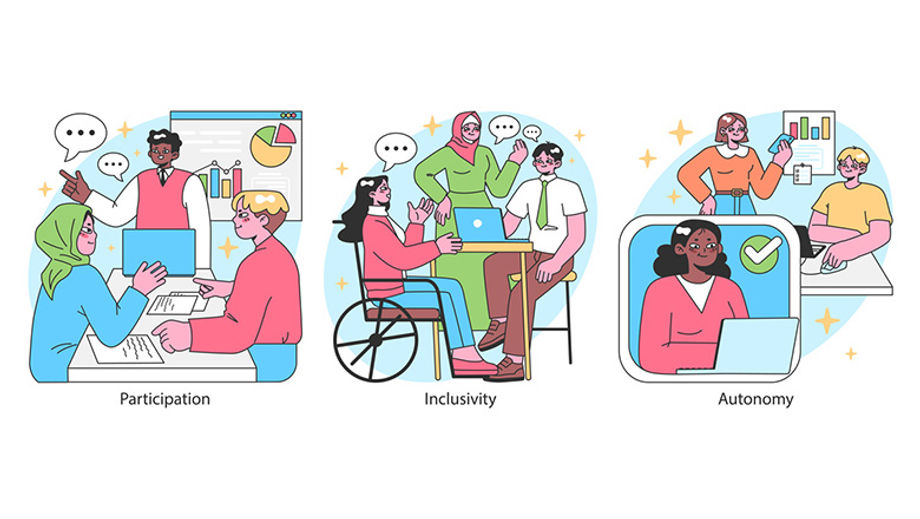
 A great need: prioritising the people element of experiences at events. Photo Credit: Adobe stock/inspiring.team
The events industry is making inroads into addressing the
environmental impact of travel, but when it comes to prioritising the
people element of experiences at events, much work still needs to be
done, according to Rose Griffiths, event producer at emc3.
If one takes a little extra time to plan for the comfort and
inclusion of different delegate requirements before an event, this not
only helps those with additional needs, it also enhances the overall
satisfaction and retention of the wider audience.
She shares the dos and don’ts of creating accessible experiences.
Venues
· Provide attendees with detailed venue information pre-event
· Ensure that access routes and accessibility infrastructure
(including bathrooms, quiet space and prayer rooms) are included
· Provide in-depth training. Ensure your team understands the
venue layout, accessibility features and points of contact for
additional needs
· Ensure the venue has good transport links. For eg: taxi company catering for wheelchair users.
Marketing and communications
· Test your event website and registration pages. Ensure they are accessible to assistive tech before pushing events live
· Keep accessibility information at the top of your event page.
Too often, it gets hidden away. Make sure it is easy to access in a
matter of seconds
· Keep graphics simple and be mindful of adding wording into the graphic without adding it in a text format
· Use one content format and allow various ways of engagement (video, downloads, PDFs, images)
· Collect accessibility accommodations from the audience and
provide pre-event content, and early access for familiarisation.
F&B
· Offer a creative non-alcoholic drink menu. Think beyond fizzy pop and orange juice and get creative
· Clearly label food. Provide as much information as possible to allow delegates to make informed choices
· Consider variable height displays for food to include wheelchair users
· Provide seating, especially around cocktails.
Event experience
· Carefully plan your content and agenda. Provide a range of session types and lengths, adding frequent breaks
· Ensure there are quiet spaces. These areas should be laptop-free zones and be staffed to ensure safety
· Provide accessibility-specific activities to ensure all activities are adapted to a diverse audience.
Source: M&IT