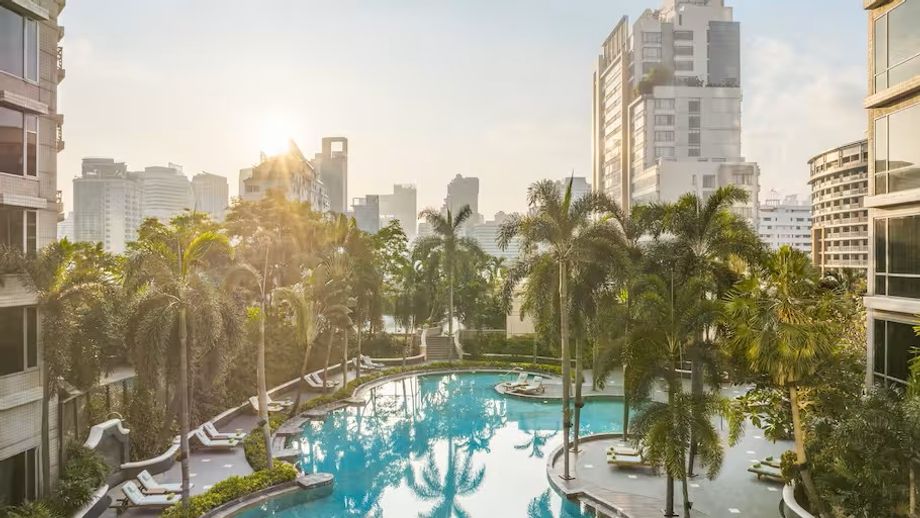
 Conrad Bangkok implements Hilton's Travel with Purpose ESG strategy to create sustainable events in Bangkok.
With 1,893 square metres of event space spread across 22 meeting
rooms, a ballroom that can hold up to 1,200 people, and a prime location
in the heart of Wireless Road, it's easy to understand why Conrad
Bangkok is among the city's preferred venues for MICE events.
As planners and delegates become more aware of sustainable travel,
they are looking for more than just a venue for events, points out Tim
Sainsbury, general manager of Conrad Bangkok, which has been proactive in
implementing the Hilton Hotels and Resorts' Travel with Purpose ESG
strategy.
Responding to the call for sustainability
Citing a specific example of an inquiry from a firm in the US that requested a sustainable event, Sainsbury mentioned that
Conrad Bangkok offered meal and break menus made from zero-waste
ingredients sourced entirely locally, including from the hotel's garden
terrace. The hotel also reduces printing with the use of QR codes, like
the directories and menus printed on a wooden die.
Conrad Bangkok has also developed its own activities suitable for
incentive or team-building groups. Guests can make traditional elephant
dolls that benefit a community outside Chiang Mai or make soap from
discarded bars that are recycled and then donated to communities in
need. In this way, the hotel can produce up to 30kg of soap a month.
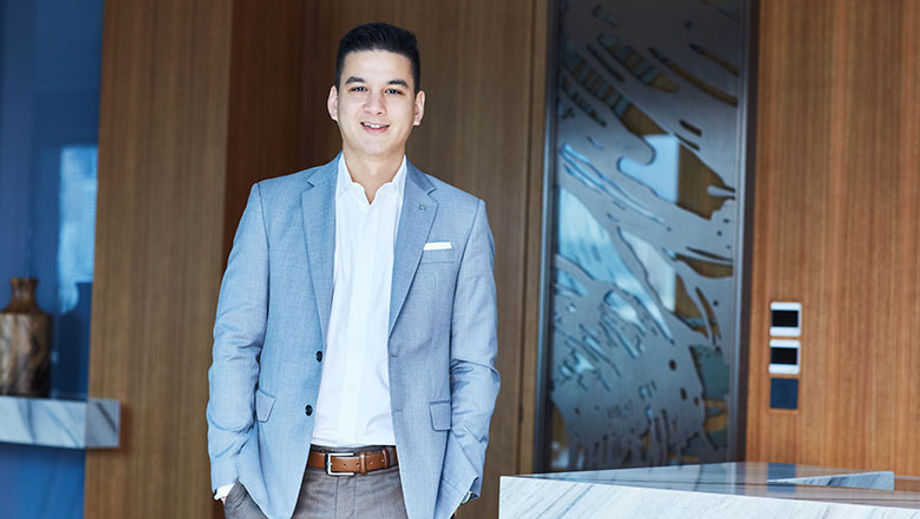 Conrad Bangkok takes a holistic approach to events planning, according to general manager Tim Sainsbury
In response to the growing demand for community-based activities, the
hotel has even created an off-site tour to Bang Krachao, known as the
known as the green lung of Bangkok. The tour is particularly popular as a
group activity, where participants can bike through the canals, meet
with local artisans and finish with a dinner cooked by local families
using locally-grown ingredients.
Bringing all these elements together is an approach that Sainsbury
describes as holistic. And it’s not limited to his hotel. “Whatever we
do here, we can scale up [across Hilton’s 12 properties in Thailand],”
he says.
Calculating impacts from events
The most effective tool for explaining the hotel's positive impact is
Hilton's proprietary Lightstay Meeting Calculator. The calculator uses
data that has been consistently refined and updated since 2009, now
encompassing every Hilton property worldwide.
The calculator takes into account various parameters such as the
number of participants, the meals they order, the length of their stay,
and the activities they participate in, to determine the environmental
impact of a specific event. Once energy and water consumption and waste
production are taken into account, Hilton collaborates with NGO South
Pole to offset the carbon footprint of the event in reforestation and
water management projects around the world.
The calculator is updated monthly based on changes made to the hotel.
As event lead times have shortened to just one to four months, compared
to an average of six to nine months before the Covid-19 pandemic,
organisers can be assured that they have the most accurate data
available. According to Sainsbury, the majority of room bookings at
Conrad Bangkok are made within 30 days of the stay.
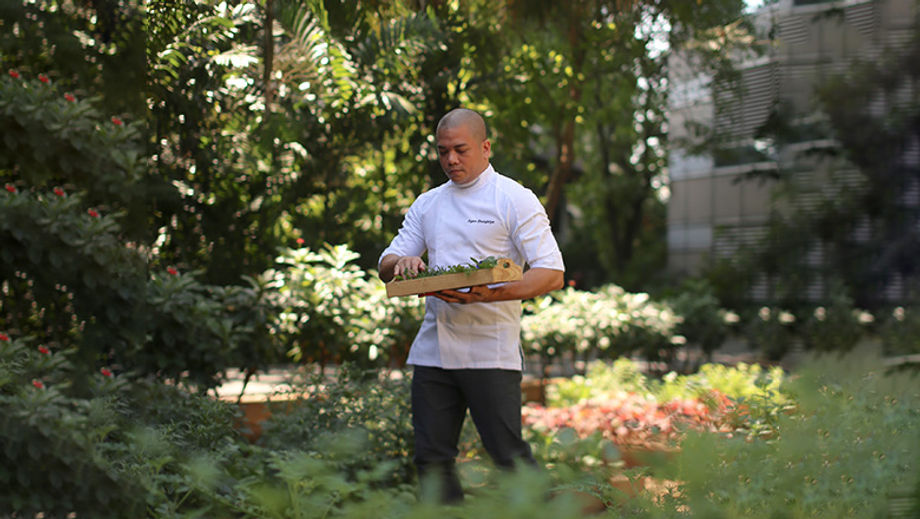 Conrad Bangkok boasts a rooftop garden of various herbs and vegetables.
While the calculator allows guests to hold low-impact events, the
hotel can also track its progress and pinpoint areas that need
improvement. By Hilton's own calculations according to its 2021 numbers, the group recorded a 70% reduction in landfilled waste per square metre and a 49% reduction in CO2 emissions intensity per square metre from the 2008 baseline.
"The calculator has so much pooled information from properties; it's
almost like a traffic light system: green, amber, red. If you miss out
on something, you get a call," says Sainsbury. "You can drill down to
see what's performing above or below average."
At Conrad Bangkok, the improvements can range from installing LED
lighting in all meeting rooms and temperature control activated by
motion sensors to upgrading water pumps and walk-in chillers that are
both more energy-efficient and of adaptable capacity. Large units no
longer need to run when they are empty.
"With a property of our age, where we're about to hit 20, the
efficiency levels are just not the same," says Sainsbury, referring to
the hotel's original equipment. "So upgrades can make a significant
difference."