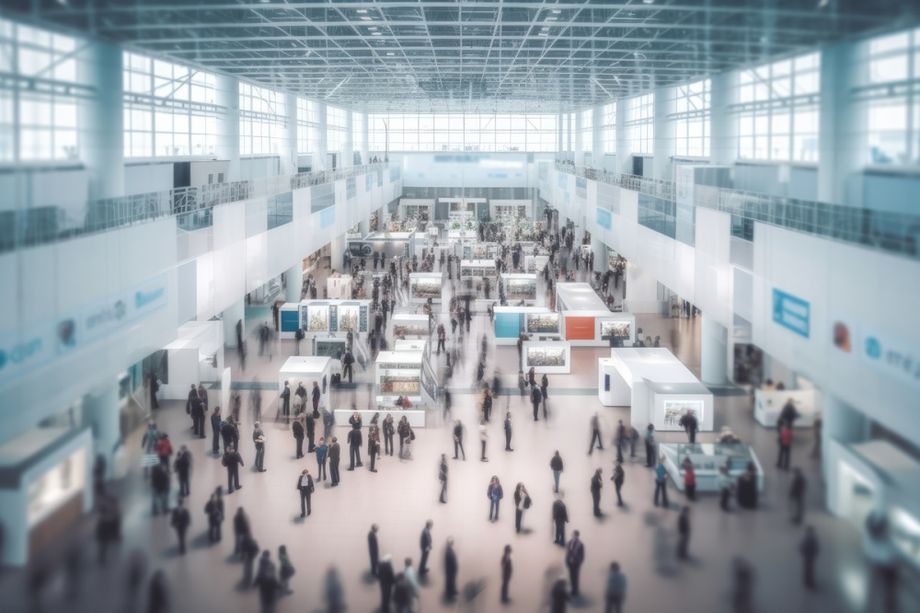
 Exhibitions: clients now want quicker ROI with solid data to make decisions. Photo Credit: Adobe stock/MVProductions
Exhibition organisers share their observations on the latest trends and discussions in their circles.
Besides heeding the call to being part of the solution to the climate
crisis, they note that effective networking at exhibitions is on the
rise, and companies are now sending fewer employees to shows and expect
quality leads.
Seizing opportunities with collaboration
“While there is an understanding that sustainability plays a key role
in the growth and revival of the industry, we need to seize
opportunities to collaborate internationally, regionally and locally
between stakeholders - countries/cities, venues, organisers and
suppliers,” said Kai Hattendorf, managing director and CEO at UFI, the
global association of the exhibition industry. “Otherwise exhibitions’
very own ‘licence to operate’ will be under threat. In most markets and
with many shows, there is a need to speed up carbon emission
reductions.”
Quality over quantity
Hattendorf added that MICE events also seeing a global trend of
‘quality over quantity’ – companies are sending fewer people to MICE
events, but these delegates have all the decision-making and transaction
power.
“Event features like matchmaking and lead generation are becoming
more central. There is also a growing demand for real-time data during
shows to empower exhibitors to drive traffic to their booths,” he said,
Sustainable stands and support for locals
Natalie Crampton, director of Dubai-based TEC, said that ensuring
stand builds are sustainable and of the right materials and focusing on
how organisers can support local businesses are key. Some examples of
support can be in F&B through local homegrown businesses or
giveaways sourced from local charities or start-ups.
Focus on guest needs
She has also noted a greater focus on guests’ needs - whether this be
guest-driven content, more research pre-event into what and who guests
want to engage with, and driving such content throughout the event.
“It’s about letting the attendees shape the agenda and content (at
exhibitions), using data and new technology to streamline the process
and create a personalised guest experiences. Post-event, we’re seeing
conversations continuing too – not just between the brand and the
attendees but with a big focus on facilitating peer-to-peer networking.
Speakers as brand ambassadors
Crampton adds that speakers at exhibitions are also increasingly
being seen as brand ambassadors, providing high quality social/LinkedIn
coverage during the event.
Quicker ROI with solid data
“Clients are getting very picky about the footfall at exhibitions –
more than ever they want to ensure they are meeting the right people and
then having systems/processes in place to be able to show results to
their stakeholders,” she says.
CEIR (the Center for Exhibition Industry Research), said exhibition
organisers are leveraging data and predictive analytics on their
attendees and exhibitors to rebuild their contact and prospect lists.
“They are also creating strong content strategies for use in their
omnichannel efforts to keep engagement going year-round, and journey
mapping to deliver a better customer experience,” said Cathy Breden, CEO
at CEIR. “Organisers who are committed to embracing innovation and
engaging in new activities have a higher probability of meeting or
exceeding 2019 metrics.”
New formats
Breden said that CEIR has data from a recent survey showing that
corporate marketers are entering the B2C market more so than in the
past, as part of their omnichannel strategy.
Hattendorf added that future exhibitions will be a blend of content,
branding, matching, and social experiences on and around the show floor.
There will be many show floors – across regions, around the world – and
a blend of big and small exhibitions, serving more specific segments of
a global industry audience.