 Event planners can tap into the power of neuroaesthetics and venue design to promote attendee well-being and facilitate networking activities. Photo Credit: Adobe Stock/WS Studio 1985 (generated with AI)
Venues such as hotel lobbies, meeting spaces and guest rooms can help
create positive effects on people’s wellbeing and on local communities,
through the intentional use of colour and material choices.
These were some of the findings from a recent webinar looking at the
relation of neuroaesthetics to hospitality, hosted by Design Hotels
together with neuroaesthetics experts Kinda Studios. As a branch of
neuroscience, neuroaesthetics explores the measurable impact of
aesthetics, culture and environments on our brains and bodies. It looks
at how these moments shape our emotions, decision-making, memory,
language and consciousness.
By applying these principles, event planners could use the design,
shape or colour of a venue to promote well-being among groups and
facilitate networking. Some examples of venues and hotels suited to
groups that are adopting these techniques are featured in a Kinda
Studios report.
These include the red velvet-covered Silencio nightclub in New York,
which Kinda Studios described as having “a cinematic and sultry
atmosphere with glowing neon lights and a gold-lined bar”, and the Ion
Adventure Hotel in Iceland, which features a viewing platform for the
Northern Lights allowing guests to get closer to nature and feel more
connected.
The webinar also touched on how physiological data can provide
valuable insights into hotel guests' emotional states and preferences.
By understanding how the brain and body respond to various design
elements, spaces can be used to promote connection, self-awareness and
overall well-being.
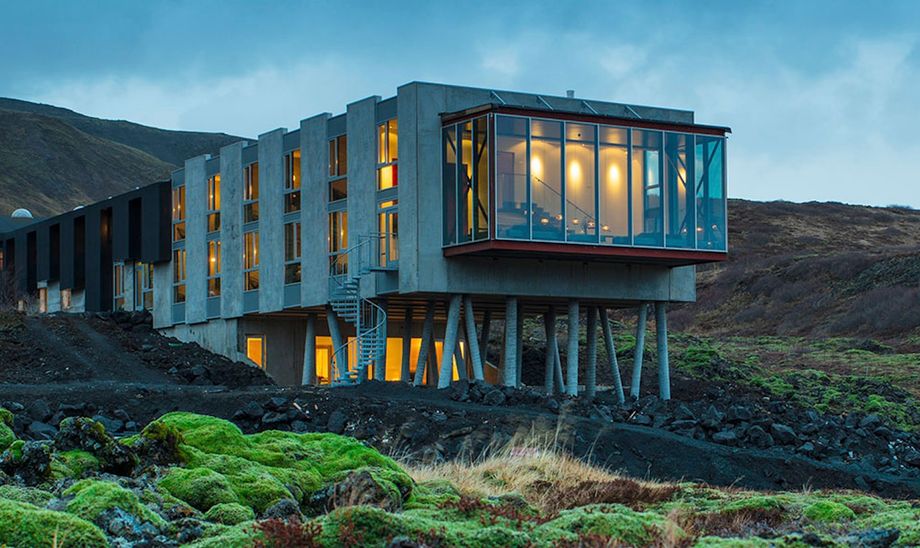 The Ion Adventure Hotel in Iceland features a viewing platform to enable guests to get closer and feel more connected to nature. Photo Credit: Ion Adventure Hotel
Intentional design with impact
Katherine Templar-Lewis, co-founder of Kinda Studios, said
neuroaesthetics is an invitation to elevate our experiential perception
of the world.
“It won’t just help us elevate design but also create more impact on
the level of the individual and the level of society itself,” she said.
“We now have the power to design our spaces with intention.”
She added that this presents an opportunity for [hospitality] brands
to foster wellbeing in a far greater way than previously. Hotels, for
example, could create spaces where guests can sit and interact and
experience ‘mental travel for your own curiosity and for your own
discovery.’ Features could include a new media wall, an installation or
artwork in the lobby, in meeting spaces or in restaurants. Kinda
Studios, for example, has created an immersive audiovisual breathing
experience, where participants breathe in time with the artwork. Backed
by science, it can help to reduce anxiety.
“Users can sit and watch this in a cinematic environment in their
hotel room, or in a pod in a hotel lobby or in any waiting area,” said
Robyn Landau, Kinda Studios co-founder. “The applications for its use
are endless, and it can help energise people or calm them down. It’s a
really good way for people to reset and rebalance on their own in their
rooms.”
Landau added that such an immersive experience not only helps people
transform their own individual self, but it also works on a collective
transformation and collective bonding level, because people’s heart
rates will begin to match each other.
Creating multi-sensory spaces
Hotels can also benefit from creating multi-sensory spaces, where sight, sound and smell combine.
“Scent can actually drive behaviour - [studies have shown that] if
somebody detects a citrus smell, because it’s associated with
cleanliness, they want their environment to be more coherent and mapped
out,” said Landau.
With regards to further ways design can impact on wellbeing and
connections, Kinda Studios outlined how buildings can use playful
elements, such as curved furniture. This curvature, it said, is
something that the human eye is naturally drawn to, creating a sense of
openness and invitation.
“It makes us more expansive and encourages us to go towards things as
opposed to avoiding them, and in turn makes us feel safe and calm,”
said Landau.