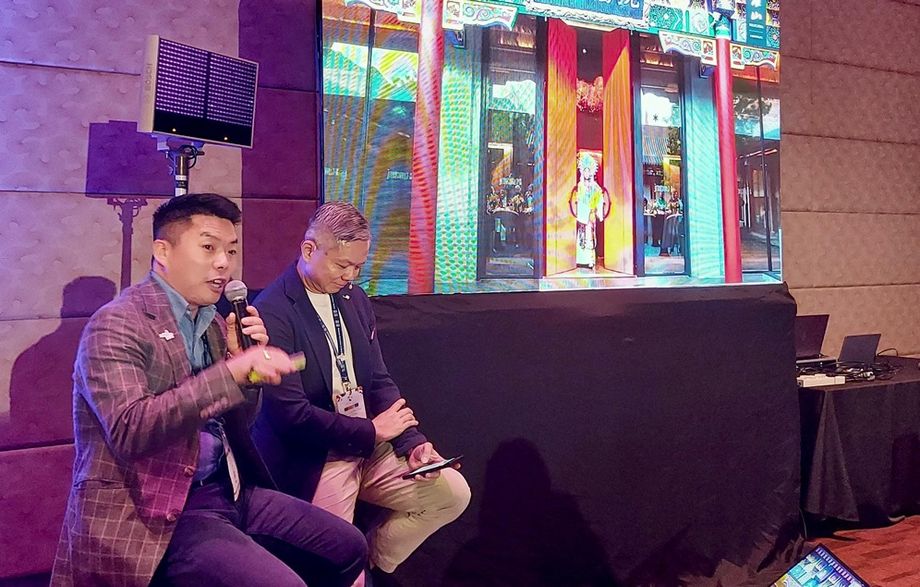
 MJ Wang, director of Wild China, speaking at Malaysia Business Events Week 2025. Photo Credit: Anis Ramli
Incentive travel today faces a different kind of pressure amidst a crowded, competitive market.
For MJ Wang, director of Wild China, that means moving beyond five-star resorts and lavish banquets to deliver programmes that are meaningful, memorable and measurable.
Speaking at Malaysia Business Events Week (MBEW) 2025, Wang shared how to strike the delicate balance between creativity, practicality and evolving client needs.
Your creativity vs client needs
Successful incentive programmes begin with a deep understanding of the client’s objectives. “The best programme is not about being expensive or cheap, or whether your team thinks it’s great,” said Wang. “The client will tell you if it’s the best. You have to understand the real audience – whether that’s the contact person, the decision-maker or the participants you’re tailoring the programme for.”
Let creative juices flow
At Wild China, creativity starts with the team. “We always ask our colleagues, ‘Are you excited?’” said Wang. “After a big dinner or team-building event, I want them to say, ‘Wow, that was my first time experiencing something like this.’ Encouraging team members to bring passion and confidence to the table fosters innovation and elevates the quality of every programme.”
Let storytelling come alive
“Crafting experiences that tell a story aligned with the client’s brand enhances impact and relevance,” he said. “We use the event, the destination, and even the games to help our clients deliver their brand story.” He stressed that designs that are aligned with the client’s brand storytelling create lasting impressions.
Make it a fun, open classroom
Integrating educational elements can elevate the event experience. “Learning is for everyone,” said Wang. “If delegates have a meaningful interaction with villagers or artisans, they take away something special,” Wang said. “It’s that personal touch that creates lasting memories and often, repeat business.”
Wang’s examples include visiting Newton’s apple tree in Lincolnshire, England with a professor-led talk, and exploring a heritage soy sauce factory to learn about fermentation.
“Equally important is building personal connections with local communities,” he added. “Until today, we still have clients that kept in touch with the villagers at Lincolnshire that welcomed us.”
Leveraging local historical sites and educational institutions, he said, can add depth and uniqueness to programmes and turn them into experiential journeys participants can remember long after they have returned home.