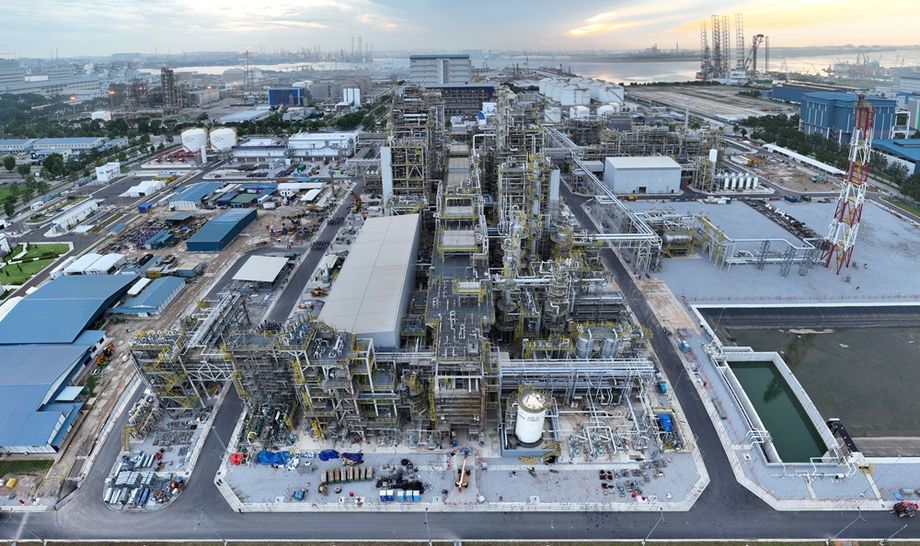
 Neste’s Singapore refinery: producing up to 1 million tons of sustainable aviation fuel, the largest capacity in the world. Photo Credit: Neste
Much has been said about Sustainable Aviation Fuel (SAF), especially at the recent 67th Assembly of Presidents of the Association of Asia Pacific Airlines
where aviation leaders have committed to achieving net zero carbon
emissions by 2050. M&C Asia spoke to the largest producer of SAF,
Neste, a Finnish energy company, to find out its plans and how it wants
to see greater collaboration with industry stakeholders.
Track record
Neste has been investing heavily in R&D of renewable diesel
technology and broadening the renewable raw material base suitable for
refining since the mid-1990s.
After piloting of the renewable diesel production within its Porvoo
refinery, Neste embarked on the global construction of renewable diesel
refineries, first in Singapore and then Rotterdam to produce renewable
diesel from renewable raw materials, mainly waste and residue raw
materials, such as animal waste fat, used cooking oil and residue
streams from vegetable oil industry.
The investment decision for the Singapore refinery was made at the
end of 2007. Singapore was selected based on the country's world-class
logistics connectivity which offers smooth transportation of renewable
raw materials and final products throughout the world. Operation started
in 2010 and over the years, production capacity of the original
refinery was gradually increased to 1.3 million tons annually from its
original design.
Besides renewable diesel, Neste also produces renewable raw materials
for the polymers and chemicals industry to help them reduce crude oil
dependency while also tackling climate change and plastic waste
challenge. Waste and residues account for over 90% of its renewable raw
material inputs globally.
Big in Singapore
At the end of 2018, Neste expanded the Singapore refinery, more than
doubling its existing land area to 45 hectares in total. The Singapore
Expansion Project’s operations started in April 2023.
On top of renewable diesel and renewable feedstock for polymer and
chemicals, the company has also added production capability of
sustainable aviation fuel. The expanded refinery increases the Singapore
refinery's total production capacity to 2.6 million tons per annum,
including up to 1 million tons of sustainable aviation fuel. The
Singapore refinery is now the world's largest producer of sustainable
aviation fuel, in terms of capacity.
How meeting planners can get involved
Susanne Bouma, head of Partnerships & Programmes, Renewable
Aviation, Neste, said: “By purchasing SAF, organisations can reduce
greenhouse gas emission of air travel by up to 80% compared to using
conventional jet fuel. This reduction can be considered to be part of
the scope 3 emissions of that organisation.
“Meeting planners have several options to include SAF into any events
and so on, they are organising. They can for example use airlines which
fly on SAF or offer the opportunity to additionally purchase SAF for
flight.
“Another option is directly purchasing SAF from producers like Neste,
which will then ensure the SAF is being used and the emission
reductions are realised. Being able to credibly report on the emission
reduction achieved is crucial for many organisations, as this often is
part of sustainability related reporting.”
Increasing awareness
Neste has been working with stakeholders within and outside the
aviation industry to increase the awareness and availability of SAF.
These include advertising campaigns at major international airports such
as Singapore Changi Airport, and also throughout its partnerships with
airlines offering SAF to end-customers. These partners would be a go-to
source for meeting planners to learn more about how to include SAF in
meeting packages, added Bouma.
Neste produces its SAF from sustainably sourced, 100% renewable raw
materials such as used cooking oil and animal fat waste. “We source our
raw materials globally using existing collection infrastructure. For
example in the US, our subsidiary Mahoney collects used cooking oil at
more than 80,000 restaurants and venues across the country. In other
countries we work together with local partners.
“The important part for hotels and MICE venues is that source
separating the waste created, enables the waste to be recycled and
reused. Used cooking oil is a perfect example of a waste material which
can be used to reduce emissions by converting it into sustainable
aviation fuel, or renewable diesel for road transportation.”