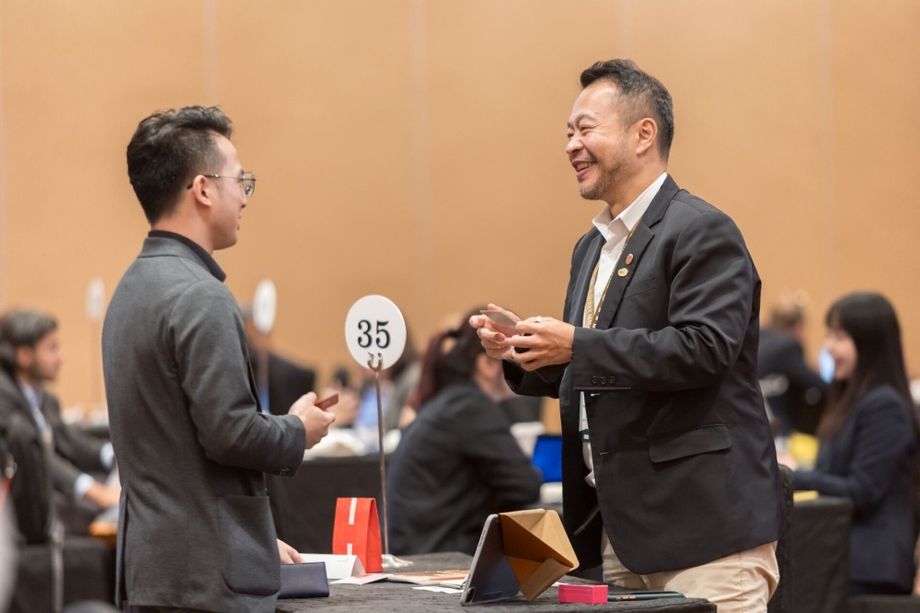
 Events are also perceived as platforms to generate ideas, innovation, connection, and collaboration, as evidenced from the the business networking sessions during M&C Asia Connections 2023. Photo Credit: M&C Asia
The Freeman Trends Report 2024, which studies attendee intent and behaviour, has unveiled fresh perspectives on where attendees find new products and services, and how they value event components. This article is the final installment in a series featured under M&C Asia's Industry Reports section.
Trust in events
In an era marked by misinformation, geopolitical uncertainties, and intergenerational change, in-person events are perceived as the most trustworthy information sources, surpassing academic institutions and webinars.
Much fewer people trust academic institutions, webinars, and thought leaders compared to 2023, with blog posts and social media influencers ranked among the least trusted sources. Events are also perceived as platforms to generate ideas, innovation, connection, and collaboration.
Discovering new products and services
In-person events emerge as the primary source for discovering new products and services, surpassing company websites due to the reliability associated with face-to-face interactions.
Furthermore, social media platforms serve as effective mediums to promote products before and after events. Although 54% of millennial exhibitors prefer social platforms for product announcements, many exhibitors do not take advantage of social channels to connect with attendees outside of the exhibit hall.
Hands-on demonstrations
Hands-on demonstrations and product samples significantly influence attendees' evaluation of products at in-person events. Despite the allure of social media, nothing replaces the tangible experience offered by live exhibits.
Networking and learning
While commerce ranks highest in importance among event components for all respondents (including decision-makers), attendees also prioritise networking, learning, and overall experience. Personalisation is key, as varying preferences dictate attendee decision-making. Planners should understand who attends their events and what their unique preferences are.
Online vs in-person
A growing number of respondents prefer to attend in-person events compared to online events (82%). However, 17% of respondents report that the specific event influences their preference to attend remotely versus in person, suggesting that there is still a place for online events depending on factors like budget and ability to travel. Respondents who attend online events do so primarily due to unique content that cannot be found elsewhere and because they offer convenient, on-demand access.