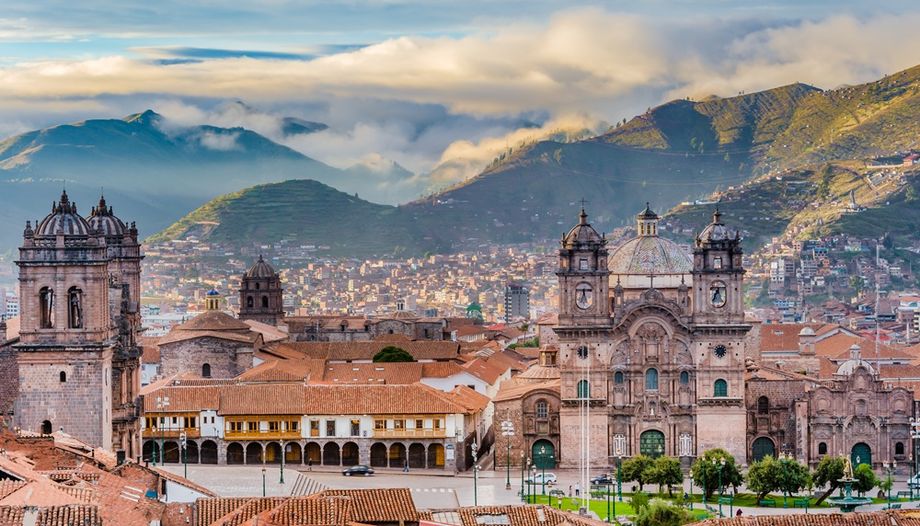
 Morning light over Cusco’s Plaza de Armas, the historic heart of the Peruvian city. Photo Credit: AdobeStock/sharptoyou
Peru is widening its international MICE push beyond Lima, giving Cusco greater visibility as an incentive destination with cultural depth, premium accommodation and access to one of South America’s best-known attractions.
PROMPERÚ used Peru’s invited-destination status at IBTM Americas 2026 last week to showcase Cusco alongside Lima, Arequipa, Ica and Loreto. Its 13-company delegation targeted 340 business appointments and US$2.5 million in potential business. The push followed Peru’s strongest recent congress performance: 93 international and regional events in 2025, up 52.5% and placing the country eighth in the Americas, according to ICCA. Cusco was among the Peruvian cities listed, highlighting the expansion of Peru’s MICE appeal beyond Lima.
The economic case is reinforced by Peru’s Ministry of Foreign Trade and Tourism, which says MICE visitors spend an average of US$1,321 and nearly 40% of international congress delegates later return for leisure. Demand trends also provide an opening. The Northstar and Cvent 2026 industry forecast found that 63% of surveyed buyers had booked destinations they had not previously used for programmes in 2026 or 2027.
Leading destination management company Ovation Global DMC has also recommended Cusco as a destination that supports strategic incentive travel programmes. It highlights the city’s heritage, premium hospitality and access to the Sacred Valley and Machu Picchu, together with group activities in San Blas, local markets and artisan communities.
Accommodation is another part of the case. PROMPERÚ lists 3,500 three- to five-star rooms and three distinctive event spaces. Options range from JW Marriott, The Luxury Collection and Hilton Garden Inn to converted historic properties such as Belmond’s Monasterio. The 58-room Motto by Hilton Cusco near San Blas has added further choice.
This breadth allows planners to match room categories to budgets, although Cusco should not be positioned automatically as a low-cost option. Seasonal rates, premium rail journeys, guiding and Machu Picchu admission can raise costs. The advantage lies in allocating higher spending to a signature rail journey or closing experience while using the wider hotel inventory for the main room block.
Access is the principal trade-off for Asia Pacific groups. Most itineraries connect through Lima, followed by a flight of about one hour and 20 minutes to Cusco; and the airport is about 5km from major historic-centre hotels. From the city, groups can reach the Sacred Valley and Machu Picchu by road and rail, while the Andean Explorer links Cusco with Puno, Lake Titicaca and Arequipa for a longer extension.
Programmes should allow delegates time to adjust to Cusco’s altitude of about 3,400m. A lighter first day could pair a guided visit through the UNESCO-listed centre with small-group market or artisan activities. A Sacred Valley day could combine community-led workshops with Moray, Maras or a hacienda lunch, before Machu Picchu provides the closing experience.
Cusco’s appeal ultimately lies in being more than a transit point. It can anchor a city-to-valley-to-citadel programme and extend into southern Peru, turning a familiar landmark into a broader incentive journey. Its strength lies in combining operational choice with culture-led group experiences.