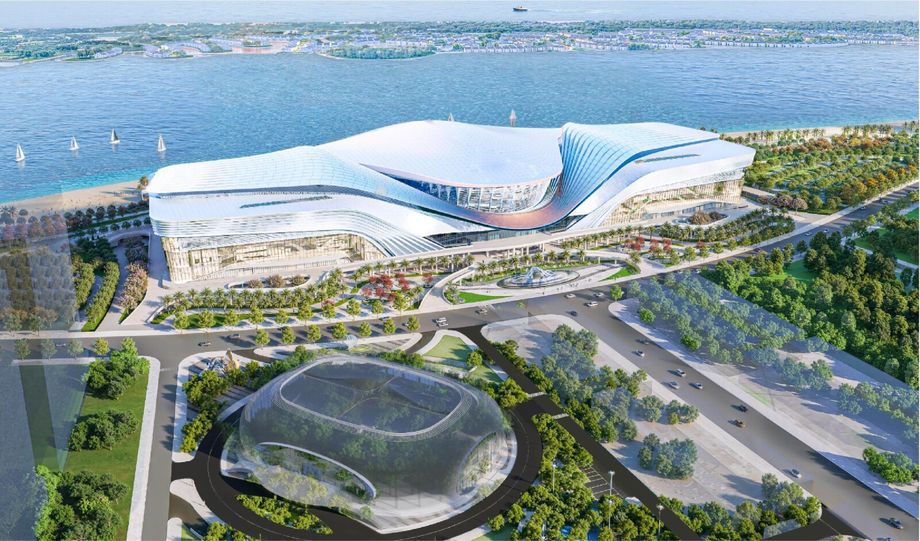
 Rendering of the Blue Wave Theater, located within the planned Vietnam Exposition Center in Can Gio.
Vietnam’s MICE sector is entering a pivotal growth phase, supported by economic stability, rising consumer spending and government efforts to liberalise the cultural and events industries, according to leaders speaking at the 2026 Exhibition, Event and Advertising Summit in Hanoi.
According to data presented at the summit, Vietnam’s MICE sector is currently valued at approximately US$6 billion, while the advertising market has reached US$3.5 billion.
Rise of live entertainment segment
The live entertainment segment has generated more than US$50 million in revenue annually, supported by over 700 large-scale events and more than US$1 billion in economic spillover from international visitors.
Chief Economist at the Bank for Investment and Development of Vietnam, Cấn Văn Lực, described the current environment as a “golden opportunity” for Vietnam’s cultural industries, noting that the country has maintained average annual GDP growth of 6.4% since the Doi Moi reforms began four decades ago.
Vietnam’s per capita income has surpassed US$5,000 and is projected to reach US$8,500 by 2030, driving demand for entertainment, sports and live experiences.
Recent policy reforms are also reshaping the operating environment for the sector. Earlier this year, Vietnam’s Politburo issued Resolution No. 80, targeting cultural industries to contribute 7% of GDP by 2030 and 9% by 2045.
The National Assembly has also passed Resolution No. 28/2026/QH16, introducing measures aimed at reducing barriers for cultural, exhibition and performance activities. The reforms include VAT reductions to 5%, tax incentives for events and sports activities, dedicated cultural investment funds and commitments to allocate at least 2% of the state budget to culture.
Alongside policy reform, major private-sector investments are rapidly expanding Vietnam’s event infrastructure.
Expanding event infrastructure
Vingroup’s 900,000-sqm Vietnam Exposition Center is currently positioned as one of Southeast Asia’s largest integrated exhibition and event complexes.
Related: Behold the new 90ha exhibition centre in Hanoi | Meetings & Conventions Asia
Meanwhile, upcoming projects include the planned VEC Can Gio development in Ho Chi Minh City, featuring the 60,000-capacity Blue Wave Theater, as well as the proposed 135,000-seat Hung Vuong Stadium and the 60,000-seat PVF Stadium with a retractable roof system.
Indeed, if policy reforms are laying the groundwork, infrastructure is becoming the deciding factor in Vietnam's ability to compete for international mega-events.
"You cannot attract ministers, government representatives, or the world's 5,000 largest corporations by chance. They come because of deliberate planning and infrastructure development," said Geoff Dickinson, CEO of dmg events, one of the world's leading energy event organisers.
Beyond venues, Vingroup has also expanded supporting infrastructure through hospitality, transportation and event operations businesses, including Vinpearl, Green SM and its convention and event services platforms.