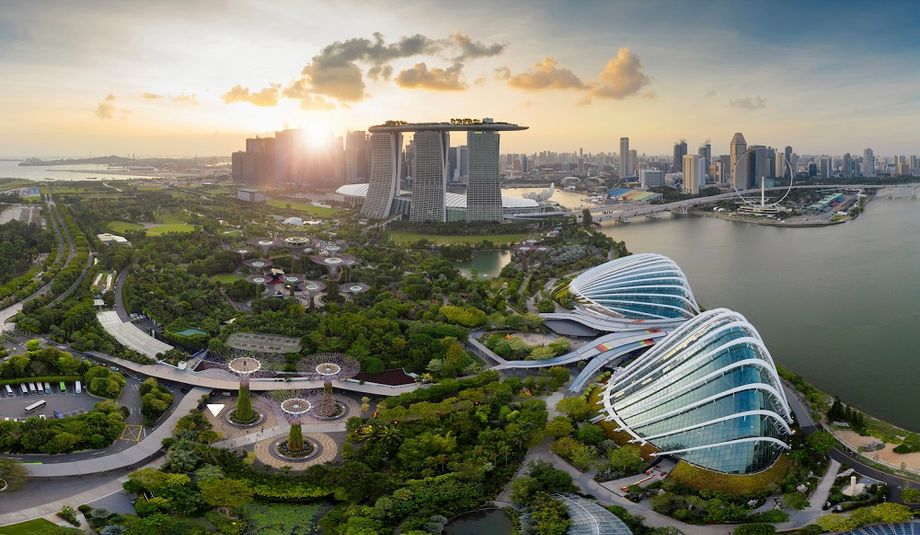
 The Singapore Tourism Board (STB) will join hands with the Global Sustainable Tourism Council (GSTC) to develop a new criteria for MICE. Photo Credit: Adobe Stock/24Novembers
Singapore is not letting up on its efforts to become a sustainable urban
destination, launching the sustainable MICE destination roadmap in 4Q
2022 and becoming the first country to attain the Global Sustainable
Tourism Council (GSTC)’s Destination Criteria earlier this year as part
of its 2030 Green Plan.
And
now, Singapore's sustainability push is kicking into higher gear as the
Singapore Tourism Board (STB) will join hands with the GSTC to develop a
new criteria for MICE and Attractions to serve as the global
sustainability standards for both industries.
Singapore: The go-to destination for sustainable business events
Singapore is leading the way in sustainable MICE events, supported by government initiatives and industry collaboration.
Read more >
“Such internationally-recognised standards are
important, as they help destinations and tourism businesses understand
if their sustainability efforts are on the right track," Keith Tan, STB
chief executive, speaking at the annual Tourism Industry Conference on
Wednesday. "We look forward to working closely with GSTC and our
industry associations to provide a Singapore perspective and help the
tourism sector contribute to a greener world.”
Randy Durband, CEO of GSTC added, “The development of GSTC MICE
Criteria will provide a globally-created and globally-applicable set of
sustainability standards that serves as a platform for universal
approaches to measurement, monitoring, reporting, and various forms of
external verification needed to drive positive impacts from good
practices.”
How will the GSTC MICE Criteria be developed?
The GSTC MICE Criteria will be developed with the inputs of industry
stakeholders including Singapore Association of Convention &
Exhibition Organisers & Suppliers (SACEOS), to provide feedback,
consultation, and industry expertise for the draft criteria and to
encourage industry adoption of the developed criteria when ready, said
Yap Chin Siang, deputy chief executive at STB.
Meanwhile, the GSTC has formed a MICE Criteria Development Advisory
Group, which comprises up to 10 organisations from both the public and
private sectors with established track record in hosting MICE events.
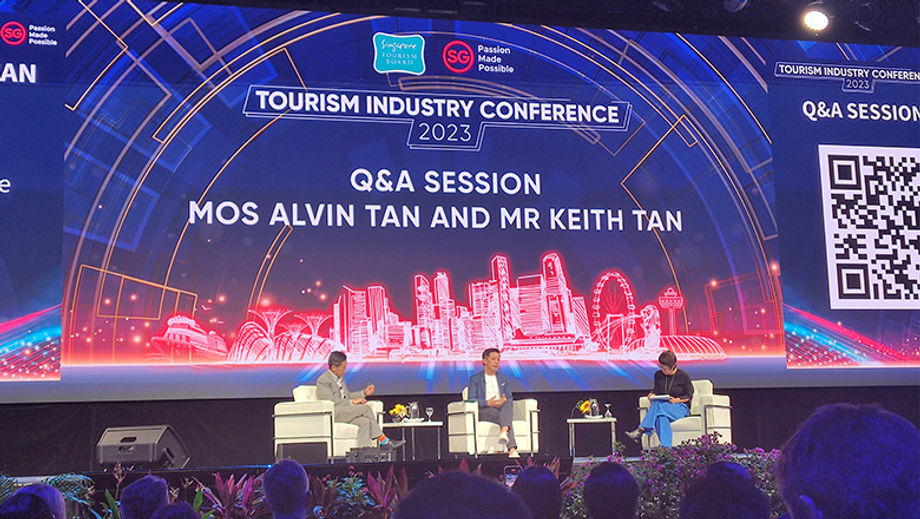 The GSTC MICE Criteria will be developed with the inputs of industry stakeholders such as Singapore Association of Convention & Exhibition Organisers & Suppliers, the STB unveiled during its annual Tourism Industry Conference.
The main objective of this group is to offer their expert opinion and
comments to the GSTC Technical Team while GSTC will retain full
oversight and control of the criteria development process. The Advisory
Group will also encourage the MICE industry to take part in the public
consultation and feasibility assessment phases of the Criteria
Development process.
The whole process of development and revision will be overseen by the
International Standards Committee (ISC) of the GSTC. The development
and content of the ‘Terms of Reference’ (TOR) endeavour to comply with
the requirements of the ISEAL Standard-Setting Code of Good Practice.
The beginning of a sustainability journey
"We have an ambition not just to set local standards but to lead the
way forward, so we also want our standards to also be internationally
recognised in some form," said STB's Yap.
These
standards are set to be established by end-2023, and more details about
the various kinds of schemes and assistance available to support
industry efforts to kickstart their sustainability journey will be
unveiled, he added.
Chief executive Tan also added that the STB will also embark on a
study to measure the baseline carbon footprint of the tourism sector
before setting targets in line with Singapore’s enhanced international
climate commitment to achieve net zero emissions by 2050.
"Being certified is just the beginning," said Alvin Tan, Singapore
Minister of State for Trade and Industry. "We will continue to steward
Singapore to become a sustainable urban destination by 2030."