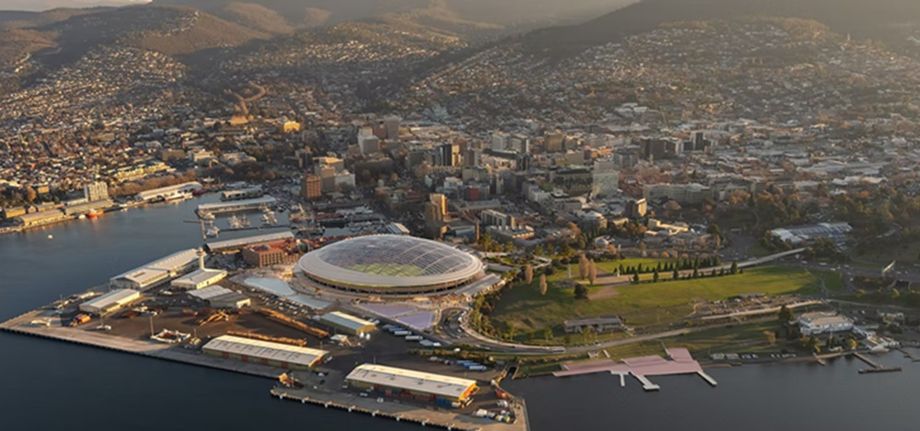
 Macquarie Point Multipurpose Stadium is scheduled for completion in time for the 2029 AFL men’s season.
A 24,500-seat stadium will be built in Hobart in the Australian state of Tasmania, purportedly a non-negotiable condition for the state to debut a team in the Australian Football League (AFL).
Pushing through
With an estimated value of more than AU$1 billion (US$664.3 million), the plan had divided Tasmanians, with many questioning its impact on an already fragile budget. Concerns were also raised about the potential disruption of transport given the stadium’s proximity to the central business district, and compromised heritage. And in September, the Tasmanian Planning Commission deemed the project "too big for the site and the benefits it will bring are significantly outweighed by the disbenefits it creates".
However, with the decision in the hands of parliament, the project was given the go-ahead after three years. Following the decision from the lower house on 13 November, the upper house voted in favour of the project on 4 December, after some 12 hours of debate.
Identity ambitions, economic returns
The Macquarie Point Multipurpose Stadium is scheduled to be completed in time for the 2029 men's AFL season. Before then, the Tasmania Football Club, nicknamed the Tasmanian Devils, is expected to enter the AFL in 2028 and play its first season at Bellerive Oval and York Park.
Beyond fulfilling the “long-held dream” of a Tasmanian AFL team and creating jobs across industries, the state government emphasised the new opportunities the stadium can create in tourism and business events.
The Macquarie Point stadium “boosts tourism, hospitality, and business events – driving new investment and delivering flow-on benefits across the Tasmanian community, including in regional areas”, it said in its official response.
When complete, the project would turn an “underutilised site” into a “vibrant mixed-use precinct with retail, arts, hospitality, residential, and entertainment offerings”.
Business event opportunities
The covered stadium will have 24,500 seats, or a capacity for up to 31,500 concert patrons. Eventually, accounting for future expansion, this capacity is expected to increase to 38,000.
Reportedly, there will also be indoor function space for up to 1,700 people in theatre or 1,500 for gala dinners, giving Hobart its “only function space capable of hosting [more than] 1,500 delegates”.
The stadium could host more than 330 events across 337 event days. The projected annual event calendar estimates 40 major conferences (with 450 delegates per event) across 80 days, on top of 34 live sport and entertainment events across 37 days.
As for minor non-event-day bookings (e.g. corporate dinners, private functions), the stadium projects 260 bookings.
Heritage venue makes way
Development of the Macquarie Point stadium will displace another event space, the century-old, heritage-listed Goods Shed.
Built in 1915 for the Hobart railway, Goods Shed was listed on the Heritage Register after it was found to have “state level historic cultural heritage significance”.
As part of the Macquarie Point development, the historic venue will be moved to a different area on the Macquarie Point site, and provide space for exhibitions, galas, and other small- to mid-scale indoor events.
Tasmanian premier Jeremy Rockliff reportedly stated that the project would “turn this wasteland into a hive of economic activity”.