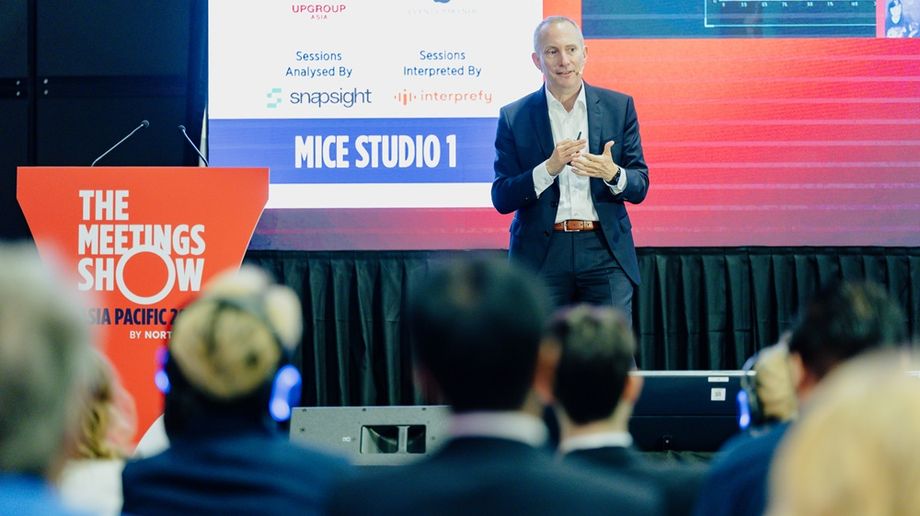
 The Meetings Show Asia Pacific
For much of the past two decades, the events industry measured its ambition in screens. Bigger LED walls, smarter activations, and richer event dashboards that all reflected the same assumption of “the more, the better”.
At The Meetings Show Asia Pacific 2026 (TMS APAC) in Singapore, a different perspective took hold. Technology’s chief role is not in creating show floor spectacles, but in the design process.
The more substantive argument running through the show was about timing. Used at the end of the planning process, technology executes an idea. Used at the beginning, it can test whether the idea is worth executing at all.
From spectacle to precision
Technology used in events has moved through two phases and is now entering a third. The first was defined by spectacle, where technology was used to impress audiences and elevate production value.
The second was measurement, where the emphasis shifted to proving value through data, engagement scores and post-event analytics.
Both were useful but shared a limitation – they described what had already happened rather than shaped what should have been designed from the start.
Now the third phase is on precision, where technology moves to the very start of the event planning process to influence outcomes rather than merely report on them.
Digital audience twin
Colja Dams, chief executive of VOK DAMS, spoke about the “digital doppelgänger”, an AI-generated simulation of an event audience built from behavioural data, adaptive modelling, and psychological profiling. The practical application is straightforward: run your event concept through the simulation before production begins and find out where attention drops, where content loses the room, where your programme’s logic breaks down.
Once organisers establish an event call to action, the first and most important question to ask is why your audience is not already doing it today, Dams said. The value is not in the technology itself but in when it arrives in the process.
That reframes what event design is for. Most briefs define what will happen at an event. Fewer define what should be measurably different afterwards, and fewer still ask that early enough to act on it.
Eight seconds to make it count
The need for precision is partly demographic. Gen Z and millennials now account for roughly 42% of MICE attendees, and the window for capturing interest has narrowed.
According to Microsoft research, average attention spans in digital environments have dropped from 12 seconds to eight. This is an audience that does not give attention. It is selective and reassesses what is before them, constantly.
UPGroup Asia’s Adam Piperdy and Searix Group CEO Lance Ng suggested audience retention lies in a three-step sequence: attention, then engagement, then action. Without initial attention, engagement never takes root. Without engagement, meaningful action rarely follows.
This is not simply a content problem. It is a design problem. Events are still largely structured around what organisers want to communicate rather than how audiences process information.
Audience participation is not a feature to be added but a mechanism through which retention happens. Experiential activities, Piperdy and Ng argued, are best understood as modes of learning through audio, visual and kinesthetic.
The analog paradox
Across audience simulations, consistent patterns have emerged, according to Dams. Early moments in an event carry more weight because attention was difficult to recover once lost. Unstructured time proves more valuable than it appears in schedules, as it was often where the most meaningful conversations take place.
Familiar elements also mattered more than many organisers assumed. Dams called it the “Eiffel Tower effect” where audiences need the psychological comfort of the recognisable to engage confidently with what is new.
The most counterintuitive finding, however, was that digitally immersed audiences still craved analog experiences. Screen-free, tactile and in-person moments continue to resonate deeply.
“Even though we are all fixed on our smartphones…digital natives go into analog and love it,” Dams noted.
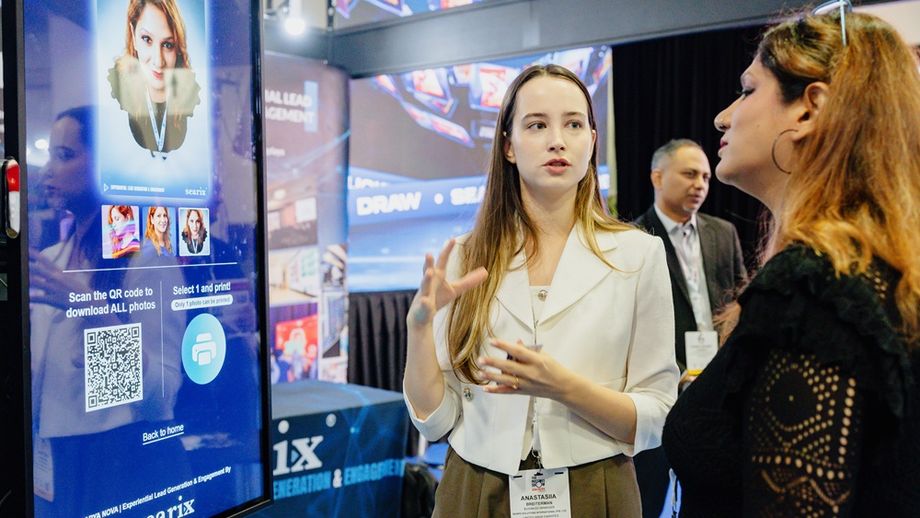
On the TMS APAC floor this was visible. The Minifiglabs activation where attendees completed a personality test, received a 3D print, and assembled custom figurines, drew sustained attention throughout the show. So did interactive installations such as AI photo booths and cocktail selectors, not because they were digital, but because they had physical interaction, creation and tangible output.
The technology enabled the experience. It was not the experience itself.
Technology follows intent
The implication is a reordering of priorities that most event planning processes do not currently reflect.
Technology typically enters the process late, after venue, concept and brief are set, at which point its capacity to influence outcomes is limited. When relegated to this final stage, it is treated as a line-item expense rather than a strategic driver.
Ng addressed the ROI tension this creates for corporate clients. His answer was direct: “If you spend a dollar and get two dollars back, the question is how much more can I spend, not how much less.” The return becomes visible when the design is right; and the design is only sound when intent precedes budget.
This hierarchy of intent as the foundation and technology as the engine reflects Dams’ “hamburger system,” with AI as the analytical core and human judgement as the essential layers around it. “The most important success factor in using AI…is the human being doing it.”
Technology can now model audience behaviour, identify where attention will be lost, and test whether a desired outcome is achievable before significant costs are incurred.
The onus now sits with organisers to use those insights to design better events, not just execute them better.