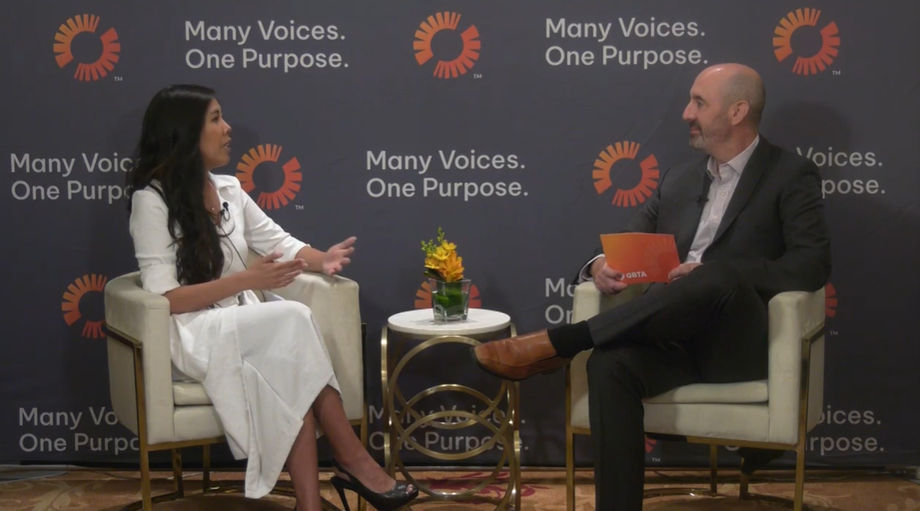
 CWT’s Petrina Goh and GBTA’s Kevin Fliess at the Broadcast Studio during the GBTA APAC Conferences 2023.
With elevated prices, inflation and fuel price challenges, how should
meeting planners navigate the current environment? Petrina Goh, head of
Commercial, Southeast Asia and Hong Kong, CWT Meetings & Events,
shared some trends and tips on how meeting planning is now all about
experience design:
Forging ahead in the current environment
Meeting planners can mitigate these challenges by planning early and
looking at a 12-month timeline as opposed to planning with a three-month
timeline. This is especially helpful for finding venues in popular
destinations such as Japan and South Korea especially after China’s
re-opening of its borders has seen a phenomenal increase in prices.
Within Asia, planners can also focus on secondary tier cities such as
Yogyakarta, the capital city of the Special Region of Yogyakarta in
Indonesia, and in Vietnam, instead of Ho Chi Minh and Hanoi, cities such
as Fukuok, the largest island of the Gulf of Thailand, south of
Vietnam, and Nha Trang which is known for its seafood, fishing villages,
snorkelling and luxury resorts. These places would be priced at 70% of
the venues in the primary cities. Similarly, for China, worldclass
hotels in Hangzhou or Lijiang offer cheaper alternatives to the major
cities.
Audience engagement KPI
Besides cost savings and avoidance as the number one KPI for most
planners, a new generation of meeting planners is also focussed on
audience engagement metrics. “They look at how engaged their audiences
are in each element of the event, from pre-event campaigning to
post-event conversations that take place as well. I think another thing
that they also look at is the adoption of technology and that's really
key for us today, because you are looking at a very tech savvy audience.
“Look at the adoption of technology in China, for example, people
don't use paper anymore - everything is on Apps; everything is about AI
in driving efficiency and driving down costs in meetings and events as
well.”
DEI
Another KPI is DEI (diversity, equity and inclusion) which aims to
provide fair treatment and full participation of all people in meetings.
This means ensuring that planners consider every different aspect of
culture in their audience. This also includes the comfort level people
have with technology.
Experience design
Technology tools now drive efficiency in getting the audience
registered and up to date with an upcoming event. CWT recently launched
an online tech tool that helps clients to immediately look at the
changes they want to make to a registration website and they can have
instant feedback on the website templates. This has helped CWT to save
20 to 30% of time in churning out websites, and this in turn, helps
clients to make sure that they have a longer runway for registration
updates and pre-event campaigning.
Chatbots free staff from answering phone calls or being on standby 24 hours a day to answer standard questions or FAQs.
Wholesome sustainability
Beyond going paperless, planners are looking at a more wholesome
approach where they support local communities, artists or local families
and make sure that when an event is over, delegates leave the
destination in a better position than before.