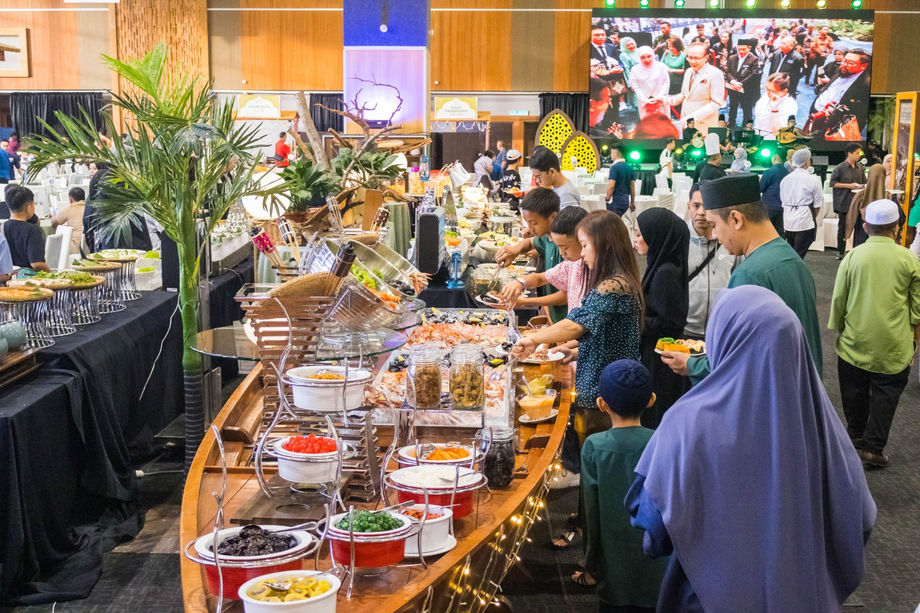
 Sabah International Convention Centre’s 850-dish Ramadan spread. Photo Credit: Facebook/Sabah International Convention Centre
Ramadan buffets are no longer about seasonal dining promotions. As larger group affairs, they are increasingly serving as windows into the various MICE dining possibilities and cultural nuances.
For instance, Sabah International Convention Centre’s (SICC) Ramadan farm-to-table concept presents an 850-dish spread – the largest iftar (the breaking of fast) buffet in Sabah. Running until 18 March, the setting spans almost 3,500sqm and can accommodate approximately 1,200 diners. Complementing this is a private VVIP dining area that can host up to 280 guests, including dedicated prayer facilities.
“Each year, we challenge ourselves to raise the standard of our Ramadan offerings,” said SICC CEO Rosmawati Haji Lasuki.
She added that “this year’s focus is on variety and collaboration with national and local agencies, reflecting SICC’s role not just as a venue, but as a contributor to the wider community and local economy”.
Meanwhile, in Indonesia, Park Hyatt Jakarta integrates Ramadan directly into its meetings proposition. Beyond its iftar buffet, the hotel has launched a “Ramadan Meeting at the Park” package, enabling corporate groups to convene during the day and break fast together in a private function space later.
By aligning meeting schedules with iftar service, the hotel demonstrates flexibility that planners value.
Elsewhere, in non-Muslim majority markets like Hong Kong, Ramadan offerings offer a chance to strengthen cultural sensitivity.
For instance, Kowloon Shangri-La Hong Kong’s Ramadan buffet is held at Café Kool, a certified halal kitchen restaurant fitted with dedicated prayer facilities and international CrescentRating.
Its Ramadan offering is part of a broader Muslim-friendly strategy to “reassure planners that we can deliver trusted, seamless experiences for Muslim delegates,” said Pauline Yau, senior marketing communications manager.
“Today’s event organisers are looking beyond facilities alone. They want venues that demonstrate genuine inclusivity and respect for diverse cultural and religious practices.”