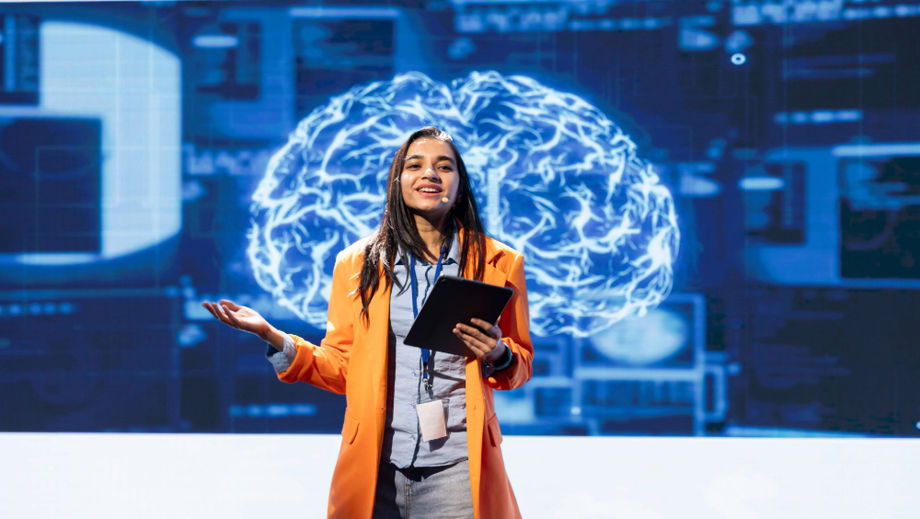
 Projection mapping, LED walls and good old-fashioned negotiating skills are some ways to balance budgets and innovations, say event planners. Photo Credit: Adobe Stock/DC Studio
Balancing budget constraints with the demand for out-of-this-world experiences is a common challenge for event planners, so it’s no surprise that the AV and technology side is one area where organisers are having to work even harder to get more bang for their buck.
A recent PCMA survey highlighted how AV and technology costs have dramatically increased post-pandemic, to the point where planners say they are “astronomical”, “ridiculous”, and “unreasonable”, with little flexibility to use outside vendors due to exclusive agreements. Survey respondents also said rising costs are coinciding with a reduction in service levels.
By employing creative strategies such as leveraging onsite existing technology and resources, using innovative technology, engaging in bulk negotiations and more, planners can match budgets to expectations.
Match objectives with venue specs
Begin by identifying the key objectives of the event and allocate resources accordingly – if the goal is to foster networking, funds can be directed toward creating interactive spaces rather than elaborate stage setups.
“A clear understanding of priorities ensures that spending aligns with the most critical aspects of the event,” says Brett Han, managing director of iCube Events. “Additionally, venues with flexible layouts and adaptable infrastructure can help organisers create unique experiences without extensive modifications.”
“Venues with flexible layouts and adaptable infrastructure can help organisers create unique experiences without extensive modifications.”
Brett Han, managing director, iCube Events
With hotel venues offering built-in AV equipment and technical support as part of their rental packages, utilising these resources can eliminate the need for external vendors and potentially reduce costs. However, Han cautions that hotel built-in AV equipment may only offer the bare minimum quality.
“This approach is largely driven by cost-efficiency and the need to cater to a broad range of clients,” he says. “Built-in AV systems are often standardised to fit the majority of events, limiting their ability to meet the unique demands of high-tech or customised setups. This is feasible if the event is on a smaller scale such as a seminar; however, if it is a conference or product launch with key customers, these require more sophisticated solutions to enhance presentations or experiences.”
Han adds that booking AV and tech services well in advance often leads to cost savings. Vendors charge premium rates for last-minute requests, so early planning ensures better deals and availability. Additionally, schedulling events during off-peak seasons or days can result in lower venue and vendor fees.
Related: Costs up, budgets down: How to get creative with your incentives
Adopt a mix and match approach
A hybrid approach is also a possibility, suggests Jade Ball, head of events at BI Worldwide. “[This means] bringing in our trusted AV partners for main plenaries while working with the venue's approved partner for breakout sessions,” she says. “This approach helps us ensure the quality of the production whilst managing costs.”
Ball adds that it’s important to note that AV and technology budgets incorporate an extensive list of equipment which is often consolidated and summarised into a single line item. The complexity of AV and technology provision can lead to a lack of understanding of the equipment needed to deliver the event successfully.
“Cutting every budget line indiscriminately is not always the way to go. There are many instances where increasing spend on a particular item can create a significant impact and yield savings elsewhere.”
Jade Ball, head of events, BI Worldwide
“When clients ask us to create impactful events with smaller budgets, cutting every budget line indiscriminately is not always the way to go,” she says. “There are many instances where increasing spend on a particular item can create a significant impact and yield savings elsewhere. Event planners can make technology work harder and smarter with strategic choices.”
For instance, LED walls may seem an expensive option, however, Ball says they offer a flexible alternative to traditional set and stage setups, allowing visuals and branding to be changed at the touch of a button.
“This customisation can transform an environment from product launch to plenary, from daytime breakout to evening awards, helping clients maximise the use of the space they have with limited additional spend,” she says. “It’s also more sustainable. The same principle applies to other AV equipment too. With careful planning, schedules can be designed to reuse equipment for multiple scenarios, reducing the need for additional equipment hire.”
Bargain hunt with a team of experts
Good negotiation skills are a bonus but technology does have a price tag attached to it. It is important therefore to engage a team of experts, with a network of vendors and experience to advise you on how best to stretch your budgets.
“With so much new happenings in the technology space, from AI to augmented and virtual reality to gamification all changing the event space, it is therefore wiser to work with specialists who can elevate your next event without compromising on the experience.”
JingWen Wong, head of Southeast Asia, FCM Meetings & Events
“With so much new happenings in the technology space, from AI to augmented and virtual reality to gamification all changing the event space, it is therefore wiser to work with specialists who can elevate your next event without compromising on the experience,” says JingWen Wong, FCM Meetings & Events leader for Southeast Asia.
Wong adds that projection technology, such as projection mapping, transforms spaces with visuals, creating a dynamic and immersive experience at relatively lower costs. She gives the example of Flight Centre Travel Group’s annual Global Gathering which took place in Lisbon, Portugal in 2024, where technology played a massive part.
“Our team curated state-of-the-art technical experiences by using portrait screens, dynamic lighting, chaser LED, and digital displays such as side screens with a stage set to enhance brand recognition and story-telling in an intimate and historic venue,” she says.