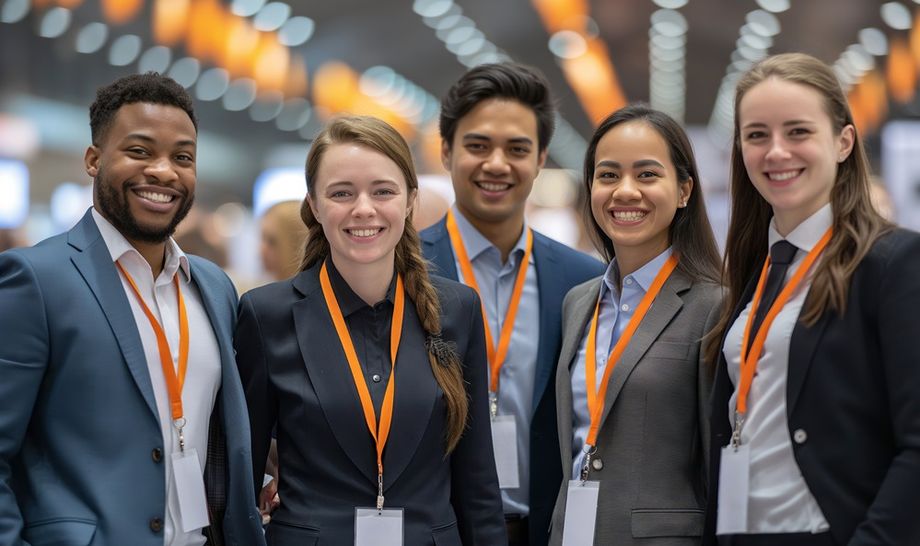
 As the workforce shifts toward a more Gen Z-focus, new event attendees have made clear what they expect from events. Photo Credit: Adobe Stock/ArtCraft (AI generated)
As Generation Z surpasses Boomers in the U.S. workforce, significant shifts in workplace values and event preferences are emerging. According to the Freeman 2024 Event Organizer Trends Report, Gen Z now outnumbers Boomers, and by 2030, the workforce composition is projected to be 35% Gen Z, 40% Millennial, 20% Gen X, and only 5% Boomer.
This generational shift is expected to reshape how events are planned and executed. Ken Holsinger, Freeman’s senior vice president of strategy and research, predicts that by 2030, up to 75% of meeting attendees will be Millennials and Gen Z, necessitating a fresh approach to event planning.
The Freeman 2024 Event Organizer Trends Report highlights a significant gap between what event organisers perceive as important and what attendees and exhibitors value. The report surveyed 453 event organisers, comparing their insights with attendee and exhibitor preferences, revealing that many organisers still operate with “outdated definitions of attendee and exhibitor value.”
“We know that we need to reach all of the generations that are in our meetings, but we need to recognize that as Boomers rapidly retire and as [the smaller] Gen X [generation] begins to retire, we need to think differently,” said Holsinger.
Key findings: Shifts in event planning strategies
One example of changing values is the concept of “experiences over possessions”. While Boomers ranked this as a low priority, Gen Z places much higher importance on experiences, signalling a shift that event organisers must adapt to.
The report categorises adaptable organisers as “Innovators” and outlines the key strategies they use to stay relevant:
Constant evolution: Innovators continually adapt their events in response to changing audience needs. In contrast, 35% of organisers follow established patterns or resist change.
Innovative learning formats: While attendees show a strong preference for collaborative learning experiences, like hands-on interactions and informal meetings, close to three-quarters of organisers still prioritise traditional classroom sessions—demonstrating a gap in expectations.
Focus on experience over numbers: Almost half of event organisers said their primary goal was increasing attendance. However, Innovators focus on enhancing attendee experiences before expanding their audience size.
Attracting new audiences: Innovators prioritise reaching untapped audiences, asking, “Who isn’t attending, and how do we engage them?” This focus is key as Gen Z and Millennials dominate the workforce.
Holsinger warns that traditional event planners who fail to adapt to these changes risk falling behind. “As we see Gen X and Boomers leaving the workforce, if the traditional planners don’t shift their mindset to net new [attendees], we’re going to rapidly see over the next five years a number of events really struggle with staying relevant.” Holsinger warned.