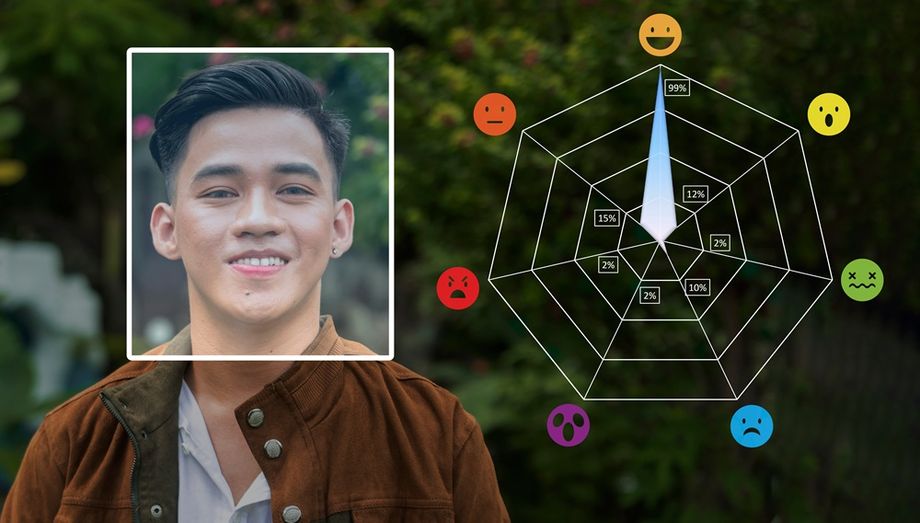
 Live mood analysis technology to enable more responsive conference content. Photo Credit: AdobeStock/Mdv Edwards
Gauging people’s moods at events and how receptive they are to conference content is no mean feat. But commentators say it’s something that could become a whole lot easier with “intentional information” and real-time sentiment analysis.
Robots that read the room
“Intentional information” is the strategic delivery of content that is personalised, contextual, and directly aligned with measurable event objectives to drive a specific, desired attendee action, according to Mervyn Tan, chief technology officer at Aavii Worldwide and country director – Malaysia at BCD Meetings & Events.
It goes beyond simple information distribution to focus on responsive behavioural change.
“We are aware of AI tools in this space that offer real-time sentiment analysis,” he says. “While the old-school method – having a highly skilled organiser ‘read the room’ – remains a pillar of our execution, AI offers something different: quantifiable objectivity at scale.”
These tools, he adds, utilise Computer Vision (Facial Expression Recognition) and Natural Language Processing (NLP) on live Q&A feeds to measure aggregate emotions, such as excitement, confusion, boredom and attention span across hundreds of people simultaneously.
”While the old-school method – having a highly skilled organiser ‘read the room’ – remains a pillar of our execution, AI offers something different: quantifiable objectivity at scale.”
Mervyn Tan, chief technology officer at Aavii Worldwide and country director – Malaysia, BCD Meetings & Events
Responsive content
Brett Han, managing director at iCube Events, says such tools can be powerful when used thoughtfully to measure mood and emotion among event attendees.
“Real-time sentiment feedback provides speakers and moderators with the ability to adjust pacing, tone and interactivity, thus creating more engaging and responsive sessions,” he says. “For example, when attendees appear disengaged, such as looking at phones or speaking to one another, speakers can pivot to questions with live pools; when excitement is high, they can dive deeper into the topic.”
Atika Rosli, managing director at Beyond Events, said this is highly valuable for non-Western audiences where overt feedback is less common.
According to Lorela Chia, founder and managing director at Gr8 Dreams, early case studies suggest that real-time sentiment feedback helps organisers to respond faster than they would using traditional surveys, which arrive long after the moment has passed. “Used intentionally, it feels most natural when it supports, rather than directs, the rhythm of delivery.”
Where it becomes a distraction, adds Chia, is when speakers are tempted to ‘chase the graph’ instead of holding their narrative, or when organisers over-react to minor fluctuations.
“When attendees appear disengaged, such as looking at phones or speaking to one another, speakers can pivot to questions with live polls…”
Brett Han, managing director at iCube Events
Golden minutes insights
The real power is often in the pattern over time, not the moment-to-moment novelty. The strongest insights emerge across multiple editions of the same event. Mood patterns reveal how agenda structure, session formats, spatial layouts, and speaker briefing influence emotional engagement over time. These can offer planners a powerful diagnostic tool and help them refine event design with clarity and confidence.
As Tan puts it, post-event, mood analysis data can pinpoint ‘golden minutes’, the three- to five-minute segments of a session that generated the highest positive emotional response. This data informs content creators which talking points to amplify and which to eliminate in future training, sales meetings or programmes.
 Data on ‘golden minutes’ can guide future training and content planning. Photo Credit: iStock/Wavebreakmedia
“It provides valuable post-event data on which specific topics or segments resonated most strongly, allowing planners to optimise future content and measure the success of individual speakers against stated engagement goals,” Rosli adds.
Not just talk
Han believes real-time mood analysis offers benefits beyond speaker guidance. In exhibitions, it can help to evaluate sponsorship ROI based on which booths generate excitement.
In conferences – during registration, lunch/coffee-breaks, it can help to optimise logistics by identifying frustration from long queues or food shortages.
As with any use of data, ethical considerations have to be front of mind too. As Tan outlines, particularly for clients in highly regulated sectors like pharma and finance, transparency and privacy must be prioritised, such as clearly informing attendees that aggregated, non-personally identifiable data is being gathered solely to enhance the collective event experience.