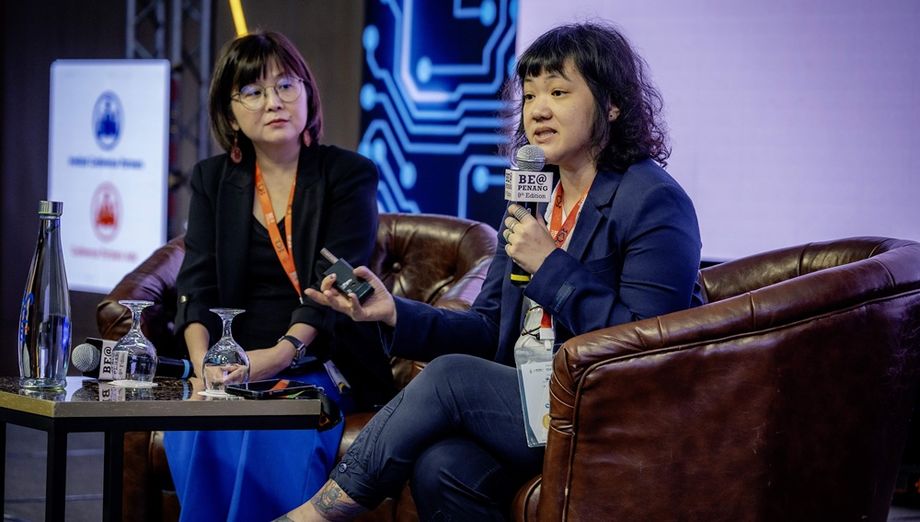
 Major accessibility improvements can happen with a mindset change, not necessarily expensive infrastructure investments, says neurodivergent activist Beatrice Leong.
Accessibility in business events is not a compliance box to tick or a cost to manage, but a strategic business priority, according to Beatrice Leong, founder of the Autism Inclusiveness Direct Action Group.
Speaking at the Accessibility: It is good business (and a human right) plenary session during the BE @ Penang conference, the documentary filmmaker and autistic disability rights activist challenged planners to rethink how events are designed, communicated and delivered.
Strategy, not charity
Drawing on personal experiences navigating events as an autistic attendee, Leong introduced the concept of universal design – creating spaces, services and systems that are usable by as many people as possible, without the need for adaptation or specialised solutions.
Accessibility, she stressed, should not be an afterthought added late in the planning process, but a consideration embedded from the start. “When accessibility is treated as strategy rather than charity, the benefits extend far beyond a single group,” she said.
Just look at the numbers
Leong pointed to the economic realities event planners can no longer ignore. Around 16% of the global population lives with a disability, and by 2030, an additional 15% of ASEAN’s population will be aged. Together, this represents close to 30% of potential customers.
“Businesses simply cannot afford to exclude a third of their market,” she said.
Compounding the issue, around 70% of people with disabilities have hidden or non-visible conditions, including neurodivergence, chronic illness and mental health conditions. “The real numbers are likely higher due to under-reporting and stigma,” Leong added.
Ask, don’t diagnose
One of the most practical takeaways from the session addressed a common challenge faced by organisers: how to identify and support diverse access needs without invading privacy.
Leong’s advice was direct. “Instead of trying to guess disabilities, ask about support needs during registration,” she said. This approach allows organisers to gather actionable information without requiring medical disclosure, which many attendees may find uncomfortable or inappropriate.
She also highlighted the importance of language, noting that “disability” is now the globally preferred term, while phrases such as “special needs” are increasingly viewed as outdated and patronising. Normalising the language of disability, she argued, helps reduce stigma rather than reinforce it.
Crucially, Leong urged planners to think beyond those who already attend their events. “If you only design for people who can show up easily, you’re missing those who can’t – and they are your invisible lost audience.”
Sense over cents
Perhaps the most provocative assertion of the session was Leong’s rejection of the idea that accessibility is expensive.
“Accessibility costs zero dollars,” she said. “Most improvements are not about building ramps or redesigning rooms. They are mindset changes.”
She explained that accessibility is less about specialised infrastructure and more about usability, clarity, comfort, safety, digital ease and predictable flow – elements that improve the experience for everyone, not just disabled attendees.
In fact, many organisations already apply accessibility principles to websites, booking engines and customer service processes. The gap, she warned, lies in overlooking hidden disabilities at physical events.
“The majority of people won’t complain. They simply won’t come back,” she said. “That’s silent revenue loss. The louder risk is when dissatisfaction shows up in feedback forms, complaint channels – or a viral TikTok video.”
Win-win
Leong was clear that perfect accessibility does not exist, as human needs evolve constantly. Instead, organisations should see accessibility as an ongoing strategic pathway rather than a one-off achievement.
She cited multiple examples of how accessible design improves overall event performance: clear information increases booking conversions; sensory-aware lighting and sound reduce complaints; readable menus save staff time; predictable layouts ease crowd flow; and accessible events reduce no-shows while boosting attendance.
Many of these improvements, she noted, can be integrated into existing systems. This includes auditing touchpoints to identify friction, prioritising high-impact fixes, piloting changes in specific areas, training internal champions, updating SOPs, and aligning digital platforms with Web Content Accessibility Guidelines (WCAG) and other global standards.
Ultimately, Leong’s message was straightforward. Accessibility strengthens operations, expands markets and builds long-term trust.
“Build the world your customers need now,” she said, “and it will be the world you will inevitably need later in life as well.”