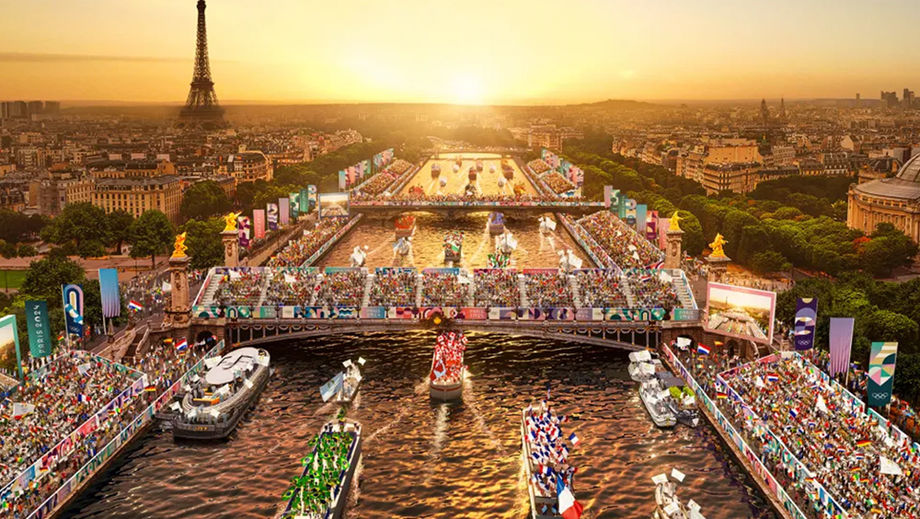
 Artist’s impression of the Paris 2024 Olympic Games opening ceremony: sports in the city. Photo Credit: Paris 2024
With the world’s biggest sporting event, the Olympic Games,
taking place in just under four months in Paris, the business events
sector is reflecting on the synergies between corporate meetings and
conferences, and sporting events.
Cross-cultural opportunities for stronger experiences
As Laveesh Pandey, MD at Invnt Group South Asia pointed out, the
significant investment in infrastructure for sporting events provides
state-of-the-art venues and facilities for conferences, attracting more
international events and delegates.
“Additionally, the cultural tie-ins showcased during big sporting
events can enrich the conference experience and promote cross-cultural
understanding, and increased revenue from tourism boosts the overall
economy,” he said.
“Sports events in India serve as a catalyst for economic growth,
social development, and enhanced reputation for both hosts and
organisers. The latter can secure additional sponsorship revenue from
brands to create a lasting impression in the minds of the consumer.”
Pandey advised integrating the theme of the sporting event in the
conference or meeting to make it relatable for the delegates. “Plan well
in advance, collaborate with city administration and tie-in with
stakeholders to give your delegates a once-in-a-lifetime experience,” he
said.
Sports means business
Mike Duignan, associate professor at UCF Rosen College of Hospitality
Management in the US and former head of department (department Chair)
at the School of Hospitality and Tourism Management at University of
Surrey in the UK, said big sporting events are in essence big business
conferences that bring together disparate stakeholders and business
politicians, DMOs, investors and domestic businesses together, all
working towards a common vision in a specific time and at a specific
place.
Think about specific business initiatives, such as ‘international houses’, specific supply chain opportunities, getting involved with live shows production, food and catering rights, or delivering VIP experiences.

Mike Duignan, associate professor, UCF Rosen College of Hospitality Management
There is a huge opportunity, therefore, to achieve the same sorts of
outcomes one would expect from a business event. Duignan referenced the
creation of ‘international houses’ at previous Olympic Games as a case
in point - specific spaces where organisations, administrations and
various other stakeholders come together.
“This serves as a way to bring people together towards discussion,
dialogue, and relationships and potential business-to-business
transactions,” said Duignan.
He added that major sporting events tend to spawn many other events
in the run up to the main one, so it can be beneficial for those hosting
business meetings to look out for those events that coalesce around the
major one.
Find the right alignment
“It’s obviously a lot more expensive to host a major event during a
major sports event for various reasons, unless it's very much tied in
with the ethos of the aims and objectives of that particular major
event,” he said. “Think about specific business initiatives, such as
‘international houses’, specific supply chain opportunities, getting
involved with live shows production, food and catering rights, or
delivering VIP experiences.”
Natalie Crampton, director at Dubai-based TEC events agency, recently
attended a business event and the Super Bowl, which was held in
February at Allegiant Stadium in Las Vegas.
“As planners we are always looking for the next new and exciting
‘thing’ to draw guests to a conference and destination,” she said. “A
big sporting event certainly provides that. I recently attended the
Super Bowl and whilst Vegas is a place that I’ve been to many times
before, it became appealing again. I was excited to go to the event, and
the Super Bowl and that conference became a once-in-a-lifetime
opportunity which I couldn’t miss.”
Create memories
For destinations and event organisers to best leverage the benefits
of sporting and business events, Crampton suggested pulling together
itineraries specifically around those sporting events.
“Plan the agenda and make sure you’re getting the business side of
things out of the way before the sporting event,” she said. “I wouldn’t
recommend trying to incorporate the business discussions into the
sporting event at all – let your guests be present and really enjoy
themselves. Use the sport part of the agenda as a relationship-building
exercise. These sporting events are often once-in-a-lifetime opportunity
– let your attendees enjoy them for that. They’ll never forget the
brand or company that made it possible for them to attend.”