 Benchmarking destination influence in securing meetings by association leadership held by local academics, professionals, etc. Photo Credit: AdobeStock/Bro Vector
Where in Asia-Pacific do we find the top knowledge hubs, and which of these destinations are most effectively converting their intellectual capital to international meetings outcomes?
GainingEdge’s Leveraging Intellectual Capital Global Report sought to answer these questions by examining the governing bodies of more than 7,500 international associations. Since 2020, the tourism and business events consultancy’s research arm has been analysing the intellectual capital of convention destinations by mapping the international association leadership held by local scientists, academics, professionals, and innovators.
Knowledge hub rankings
London again topped the 2025 global ranking, with local leaders serving on 1,979 association boards. Paris followed with 1,660 board memberships, then Tokyo (1,420), Beijing (1,240), and Madrid (1,095).
Asia-Pacific was well-represented in the top 50 rankings. Besides Tokyo and Beijing in the top five, Seoul and Singapore followed close behind in sixth and seventh spots respectively. Hong Kong (11th) Sydney (12th), Melbourne (17th), Taipei (28th, Bangkok (36th), Kuala Lumpur (37th), Shanghai (42nd) and New Delhi (48th) also made the top 50 city rankings.
Harnessing Ratio rankings
In terms of the cities that are most effectively harnessing their potential, Prague (69.63%), Lisbon (60.31%), Bangkok (56.97%), Istanbul (52.43%) and Barcelona (47.79%) ranked top five.
Other Asia-Pacific destinations that made the top 20 are Kuala Lumpur (43.83%), Singapore (38.97%), Taipei (34.92%) and New Delhi (29.7%) – which placed 11th, 13th, 15th and 20th respectively.
Meanwhile, Seoul (23rd; 28.27%), Shanghai (28th; 24.13%), Melbourne (32nd; 23.15%), Hong Kong (34th; 21.74%) Sydney (36th; 20.24%), Tokyo (42nd; 14.58%) and Beijing (47th; 9.76%) were also represented in the top 50.
Seoul vs Bangkok: A tale of two cities
For 2025, the analysis distinguished between two business segments: associations organising large congresses (over 500 participants) and those organising mid-size conferences (200–499 participants).
With the refined methodology, GainingEdge was able to observe that while Seoul held the largest intellectual capital in the mid-size segment – with local leaders in 604 international associations compared to Bangkok’s 284, the Thai capital achieved the highest Harnessing Ratio (54.93%), nearly double that of Seoul (26.32%).
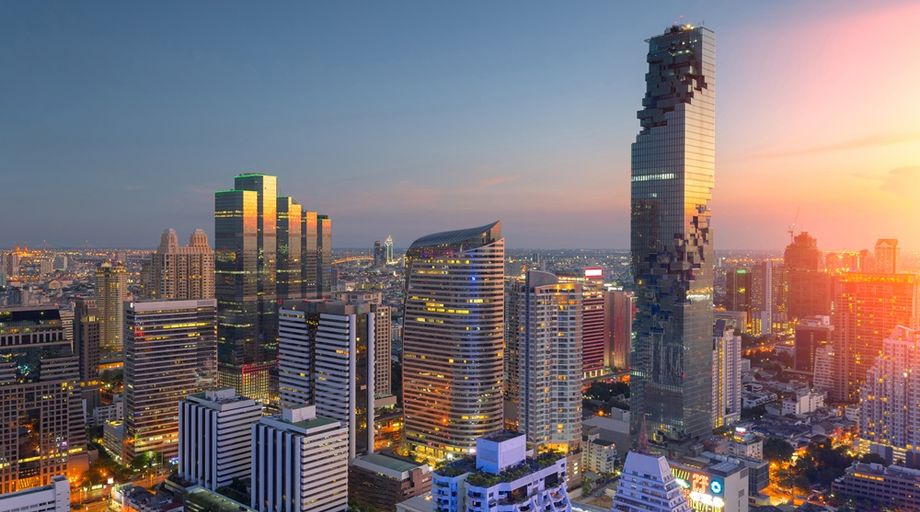 Bangkok has a comparable number of hosted or confirmed conferences as Seoul despite its smaller leader base. Photo Credit: AdobeStock/Getty Gallery]
Bangkok achieved a comparable number of hosted or confirmed conferences despite its smaller leader base, which GainingEdge says highlights strategic opportunities for both cities to optimise performance.
A similar trend is observed in the large congress segment, with Seoul again leading in intellectual capital (443 associations) but recording the lowest Harnessing Ratio in the set. Conversely, Bangkok achieved the highest ratio and comparable results.
So, what now?
Destinations with a relatively low harnessing ratio indicates a gap between a destination’s intellectual capital and its success in converting that potential into hosted events.
To close this gap, the report’s authors recommend that destinations should invest in bidding capabilities, expand and professionalise ambassador programmes, strengthen bidding teams, and enhance subvention schemes and event support initiatives. These efforts help local leaders become more active advocates in attracting international meetings, according to the study.
On the other hand, relatively high Harnessing Ratio suggests that a destination is effectively leveraging its local intellectual capital.
Recommended actions to maintain this momentum include establishing association development and legacy programmes, supporting scientific collaboration and international research engagement, and fostering opportunities for local leaders to assume or retain positions within international association governance.
Track and engage, always
In both scenarios, the study’s authors assert that the essential first step is for destinations to map and understand their full scope of intellectual capital.
“Tracking local leaders engaged in international associations must be a continuous process, as governing roles evolve regularly and represent an ever-changing, yet critical, strategic asset,” the report stated.
“If the convention bureau and the local industry have a strong and creative collaboration, they can develop advanced marketing programmes which will be significantly improved through active engagement of their local knowledge leaders.”