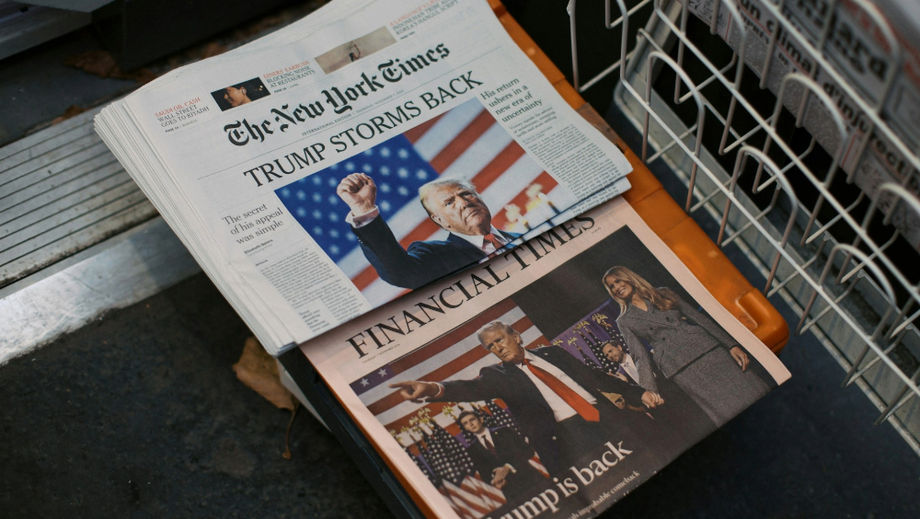
 Trump’s policies create uncertainty for global event planning. Photo Credit: Unsplash/The Now Time
It’s been a little over a month since Donald Trump was inaugurated as the 47th President of the United States. Could his policies announced thus far – such as new tariffs and cuts to the federal workforce – have an impact on where US groups choose to host their events? And will this have a further impact on Asia’s events sector too?
Wait-and-see approach
Catherine Chaulet, Global DMC Partners president and CEO, has observed specific impacts on certain industries, particularly pharma meetings, due to policy changes at the National Institutes of Health, which have restricted communication and participation in conferences until further notice.
Additionally, workforce reductions in government agencies have led to delays in visa approvals, further complicating international travel. Tariffs announced on certain goods and services could also increase costs, placing additional strain on already tight budgets. Furthermore, geopolitical factors stemming from new policies may influence the perception of some destinations, making them appear more challenging for group travel.
"We are noticing more of a cautious, wait-and-see approach, where companies are reviewing contract terms, especially regarding cancellation policies, and making more last-minute decisions."
Catherine Chaulet, president and CEO, Global DMC Partners
“That said, we have not observed a downturn in demand for travel to Asian countries – if anything, interest remains strong,” she says. “The broader trend we are noticing is more of a cautious, wait-and-see approach, where companies are reviewing contract terms, especially regarding cancellation policies, and making more last-minute decisions.”
Chaulet adds that if tariffs lead to higher costs for goods and services, this could put additional pressure on budgets, making companies more cautious about international meetings and incentives. She believes that there is a potential upside, however, as corporate tax cuts may increase available budgets for incentives and meetings in the long run.
Growing uncertainty for international travel
For Rhanee Palma, CEO of Rhanee Palma and Co, Trump’s policies, particularly around immigration and visas, have created additional uncertainty for international travel. She notes that this has contributed to a more cautious approach by US organisations, with both companies and academic institutions reassessing their global engagement strategies.
“However, these challenges are part of a broader trend shaped by geopolitical shifts, global economic factors and evolving travel regulations,” she says. “While US policies have played a role, this is part of a larger rethinking of how organisations approach international meetings and travel.”
"Trump’s policies, particularly around immigration and visas, have created additional layers of uncertainty for international travel. This has contributed to a more cautious approach by U.S. organisations, with companies and academic institutions reassessing their global engagement strategies."
Rhanee Palma, CEO, Rhanee Palma and Co
Palma adds that the hesitation to travel internationally is influenced by multiple factors. While US immigration policies have made travel logistics more complicated, this trend goes beyond politics.
“Economic pressures, shifting geopolitical relationships and risk management concerns are all playing a role,” she says. “Many companies are adapting by opting for smaller, more frequent regional meetings, reducing offsite events, or utilising their own office spaces rather than travelling abroad. Hybrid formats remain an option, but rising costs in the US have made fully in-person domestic events more common.”
Stability remains a key concern
She stresses that for corporations, the priority is stability and predictability when planning travel. If a destination presents too much uncertainty — whether due to visa challenges, economic instability or changing regulations, many prefer to scale back international travel rather than take unnecessary risks.
Timothy Glanzer, chief elevation officer at Elevated Meeting Solutions, says he has not seen any disruptions in event protocols and patterns as of yet. However, he has noted that groups based in both Canada and Mexico are hesitant to move forward with their US-based events due to the tariff threats that Trump voiced in January,
“Normal patterns are still happening. However, I’m hearing from my clients that they are watching what President Trump is doing and what impact that may have on future group travel abroad and even for domestic group travel,” he says.