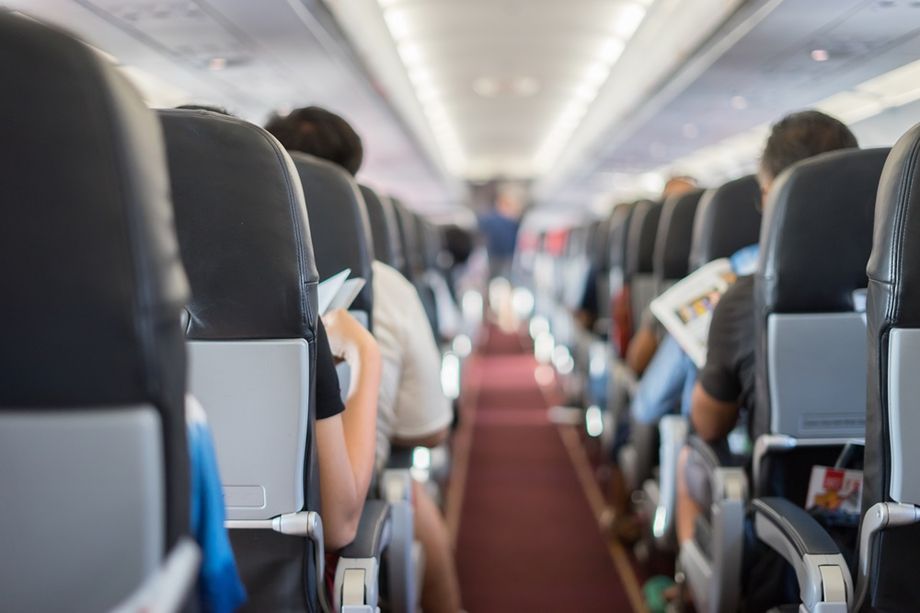
 There will be more airline seats for all segments by Q1 2024 than in Q1 2019. Photo Credit: Adobe stock/Have a nice day
Results from the latest FCM Global Quarterly Trend Report shows that
whilst travel demand is growing, the increases have moderated for Q3
2023.
With global inflation forecast at 5.2% in 2024, compared to the
global average of 8.7% in 2022 and an estimate average of 6.8% in 2023,
2024 increases will not be as high as previous years. However, corporate
travel programmes should budget for moderate increases.
The key figures showed that Q1-2024 is forecast to have +71.8 million
(+5.3%) more seats (both domestically and internationally) than in
2019, for the same period. The final 2023 seat capacity is forecast to
be -2.2% down in 2019.
Air seat growth shows Africa leading the way with a predicted
increase of 14%, followed by the Middle East (11%), Latin America (8%),
North America (8%), Asia (7%), Australasia (flat), and Europe down 2%.
One of the biggest impediments to recovery so far has been a lack of
airline capacity and competition. Conditions are gradually improving,
which is expected to benefit travellers as the year progresses, but the
concern remains regarding the lack of available seats on services
between Australia and Europe, via the Middle East.
According to IATA (August 2023), global Passenger Load Factors (PLF)
were at 84.6%, with domestic PLF sitting at 83.5%, and international PLF
reporting 85.4%.
Domestic PLF across major markets was led by the USA at 84.5%,
followed by India (83.9%), Brazil at 83.1%, Japan (82.5%), and Australia
at 82.3%. International PLF was led by North America at 87.7%, as the
highest performing region compared to the lowest, Africa at 76.2%.
This FCM Consulting quarterly report draws on global data sourced
from FCM and Flight Centre Travel Group corporate booking data, for
travel from July to September 2023 (Q3-2023). The report uses Cirium
aviation schedule data as of 23 October 2023. Airfare pricing variations
exclude all taxes.