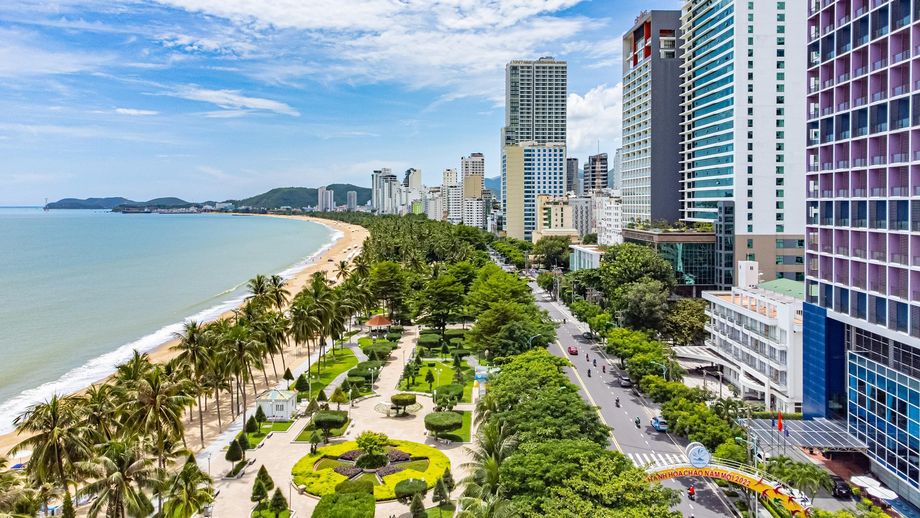
 Locales that traditionally appeal to leisure travellers are becoming increasingly relevant in business travel. Photo Credit: AdobeStock/pierrick
Southeast Asia has a gained new edge among business and MICE travel with the resurgence of bleisure in cost-sensitive times, according to a new report by FCM Consulting.
As organisations scrutinisise travel budgets more than ever and assert greater cost controls, companies are looking beyond the usual business hotel types. Many are also opting for competitive rates and value-added deals to manage expenditures efficiently.
“Policies increasingly focus on traveller wellbeing, advocating for accommodations that offer wellness facilities and health-conscious menus,” the report noted.
This trend is apparent globally, with rising demand for properties providing fitness centres and nutritious dining options.
Culture, leisure appeal shores up SE Asia
The availability of hotels that facilitate leisure activities alongside business facilities means that more corporates are choosing traditionally leisure locales, like Southeast Asia and the Mediterranean, for business.
Business travellers are interested in local culture and cuisine. Hotels in culturally vibrant regions that integrate local aspects into their services are especially attractive in these times.
At the same time, business travellers are increasingly extending work trips for personal leisure.
“By allowing travellers to benefit from negotiated corporate rates for their leisure component – provided the personal segment is cost-neutral for the organisation – companies can support work-life balance while maintaining control of programme costs,” Felicity Burke, head of FCM Consulting APAC said.
If I were reviewing a client’s travel and event calendar right now, I’d be looking at whether we could shift conferences, leadership meetings, or large team gatherings into cost competitive Asia destinations.
Felicity Burke, head, FCM Consulting APAC
Asia’s cost advantage
Moreover, Asia continues to offer cost-competitive opportunities for corporate travel and business events.
“If I were reviewing a client’s travel and event calendar right now, I’d be looking at whether we could shift conferences, leadership meetings, or large team gatherings into cost competitive Asia destinations. It’s a smart way to stretch budgets while creating unique and high-quality experiences. The savings can then be channelled into traveller activations, dining experiences, etc.,” said Burke.
Data from the first half of 2025 shows the region remains significantly more affordable than the global average. Total trip costs in Asia averaged around US$972, nearly 40% lower than the global average of roughly US$1,600. Average hotel rates across Asia sat at around US$170 per night, the report revealed.
The price advantage is helping sustain corporate travel, meetings and group movements across the region despite wider economic pressures such as geopolitical tensions, tariffs and slower growth in some markets.
Aviation dynamics
Citing figures from the International Air Transport Association, Burke shared that international routes across APAC recorded strong performance, with load factors averaging around 83%, among the highest globally.
APAC’s domestic flights accounted for about 14.7% of global airline seats as of May 2025.
Large domestic markets such as China and India continue to dominate regional capacity, supported by extensive domestic networks and high passenger load factors of about 84% and 86% respectively.
Overall, high seat occupancy means airlines have little incentive to heavily discount fares, particularly on major corporate and leisure routes. Still, strong competition among carriers on many intra-regional routes is expected to help keep prices relatively competitive.