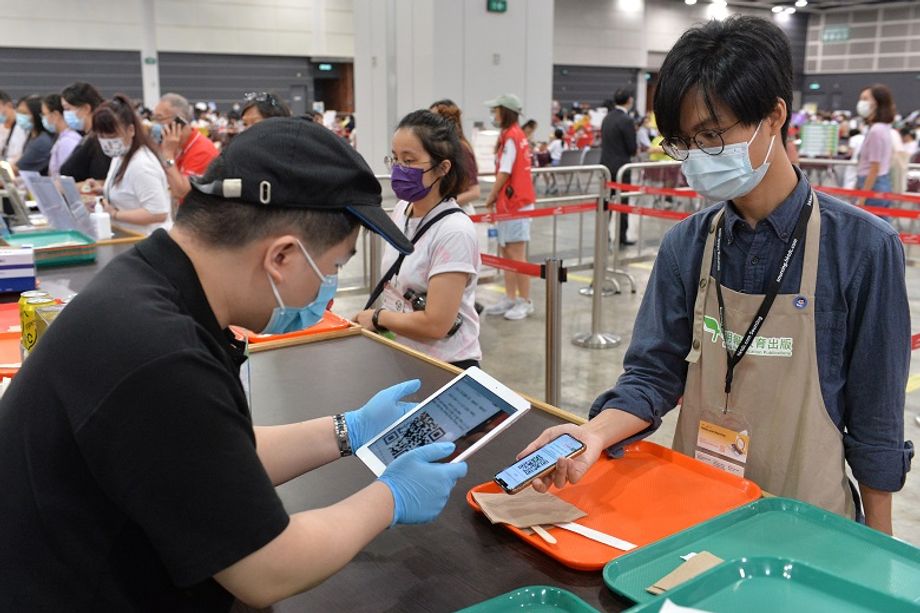
 Attendees scanning QR codes to redeem meal boxes at HKCEC. Photo Credit: HML
Managing the return of in-person events has been both welcome and
tricky, but none more so than executing the universal crowd-pleaser:
buffet lines. How have operators levelled up in their F&B service,
feeding fun and delicious meals, while keeping to Covid-safe rules?
A mainstay at business events, buffets have been banned ever since
the pandemic in early 2020, returning to Singapore's tables only a year
later in April 2021, and much later for Malaysia's venues following
business resumption in October 2021.
So, which type of F&B services are event planners and venue
operators seeing most of, and what are some of the creative catering
ideas for post-pandemic networking and meal breaks?
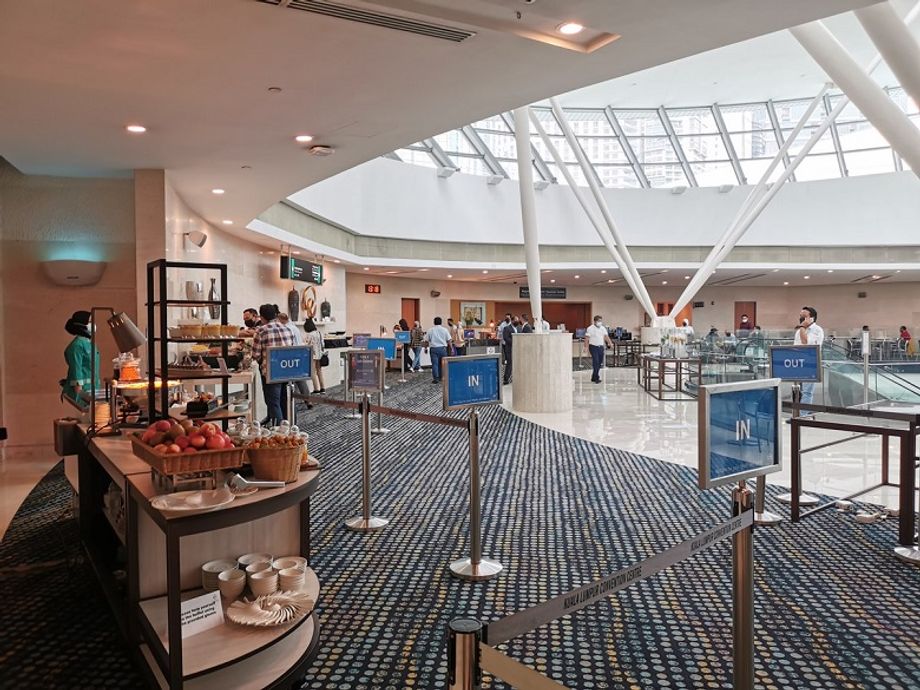 Buffets used to be a mainstay at business events, although in a post-pandemic setting, hotels have adopted the a la carte buffet concept. Photo Credit: KLCC
Less is more
In post-Covid days, the shared break station is no more. Instead of
sumptuous grazing tables, individually-wrapped snack boxes are seeing a
resurgence.
Alan Pryor, GM at Kuala Lumpur Convention Centre notes attendees are
asking for "individually packed food for either on-site dining or to
take away", while Yan Ping Mew, Director of Marketing and Communication
at Conrad Hotels & Resorts adds "organisations request us to deliver
afternoon tea sets to their participants when they are doing hybrid
meeting gatherings".
"Bento deliveries are popular as they are straightforward and
relatively more fuss-free while at the same time being able to cater to
different special dietary requirements," explains Robert Stirrup,
Director of Culinary Operations at Fairmont Singapore.
For the groups that still prefer buffets, such as at Malaysia's One
World Hotel, GM Alvin Koh says "plated meals and assisted buffets are
becoming our event staples. We also cater Work-From-Home meals like
Bento sets and meal kits for employees who are working remotely from
homes".
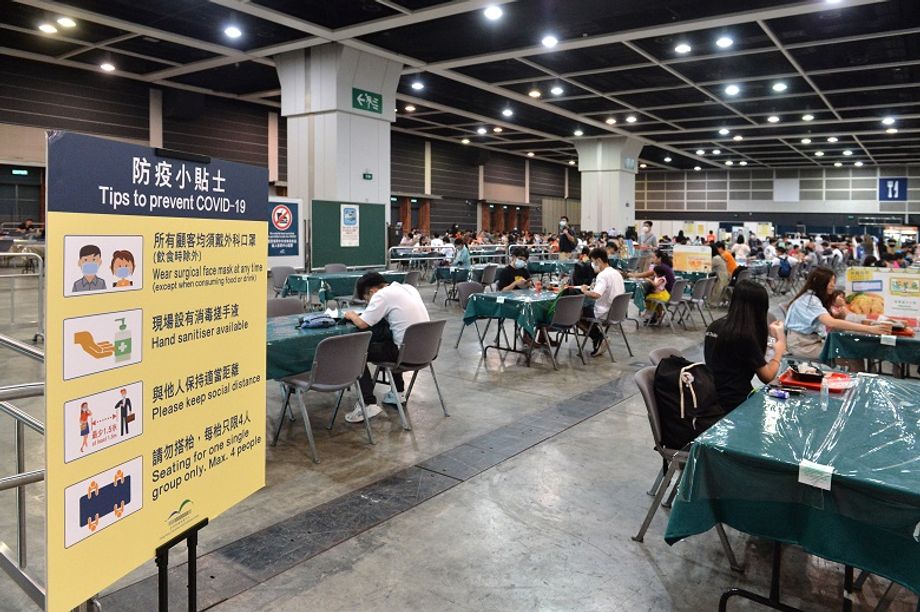 Designated dining areas to facilitate social distancing at HKCEC. Photo Credit: HML
Still, safety comes first
Dining out is never the same again, especially so in larger event
conditions, with a universal implementation of safety protocols such as
plexiglass partitions, while masked and gloved service staff dish food
onto plates on behalf of guests.
Over in Hong Kong, Hong Kong Convention and Exhibition Centre
(Management) Limited (HML) which operates the Hong Kong Convention and
Exhibition Centre (HKCEC) splits up F&B service for exhibitors,
buyers, visitors, and contractors in designated areas with pre-set
seating to observe social distancing rules, and transparent partitions
between tables.
As well, exhibitors, contractors and organisers are recommended to
pre-order their meals online and redeem their meal boxes using HKCEC's
QR code to minimise contact and cash transactions.
Costs have also shot up across the board.
KLCC's Pryor estimates a "20% increment in cost due to the provision
of additional space, individual meal packaging, additional tables,
chairs and linen, as well as extra manpower".
Fairmont Singapore's Stirrup adds that food costs have gone up to
50% depending on products and supply chains, while delivery charge has
also risen "an average of 15%, due to shortage in courier providers".
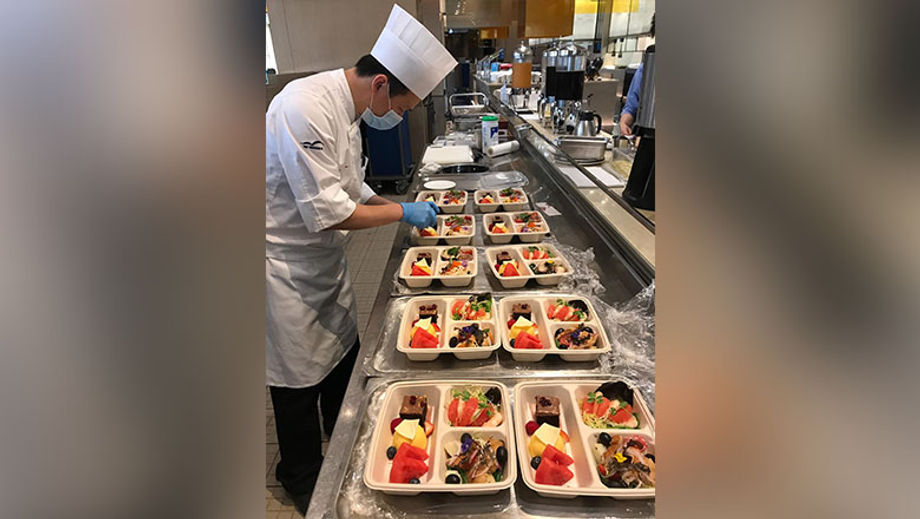 Beyond bento boxes, think cooking classes or how about curated cocktails for deliveries? Photo Credit: HML
Tips for planners?
Creativity knows no bounds.
Fairmont Singapore has for instance done branded customisation for
corporates in the likes of logos on pastries, macaroons, chocolates, or
for special occasions such as bespoke teas/mother’s day gifts; as well
as extending bundled deals with curated cocktails for deliveries.
"We’ve also had private group dinners delivered to individual houses;
partnerships with cooking classes and ingredients delivered so all can
cook over a zoom bonding session together," says Jessie Lim, Director of
Conference Services & Sustainability at Fairmont Singapore.
Both KLCC and HKCEC have also introduced external set-ups beyond the
restaurant or main kitchen, such as "food stalls and kiosks safely
and strategically set up in areas with high footfall to encourage
purchase," says Pryor, and "F&B concession stands with differing
menus catering to event type and attendance volume" says HKCEC.
With planners increasingly slotting sustainability into their agenda,
Yan says Conrad is moving towards initiatives such as "sourcing local
produce, plant-based protein ingredients into our menus, and championing
the use of 'ugly vegetables'".
Finally, plan, and plan well ahead in advance.
"While hotels have dedicated teams who will be able to assist them
throughout the event planning process, there are more factors to
consider these days. The organiser also needs to constantly understand
the changing guidelines and be flexible to these changes," advises Yan
of Conrad Hotels & Resorts, referring to changing safe management
measures in Singapore.
With seven-page guidelines and inevitable postponements, Fairmont
Singapore's Lim is thus thankful that "our customers and guests
appreciate our willingness to be open, flexible and adaptable to their
requests".