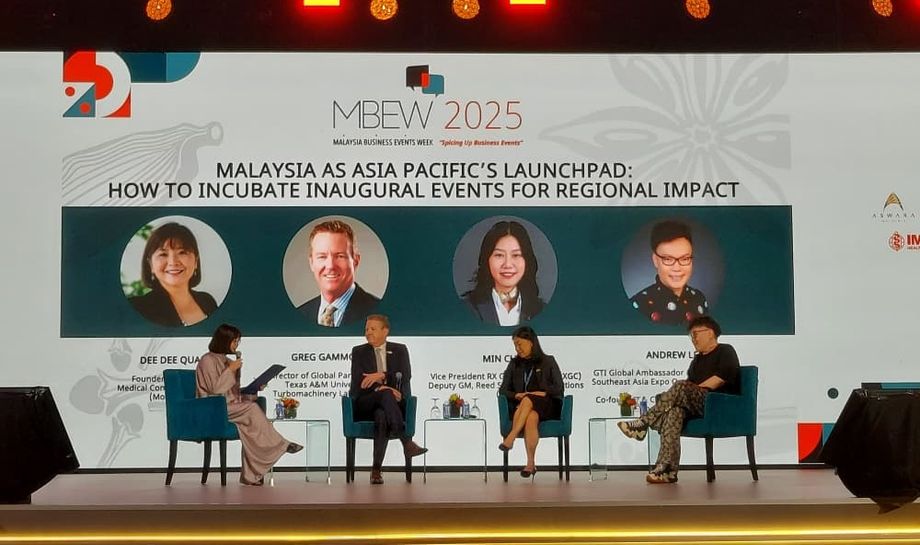
 At Malaysia Business Events Week (MBEW) 2025, speakers pointed to Malaysia's unique selling points, including its multilingualism, cultural diversity, cost-effectiveness and visa-free ASEAN access.
At Malaysia Business Events Week (MBEW) 2025, industry leaders made a strong case for Malaysia as a destination of choice for inaugural events in Asia Pacific.
In the panel discussion, “Malaysia as Asia Pacific’s Launchpad”, speakers pointed to Malaysia's unique selling points, including its multilingualism, cultural diversity, cost-effectiveness and visa-free ASEAN access.
Strong local partners can make or break market entry for events. For Greg Gammon of Texas A&M University Turbomachinery Laboratory, this was the determining factor in moving the Asia Turbomachinery and Pump Symposium (ATPS) conference from Singapore to Kuala Lumpur in 2022.
“MyCeb introduced us to various agencies, including the Ministry of Investment, Trade and Industry (MITI). Through these introductions, we were able to explore relationships with all of these other entities, including PETRONAS.” Together with MyCEB ‘s incentives and resources, Malaysia offers a competitive destination for business events, said Gammon.
For organisers, easy access and connectivity is key. With ASEAN visa-free access and competitive costs, it just makes it easier to sell Malaysia to international delegates, said Andrew Lee of GTI Southeast Asia Expo Organizing Committee.
“Holding an event in Malaysia, at least for our ASEAN neighbours, makes it easy for attendees to get in. That by itself was one of the driving factors.”
Min Chen of RX Greater China said, “Malaysia’s strategic location in Southeast Asia, coupled with its well-developed infrastructure, is a significant advantage. The country’s event facilities continue to evolve, with ongoing upgrades to venues and supporting services to meet the needs of large-scale international events.”
In addition, Malaysia’s cost structure remains far more competitive than many regional alternatives, giving organisers greater value without compromising quality, she added.
“Malaysia's multilingual environment, particularly the widespread use of English and Chinese, makes it an attractive destination for international events,” said Lee. This dual language advantage smooths communication for organisers and enhances delegate experiences, especially for markets like China, where cultural familiarity plays a role in participation and engagement.