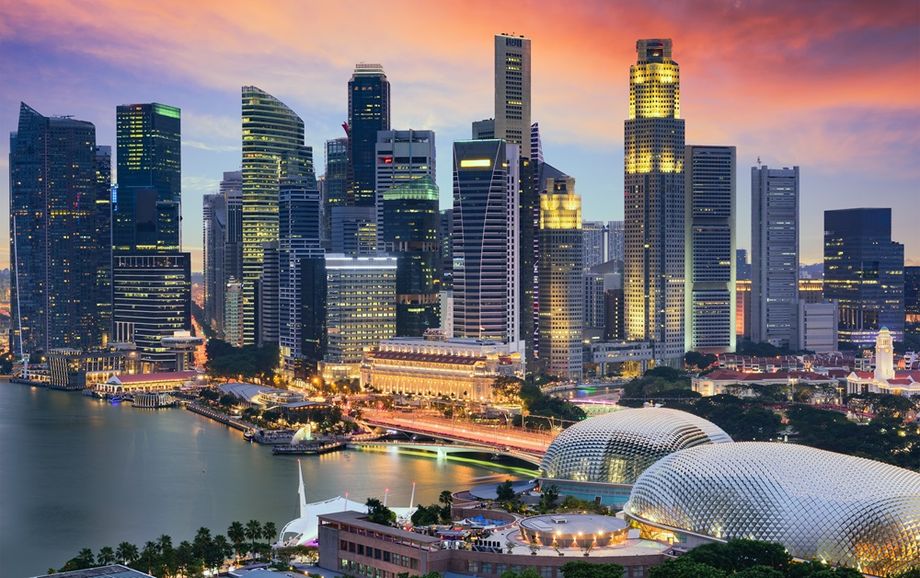
 Singapore is known for its “hard power”, but “soft power” is where the country may currently be lacking. Photo Credit: Adobe Stock/SeanPavonePhoto
Singapore's hard power prowess is well-established, but industry
experts at the recent Singapore MICE Forum suggest that the city-state
could do more to bolster its soft power, particularly through MICE
events and reputation building.
Speaking at a panel discussion titled “Singapore: Riding the Next
Wave”, Koh Buck Song, author of "Brand Singapore" and country brand
adviser, argues that while Singapore's stability and reliability are
widely recognised, it lacks in soft power – the cultural and intangible
attributes of a country. "Soft power needs showcase, it needs brand
ambassadors, and any MICE event can be such a platform. It’s a matter of
priority and more could definitely be done.”
Malminderjit Singh, COO and regional director, APAC at Speyside
Group, adds, "As Singapore matures as an economy, democracy, and
society, we need to ask how we can maintain our economic relevance to
rising powers, given that the rest of the region is catching up fast.
What more can we offer them that we haven’t already offered?”
Soft power needs showcase, it needs brand ambassadors, and any MICE event can be such a platform.
Koh Buck Song, author of "Brand Singapore" and country brand adviser
‘Everyone can be like the Raffles Hotel’
Koh cites the Raffles Hotels & Resorts brand as an example of
soft power in action. Despite Singapore no longer controlling the chain following its acquisition by Colony Capital in 2005 – subsequently by AccorHotels in 2015 – its global presence continues to contribute to Singapore's branding.
“[Raffles Europejski Warsaw] had included the Singapore Sling in the
menu with its own write-up, and there were two clocks in the lobby
showing the time in Warsaw and the time in Singapore,” said Koh,
recounting a recent visit to the property in Poland.
This was a heartening realisation for Koh, who suggested taking a
leaf out of the same playbook. “All of us can be like the Raffles
Hotel,” he said. “All of us can do something to add to Brand Singapore
while also achieving our personal and professional goals.”
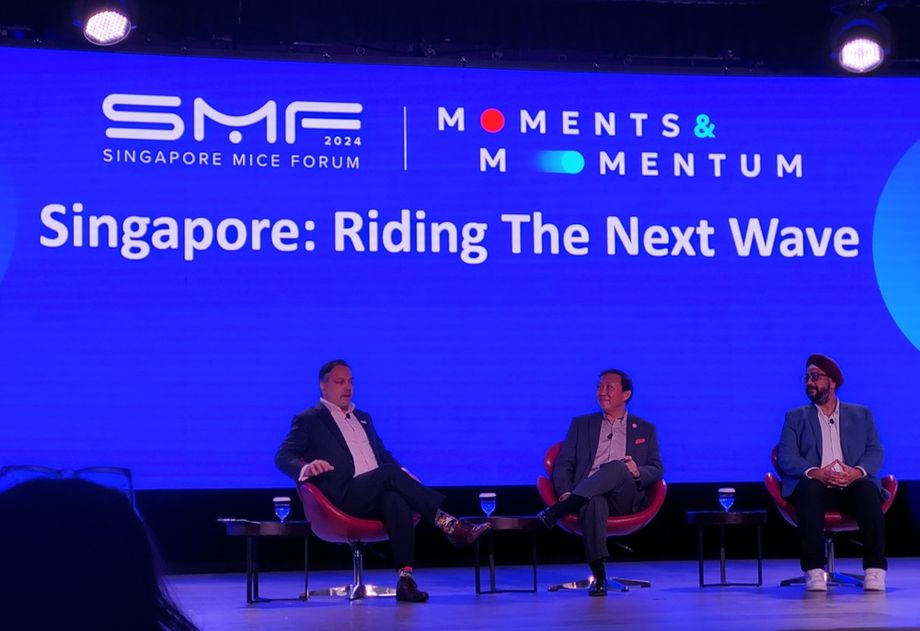 Experts discussed Singapore’s branding on the global stage at Singapore MICE Forum.
Soft power, MICE power
Singapore's popularity with MICE groups may already be boosting its
soft power. The global MICE industry is expected to grow by 7.2% from
2023 to 2032, surpassing US$1.7 trillion. The Asia-Pacific region is set
to expand at an even higher rate of 7.4%, potentially accounting for
almost half of the global market share by 2032.
Michael Wilton, CEO & Managing Director at Messe Muenchen
International Asia, notes that recent disruptions have created
opportunities, particularly in Southeast Asia's diverse markets, where
Singapore’s hub position makes it an attractive destination to launch
events to tap and access the regional markets.
“There's been a lot of disruption over the last few years, and that's
opened up opportunities, there are new industries popping up and new
subjects are becoming more relevant,” he said.
“Southeast Asia is a kaleidoscope of different markets, so launching
[new businesses] becomes attractive as there are untapped subjects in
these particular markets we can take advantage of.”
Earlier this year, Singapore also launched its campaign to be the “World’s Best MICE City”, with a focus implementing innovative technologies to enhance event immersion and accessibility.
With efforts taken to further encourage MICE investment and
opportunities, Edward Koh, executive director of the Singapore Tourism
Board, says the industry’s future is bright.
“We see a lot more assistive technology like text-to-speech
conversion and voice recognition that help people with disabilities live
a better life, and we see them being used in events,” he said. “There’s
also a lot of interest in education, and I think that’s a reflection of
the industry’s interest in sustainable practices, and a drive to do
more.”