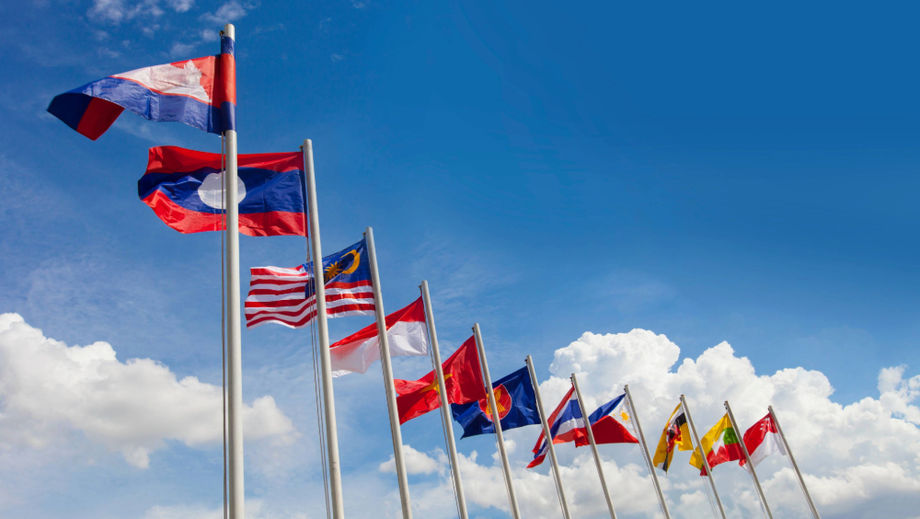
 At BE In Sabah 2025, industry leaders discussed how ASEAN can drive business events growth in the Asia-Pacific region through regional collaboration, infrastructure development and leveraging tourism strengths. Photo Credit: Adobe Stock/OPgrapher
With a population exceeding 680 million and rapid economic growth, ASEAN is stepping into a new era of business events. While established hubs like Singapore and Bangkok continue to thrive, opportunities also lie in the region’s emerging MICE cities. From Indonesia’s evolving capital shift to the strategic positioning of East ASEAN markets, untapped destinations are gaining momentum as key players in the business events landscape.
Leveraging East ASEAN’s strategic position
Asia-Pacific remains a powerhouse for business events, and ASEAN is uniquely positioned to fuel its growth. At BE In Sabah (BEiS) 2025 in Kota Kinabalu, a plenary session titled Unlocking Business Events Expansion Opportunities in Asia Pacific: How Can ASEAN Leverage to Fuel APAC Growth? highlighted how sub-regional markets can strengthen their role in the industry.
“Asia-Pacific is a source of business and inspiration, and sub-regional markets must capitalise on their strategic position,” said Datuk Dr. M Gandhi, president of Malaysian Association of Convention & Exhibition Organisers & Suppliers (MACEOS). “With 81 million people in the BIMP-EAGA region – or what I call ‘East ASEAN’ – Brunei, Indonesia, Malaysia, and the Philippines should position themselves as gateways to international markets. This localised approach will be the future of ASEAN, offering stronger connectivity and economic opportunities.”
"Rather than competing with established hubs like Singapore and Bangkok, ASEAN must focus on developing sub-regional strengths to create a more integrated and sustainable business events ecosystem."
Datuk Dr. M Gandhi, president, MACEOS
He emphasised that destinations like Penang and Kuching are already natural MICE hubs, given their close ties to Southern Thailand and Borneo respectively. However, infrastructure remains a barrier to seamless connectivity. “It’s easier to fly from Kota Kinabalu to Hong Kong than to Bintan, and travellers from Davao, for instance, must transit through Manila to reach (Kota Kinabalu),” he noted.
According to Dr. Gandhi, business events can serve as a platform to address these gaps, strengthening regional linkages and driving long-term economic development. “Rather than competing with established hubs like Singapore and Bangkok, ASEAN must focus on developing sub-regional strengths to create a more integrated and sustainable business events ecosystem,” he added.
Related: Why second-tier MICE cities are picking up
Government support for long-term MICE growth
Greater government involvement in MICE infrastructure is essential if ASEAN is to solidify its position as a serious contender in the global business events industry. Hosea Andreas, chairman of the Indonesia Exhibition Companies Association (IECA), shared Jakarta’s limitations in hosting large-scale conferences and business events due to infrastructure constraints and strong competition from regional hubs like Singapore and Kuala Lumpur.
However, with Indonesia’s capital relocating to Nusantara, Bapak Hosea believes that Jakarta has an opportunity to retain and expand its MICE activities. “That transition will take three to five years, and Jakarta must use this window to strengthen its position as a premier business events destination with greater government investment in MICE infrastructure,” he said.
Building on ASEAN’s leisure tourism success
ASEAN’s strength in leisure tourism provides a natural foundation for business events expansion. Nooch Homrossukhon, director of corporate image & communications at the Thailand Convention and Exhibition Bureau (TCEB), emphasised how Thailand’s strong repeat visitor base offers a strategic advantage for MICE growth.
“Thailand has many repeat visitors. If travellers feel safe and comfortable returning time and again, that provides a strong foundation to bring business events into our country,” she noted.
Beyond infrastructure, Nooch stressed that a destination’s true competitive edge lies in its cultural authenticity and hospitality. “True hospitality and cultural authenticity cannot be built overnight,” she said, underscoring how these innate qualities set Thailand apart as a MICE destination. Other ASEAN nations, she suggested, should similarly harness their unique cultural assets to differentiate themselves as MICE destinations.