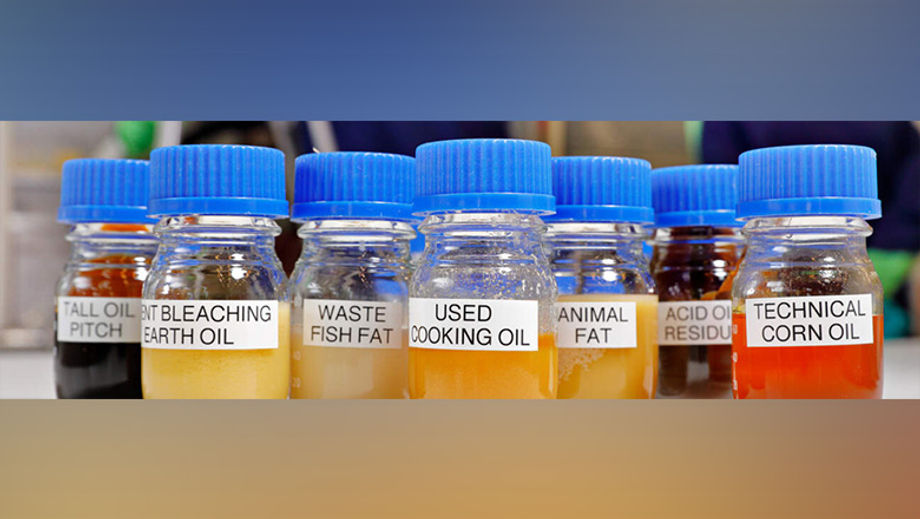
 SAF production: where government money leads, private money will follow. Photo Credit: Neste
The 3rd Conference on Aviation Alternative Fuels (CAAF/3) in Dubai
has delivered a message of hope for sustainability advocates: supportive
policies that will propel aviation’s decarbonisation.
The event which was hosted by The International Civil Aviation Organization (ICAO) delivered critical agreements on:
· A global framework to promote Sustainable Aviation Fuel (SAF)
production in all geographies around the world. The aim is that
aviation fuel in 2030 is 5% less carbon intensive than fossil fuel used
today by the industry.
· Acknowledging that certain States have the capacity to progress as a faster pace, and that others do not.
· Capacity building, a “Finvest Hub”, and voluntary technology
transfer, are all among the measures put forward to ensure that all
countries can partake in a global SAF market.
· Enabling airlines to claim the environmental attributes of
their SAF purchases against their decarbonisation obligations, based on a
global and robust SAF accounting framework.
“Governments have understood the critical role of SAF to achieve net
zero emissions for aviation by 2050. The CAAF/3 results add a vision on
the shorter, 2030, time horizon that is ambitious. To that end, the
CAAF/3 agreement signals to the world in no uncertain terms the need for
policies that enable real progress.
“There is no time to lose. IATA now expects governments to urgently
put the strongest possible policies in place to unlock the full
potential of a global SAF market with an exponential increase in
production,” said Willie Walsh, IATA’s director general.
Demanding more SAF
Airlines’ demand for SAF vastly exceeds the availability of SAF
today, which is limited to 0.2% of airlines’ jet fuel consumption in
2023. Airlines have sent major demand signals to the SAF production
market:
· All SAF produced in 2022 was bought, at an additional cost to
the industry of around US$500 million, as SAF is priced at a
significant premium over the price of jet fuel.
· There are increasing examples of airlines vertically
integrating into the supply chain, with some committing equity and risk
capital into SAF projects.
· Airlines have entered into forward purchase agreements for
SAF worth around a total of US$45 billion, well in excess of today’s SAF
availability.
“We need to see governments acting on the CAAF/3 declaration with
policies that expand SAF production in all its shapes and forms. Despite
unequivocal demand signals, the SAF production market is not developing
fast enough. We need SAF everywhere in the world, and to that end, the
right supportive policies – policies that can stimulate production,
promote competition, foster innovation, and attract financing - must be
put in place today,” said Walsh.
Added Marie Owens Thomsen, IATA’s senior VP sustainability and chief
economist: “The goal is maximising SAF production everywhere with
positive, not punitive, policy measures. Airlines are ready with open
arms to catch the resulting SAF production. While airlines are at the
sharp end of decarbonisation, they cannot bear the burden alone.
“CAAF/3 has again made it clear that aviation’s decarbonisation will
require the wholehearted and united efforts of the entire value chain
and governments as we all focus on net zero by 2050. To be perfectly
clear, where government money leads, private money will follow. It is
absolutely essential that governments play their part, and we will
certainly play ours.”