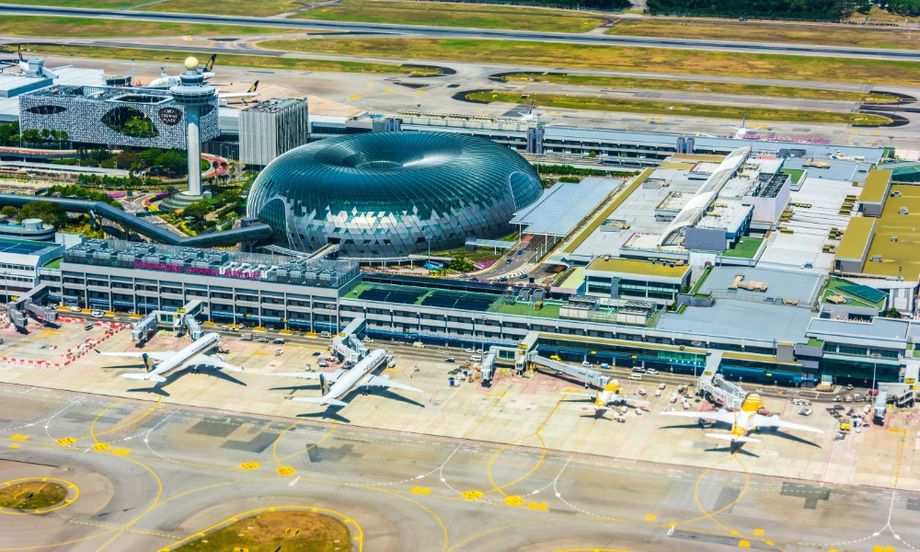
 The sustainable fuel levy is part of Singapore's broader sustainable air hub ambitions, with sustainable fuel to form 1 per cent of all jet fuel used at Changi and Seletar airports in 2026. Photo Credit: Adobe Stock/monticellllo
Starting in 2026, passengers travelling from Singapore can expect higher airfares as the Singapore government mandates the use of sustainable aviation fuel (SAF) on all flights departing the country.
The sustainable fuel levy, the first of its kind in the world, will contribute to the bulk purchase of SAF, primarily derived from waste materials, which is three to five times more expensive than conventional fuel.
According to the Civil Aviation Authority of Singapore (CAAS), the levy will be fixed and determined based on the SAF target and projected price at that time, providing airlines and travellers with cost certainty.
While specific details are pending, estimates suggest economy class passengers may incur an additional S$3 (US$2.20) to S$16 (US$11.90), depending on flight distance and class of travel.
This initiative is part of Singapore's broader sustainable air hub blueprint, unveiled by Transport Minister Chee Hong Tat, who outlined 12 strategies to reduce carbon emissions and achieve net-zero domestic and international emissions by 2050.
Initially, the CAAS will aim for a 1% SAF target for a start, to encourage investment in SAF production and develop an ecosystem for more resilient and affordable supply.
The goal is to raise the SAF target to 5% by 2030, subject to global developments and the wider availability and adoption of SAF.