 Tips for hosting distracted attendees: more flexibility with meeting spaces, formats and tools. Photo Credit: Adobe stock/CasanoWa Stutio
The decline of attention span is a growing concern. Scrolling on
social media, checking messages, daydreaming, and other distractions are
costing the UK economy a whopping £19.9 billion (US$25.2 billion) each
year, according to the latest research by Queen Elizabeth II Centre
(QEII Centre).
The report “The Distracted Economy: We are losing focus – how to hold
attention and keep delegates engaged during business meetings and
events” commissioned by the London conference and events venue, reveals
that 83% of people admit to being distracted during in-person meetings
while the number rises to 85% during online meetings.
And while the nation’s dwindling focus is harming productivity and
profitability, it is also something that is worrying individuals. Over a
third (38%) of workers claimed to be concerned about their ability to
be fully focused during meetings or events, according to the findings.
The survey of 1,000 UK desk-based workers who attend both online and
in-person meetings was carried out by QEII Centre to better understand –
and tackle – the growing concern of distraction.
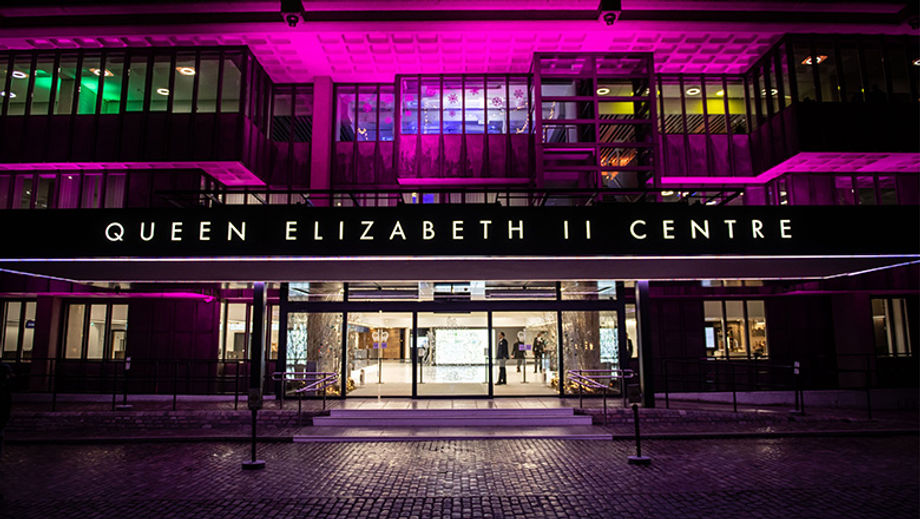 QEII Centre, a leader in sustainable events in London.
The report dives into the issue to better understand the challenges
faced by delegates in their battle to stay focused. Here are some key
findings:
The crisis of attention: The research found that
distraction during online meetings costs the UK economy more - £11.1
billion (US$14 billion) - than in-person meetings (£8.8 billion). At
work, over a third of people (38%) are concerned about their ability to
be fully focused and concentrating during business meetings or events,
and in everyday life, 43% admit to often being easily distracted during
their leisure time.
Working in a post-pandemic age: Over one-third (36%)
of respondents believe that their work colleagues have become more
easily distracted during in-person business meetings and events.
Distracted economy: 83% of respondents openly admit
to losing focus during in-person meetings and 85% during online
meetings. Senior management is not immune to distractions, with 40% of
them admitting to being distracted for a third of the meeting.
Preference for in-person meetings: The study
revealed that most respondents (49%) prefer in-person meetings over
online alternatives whenever possible. More than half of the respondents
(52%) agreed that productivity is higher when everyone attends
in-person meetings compared to online meetings.
Suggestions for moving forward
By analysing what distracts delegates, planners should plan on how to
cope with the competing demands for attention and to boost engagement
and productivity. Whilst it is good news for venues that in-person
meetings are more popular, they will have to offer more flexibility with
their spaces, formats and tools to capture attention.
Mark Taylor, chief executive, The QEII Centre, said: “In this
increasingly distracted world, we thought it was crucial to understand
the causes behind the deficit in attention span and what can be done
about it. Something has to change. From being distracted by digital
tools to boredom and multi-tasking, the findings reveal the reasons
behind the distraction and help us understand the need for more engaging
interactions. With this report, we hope to help professionals in the
event industry to collaborate impactfully and meet the ever-changing
delegate’s needs of the future.”