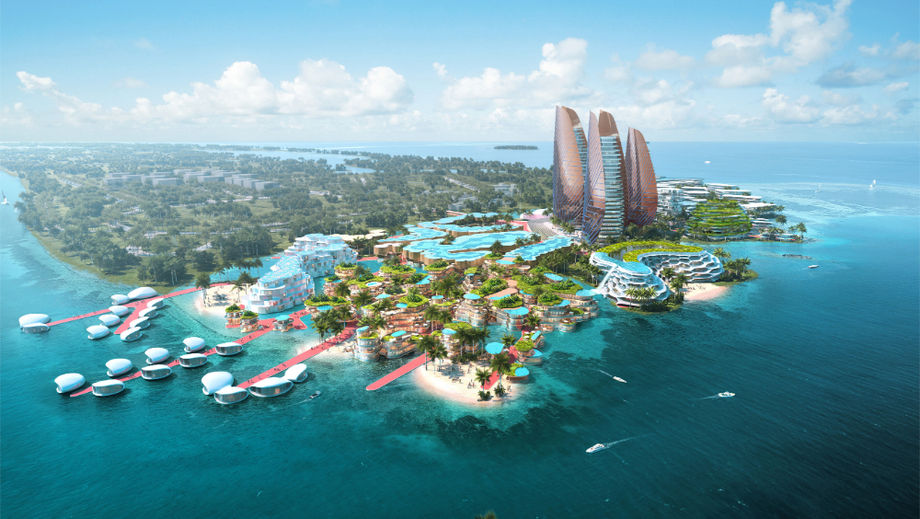
 The Maldives International Finance Centre will feature world-class sports facilities, cutting-edge wellness centres and shaded running and cycling tracks, alongside expansive green spaces
The Government of Maldives has announced plans to build the Maldives International Finance Centre (MIFC), a financial hub with a state-of-the-art conference centre as its centrepiece.
The MIFC aims to attract increasing business to the destination, positioning the Maldives as a premier place to do business. The US$8.8 billion development, in partnership with MBS Global Investments, aims to create a wholly sustainable, financial free zone in the capital Malé, designed for global financial institutions, fintech pioneers and global digital Nomads.
The state-of-the-art conference centre will have capacity for 3,500 people. The multi-purpose venue will host leading global conferences, cultural events and innovation-driven hackathons establishing Malé as a leading assembly hub, driving all year round engagement in the Maldives and further supporting the wider hospitality industry.
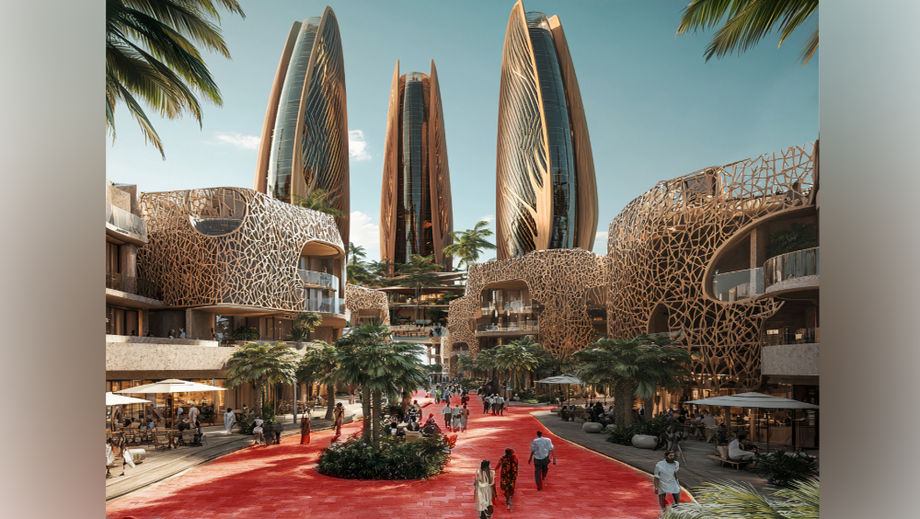 The new state-of-the-art conference centre in the Maldives is expected to accommodate 3,500 people.
According to the Government of Maldives, the MIFC will also feature world-class sports facilities, cutting-edge wellness centres and shaded running and cycling tracks, alongside expansive green spaces. Complementing its state-of-the-art office spaces, MIFC will also be home to premium retail and renowned F&B destinations, as well as cultural venues.
The hub will also include world-renowned hotel brands, a one-of-a-kind retail experience, an Oceanographic Museum and a mosque.
President of the Maldives, Dr Mohamed Muizzu said, "With the MIFC, we are shaping the Maldives of tomorrow, a beacon of innovation and national pride that will thrive in harmony with nature. The financial centre will be a symbol of economic resilience and will set a new global benchmark that will massively benefit the people of the Maldives for generations to come.”
MIFC will have a fully climate-resilient infrastructure, and the architecture and public spaces will be powered exclusively by renewable energy. The development is expected to be completed in 2030.