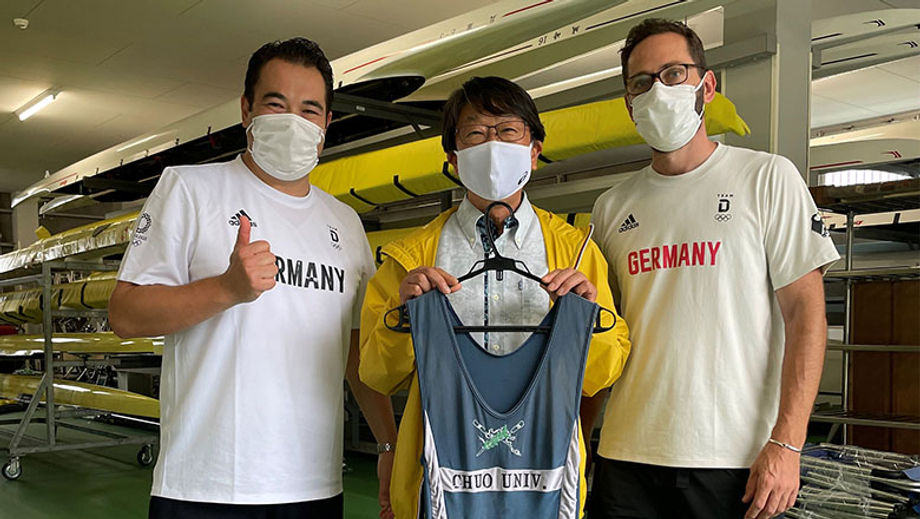
 In memoriam: Incentive planner and sports travel consultant Yuji Andreas Wendler (left) and former Kinosaki mayor (centre) pays tribute to the late Tatsunori Yuuki with his rowing uniform.
For incentive planner and sports travel consultant Yuji Andreas
Wendler, who is of mixed German-Japanese parentage, being involved in
the Olympics has been both a personal dream and professional goal.
When Teamtravel International, the Cologne-based incentive house and
Japan DMC that he founded, was appointed to organise the pre-games
training camp in Japan for the German and Swiss national rowing teams
ahead of the 2020 Tokyo Olympic and Paralympic Games, he was elated.
Spirit of omotenashi
The Japanese mindset of hospitality, omotenashi is a reference to the way that Japanese hosts pay attention to detail and anticipate their guests' needs, providing service from the bottom of the heart.
Toyooka City in Hyogo Prefecture, in western Honshu, was the host
town for the rowing teams. The city of 82,000 inhabitants is home to the
onsen town of Kinosaki, while the Maruyama River – with a gentle
sloping gradient of 1m per 10km – is particularly suitable for rowing.
On the ground, Wendler found a trusty counterpart, Tatsunori Yuuki,
who as a rower knew what would be expected and brought all the operation
pieces together. Yuuki also shared Wendler’s dream of bringing the
German and Swiss national teams to Kinosaki, where he called home.
Both Wendler and Yuuki believed Kinosaki was the perfect pre-game
acclimatisation venue for the European teams. Wendler said: “The
Olympics was like a big incentive group for us. We wanted to showcase
the best of Japan and the omatenashi spirit to the athletes.”
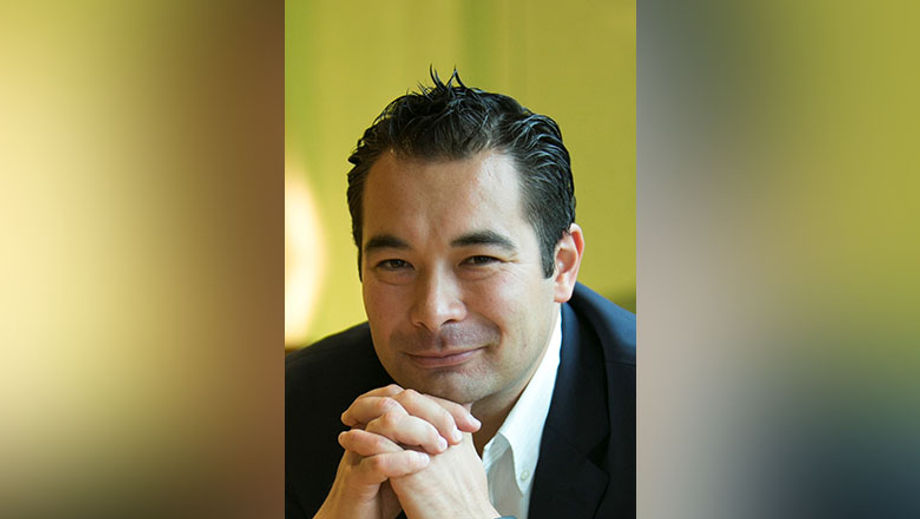 Yuji Andreas Wendler, CEO, Teamtravel International
The Olympics was like a big incentive group for us. We wanted to showcase the best of Japan and the omatenashi* spirit to the athletes.
Yuji Andreas Wendler, CEO, Teamtravel International
Coping with loss and grief
Then came the Covid-19 pandemic, which derailed the Tokyo 2020
Olympic Games and threw a spanner into three years of preparation for
Wendler and Yuuki. Overnight, some 20,000 roomnights had to be cancelled
and contracts renegotiated when the Japanese government postponed the
Olympics to summer 2021.
Then another tragedy struck. Yuuki unexpectedly passed away in April
2020 from stroke at the age of 42, leaving behind his wife, two young
kids and as-yet fulfilled dreams.
Wendler was devastated. Not only did he lose a dear friend and
business partner, he also had to rebuild contacts and renegotiate
contracts all over again.
The ever-changing Covid rules also added layers of complexity to
international travel and event planning. Japan’s Covid-19 playbook for
the Olympics meant that the teams, upon their arrival and exit from the
country, had to be maintained in a constant bubble.
When July 2021 came, the foreign athletes’ arrival in Japan became a
very underwhelming and tedious process, hardly the showcase that Wendler
had envisioned when he first undertook the project with Yuuki. After
the teams’ arrival at Tokyo-Narita airport, the delegation was quickly
ushered into coaches for a 12-hour ride to Kinosaki.
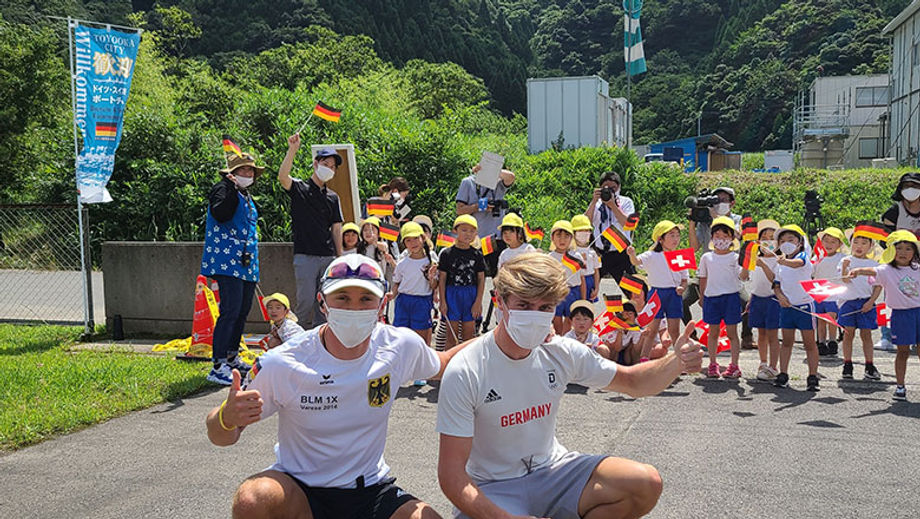 Local schoolkids giving the German and Swiss athletes a warm welcome. Photo Credit: Teamtravel International
Overcoming challenges with omotenashi
In Kinosaki, however, the delegates received an unexpectedly warm
welcome. Hotels, restaurants and bathhouses across the city were adorned
with banners emblazoned with the national flags of both countries and
“Herzlich willkommen” messages, while locals came out on the streets to
wave to the foreign visitors.
Due to pandemic restrictions, the athletes and staff were not allowed
to step foot into local destinations or have any interaction with
locals during their stay in Kinosaki. Their entire time, save for their
training on Maruyama River, was solely confined to Nishimuraya Hotel
Shogetsutei.
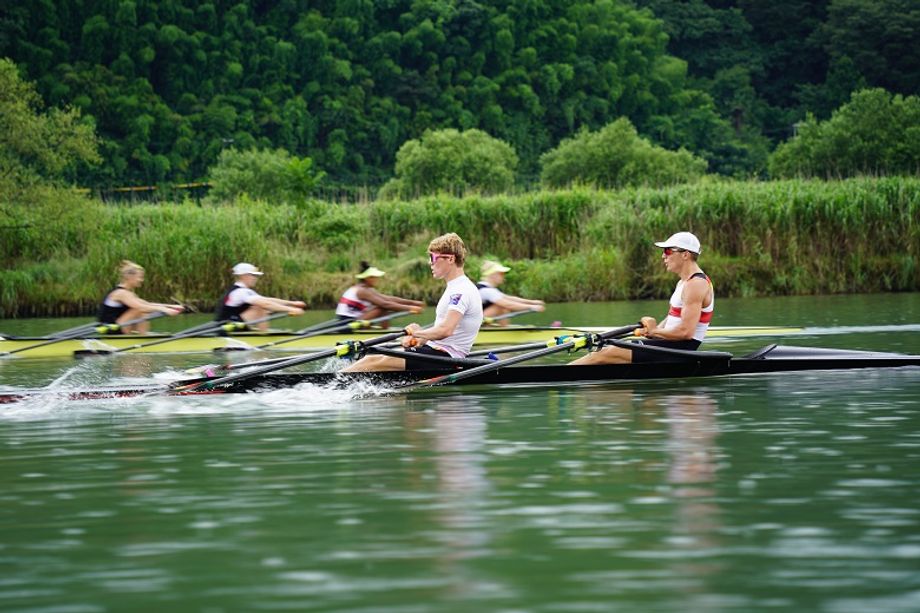 The German and Swiss national rowers trained on the gently sloping Maruyama River in Kinosaki. Photo Credit: Teamtravel International
Even small errands had to be handled by the team, from buying
softdrinks and oatmeal to tea set souvenir shopping and getting a
hairband. Wendler also met with the hotel owner and the kitchen daily to
discuss meals and adjust them based on the athletes’ wishes and dietary
concerns.
“As an open exchange was not possible, we had to find ways to bring
authentic Japanese culture and experiences to the guests and include the
local public, without breaking any Olympic rules,” said Wendler
remarked. “Finding alternative ways to make things possible was
challenging but most rewarding in the end.”
As an open exchange was not possible, we had to find ways to bring authentic Japanese culture and experiences to the guests and include the local public, without breaking any Olympic rules.
The bicultural events specialist had to think out of the box. If the
athletes could not properly step foot into Japan, then Japan had to be
brought to them through cultural experiences such as kimono/yukata
wearing, Japanese calligraphy and tea ceremony.
The Kinosaki locals tried their best to show contactless omotenashi
to the foreign visitors. School kids created lucky charms for the
athletes, while the local temple priest did a special prayer for the
teams’ success at the Olympics.
Local residents and schools were also invited to cheer on the
athletes during their twice-daily training sessions on the Maruyama
River, which greatly boosted the teams’ morale during practice sessions.
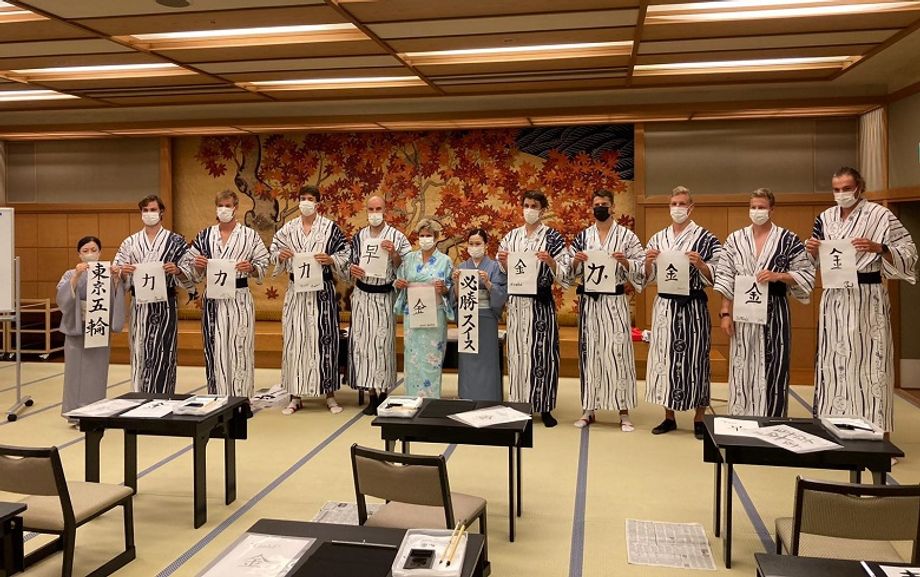 Due to pandemic restrictions, Teamtravel International had to find ways to bring authentic Japanese culture and experiences to the delegates in the hotel. Photo Credit: Teamtravel International
A host town that went out of the way
After three weeks, the Swiss and German national rowing teams checked
out of Kinosaki and moved to the Olympic Village in Tokyo. But
Kinosaki’s omotenashi spirit left an indelible impression on everyone.
Feedback from the athletes and participants was “mind-blowing”,
recounted Wendler, as many told him they would like to return to
Kinosaki for a more immersive visit.
“The Kinosaki guys deserved an award – as hosts, they made the best
of the situation. They really wanted us to come, and they didn’t cancel
on us.”
The Kinosaki guys deserved an award – as hosts, they made the best of the situation. They really wanted us to come, and they didn’t cancel on us.
For Wendler, the most poignant moment came when the teams departed
Kinosaki on coaches and residents came out on the streets. Standing
amongst the waving crowd were Yuuki’s family members – his two kids, his
wife holding up a portrait of him, and his brother carrying an urn
filled with his ashes.
“A medal for the German’s eight was something Yuuki and I had been
dreaming about,” a wistful Wendler recounted. “And he was there for
sure.”