 Whether in person or online, engagement with followers is a key attribute for social media and marketing campaigns of a business event. Photo Credit: Adobe Stock/VectorMine
As the growth director and founder of Attention Experts, George Hawwa
helps companies from around the world in over 30 different industries
develop ROI strategies from social media campaigns.
Hawwa recently spoke at The Meetings Show APAC, sharing invaluable insight about social media and marketing campaigns.
Obsolete metrics must go
For example, the number
of followers, comments, shares and likes are incorrect KPIs for
developing a successful social media marketing campaign; rates have
dropped by 40% and the Meta algorithm does not currently favour these
metrics.
However, what the algorithm looks out for is content consumption via
what he referred to as “covert engagement”. This includes metrics such
as video watch time, video views, link clicks, and profile visits, and
website visits, with its number one goal to keep people on the platform
for longer.
Another such measurement is hangtime, or how long someone stays on a
post. Said Hawwa: “For every millisecond you achieve that, you are now
getting brownie points for the algorithm. So, you've got to understand
the mechanics of these platforms and how they tick to get distribution
of your content to high quality audiences, to audiences that will
actually buy your products.”
You’ve got to be seen to be building a community and keeping people engaged… It’s not about who spends the most money, but about who actually follows best practices.
George Hawwa, Attention Experts
What companies need to understand, Hawwa stressed, is that the
algorithm protects itself from businesses that aren’t utilising it
properly and keeping people on the platform for longer. In other words,
eyeballs on a page are the new name of the game.
“You’ve got to be seen to be building a community and keeping people
engaged,” he said. “You don’t actually have to be achieving that! You
just need to be showing the algorithm; It’s not about who spends the
most money, but about who actually follows best practices.”
In the vein of community-building, businesses that seem to have a
genuine, empathetic connection with friends, family, and the general
audience do the best on social media, from an ROI perspective.
Trust – the best marketing campaign
So far,
Singaporean and Australian users place the highest priorities in privacy
protection, and event planners should be transparent about their data
usage and audience engagement. For example, Hawwa suggests that
companies should explain why the cookies – which are small pieces of
text the website visited sends to a user’s browser, helping the website
remember information about the visit and making subsequent returns to
the website easier – which are accepted are for their best interests.
For businesses that are just starting out, take note: Meta will start
these fresh profiles off by introducing a low-quality audience to avoid
risking higher-quality audiences that it saves for its best
advertisers.
At this stage, Hawwa says, the new brands will just be sold
advertising – and if the cost per 1,000 impressions (CPM) is trending
upwards, that’s a bad sign.
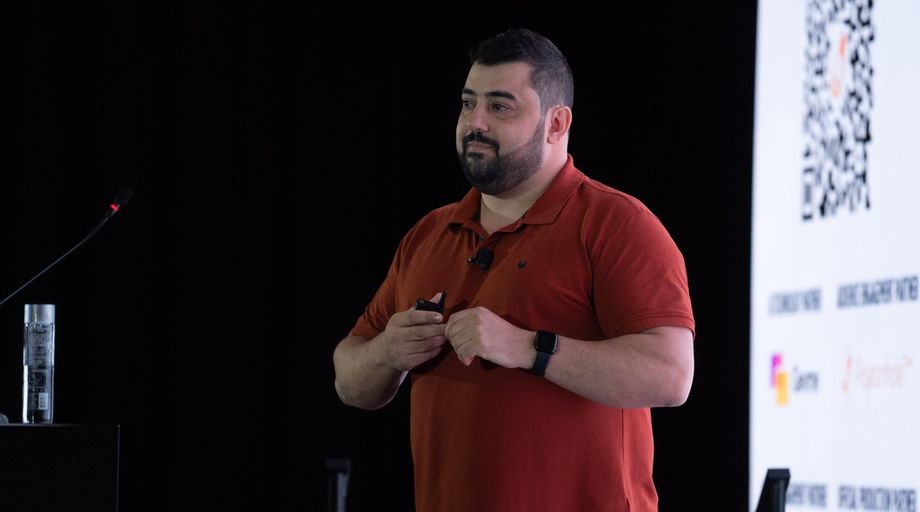 George Hawwa speaking at The Meetings Show Asia Pacific 2024 in Singapore. Photo Credit: M&C Asia
“[What this means] is Facebook is trying to minimise this risk and is
making your advertising more expensive to minimise the amount of people
that will see you; that’s another indicator that the algorithm does not
like you,” he shared. “So, keep an eye on that for the health of the
algorithm score! Spend 70% of your time on optimisation and analysis,
not chasing content – data is key for the algorithm.”
To know if a social media marketing campaign is working, listen out
for word of mouth, Hawwa says. During events, planners should not give
delegates a list of channels to tick when asking them how they found out
about an event. Since people often forget how they found out about an
event, direct questions such as “Did you find out about us on
Instagram?” are more effective.
Spend big on marketing and advertising
Between
events, brands should prioritise maintenance marketing, and Hawwa
encourages spending money on maintenance, advertising, and marketing to
databases between events. “Once we get 20-25 touch points for users –
which usually takes about six months to develop – we get an increase in
sales leads and inquiries,” he said.
This means that if businesses aren’t seeing high ticket sales for
social media, inquiries or leads, odds are they’re having engagement
problems, and haven’t been engaging with the right audience.
If you’re running an event show on finance, your event needs to show people what you know about that.
George Hawwa, Attention Experts
To be relevant, content cannot be older than two weeks, and should
position the brand as the thought leader in its relevant industry. “If
you’re running an event show on finance, your event needs to show people
what you know about that,” said Hawwa, adding that paid and organic
content will help put these leadership pieces front and centre.
However, users don’t like to be bombarded with content – Hawwa
recommends limiting content calendars to five pieces of content per
week, from promotional branding and business benefits to thought
leadership videos and success stories, and scheduling these posts up to
two weeks in advance.
Maintenance marketing is crucial, but advertising is where brands
will see results. If a business relies solely on organic content with no
paid ads, Hawwa warns, they might only be seen once or twice a month –
and that’s even with the recommended five posts per week.
The trick is to bring in the ads: “If you do five posts a week in
paid ads daily, you’ll be seen five times a month – that’s where you’re
going to get your ROI, and you can then do your re-marketing, create
touch points and affinity, and develop sales leads and inquiries.”