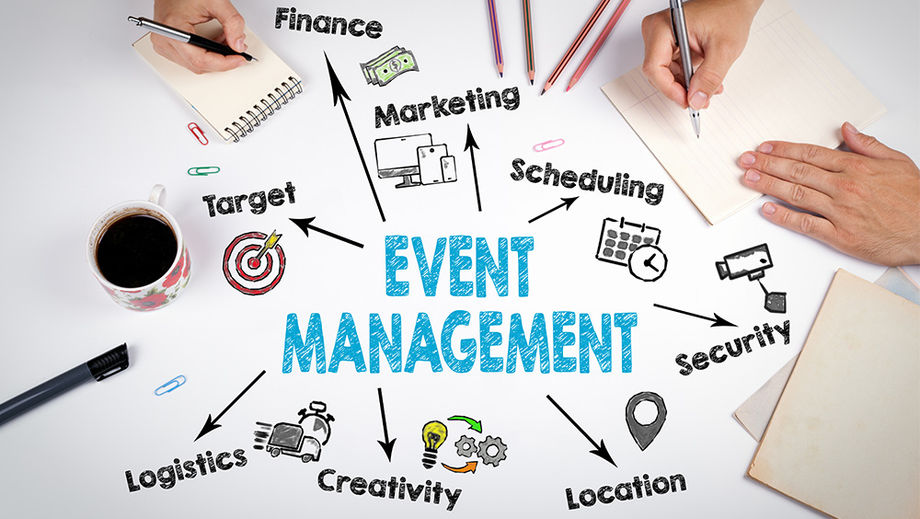
 Optimistic outlook, with emphasis on attendee experience. Photo Credit: Adobe stock/STOATPHOTO
Event planners are being more conservative with their budgets in 2024
compared to last year, but they are still investing in the attendee
experience and expecting more participants at meetings and events.
This is according to Northstar Meetings Group’s latest meetings
industry pulse survey, run together with Cvent, which featured responses
from just under 400 professionals within the events industry, drawn
from corporates, professional conference organisers, associations and
third party independent event planners. The data was sourced over the
first two weeks of December 2023.
The findings were discussed during a webinar hosted by David
Blansfield, executive VP & group publisher, Northstar Meetings Group
and Jaimi Welch, lead content writer at Cvent. The webinar also
explored how to set a venue up for success in 2024, focusing on what
planners are looking for in 2024 and the role that technology plays.
Busy days ahead
“Planners are booking and if they're not booking, they're sourcing
actively - the (events) pipeline is still robust,” said Blansfield.
“More and more event organisers are expecting a greater number of
attendees for their meetings in 2024 than they did for meetings last
year.”
Blansfield also pointed to how the data suggests that fewer
organisations are capping their budgets; instead, they are looking to
reduce their overall costs, reflecting how planners are getting value
from venues and their events and meetings. For example, they are finding
cost savings in areas that will not diminish the attendee experience,
eliminating events that are less profitable or less important or
shifting to more regional and local events to minimise travel expenses.
“Planners will continue to pay what it costs to do them (events)
rather than not spending what's necessary,” he said. “They’re also
looking at strategies to mitigate the impact of the rising costs of
events. Most planners are sticking with the basics, essentially finding
cost savings wherever they can. The message is that the show must go
on.”
Better experiences with hotels
Planners are also reporting improved experiences with their hotel
partners now than in previous years, with planner/hotel dynamics having
improved considerably compared to last year. This can be attributed to
quicker RFP response times from venues. According to the data, many
planners are getting responses back from venues and hotels within a day,
while a third say the average time frame is three to four days.
“This is mission critical to ensuring that planners can plan their
events adequately and this shows that planners are far more satisfied
with how hotels are responding to their fees,” said Blansfield. At the
same time, planners still appear to be lamenting lost relationships with
hotels and venues - a similar number suggested this in 2022 as well as
in 2023.
Here to stay
The webinar also touched on the impact of AI, highlighting how
technology is not going to replace the role of an event planner, do
their job or get to the point where it will threaten a planner’s role.
Instead, much of the focus recently has been about how AI is increasing
the value proposition represented by the event planner role.
“As AI becomes more and more used in the marketplace, the value of
interactions, face-to- face and human contact becomes that much more
important,” said Blansfield. “The opportunity to exist with AI is
through the economics it brings - particularly the economies of time.
There are many AI elements that can make your world a lot easier to
navigate.”
Many applications that have thus far been demonstrated within the
industry have shown just how effective AI can be as a productivity,
marketing and communications tool.